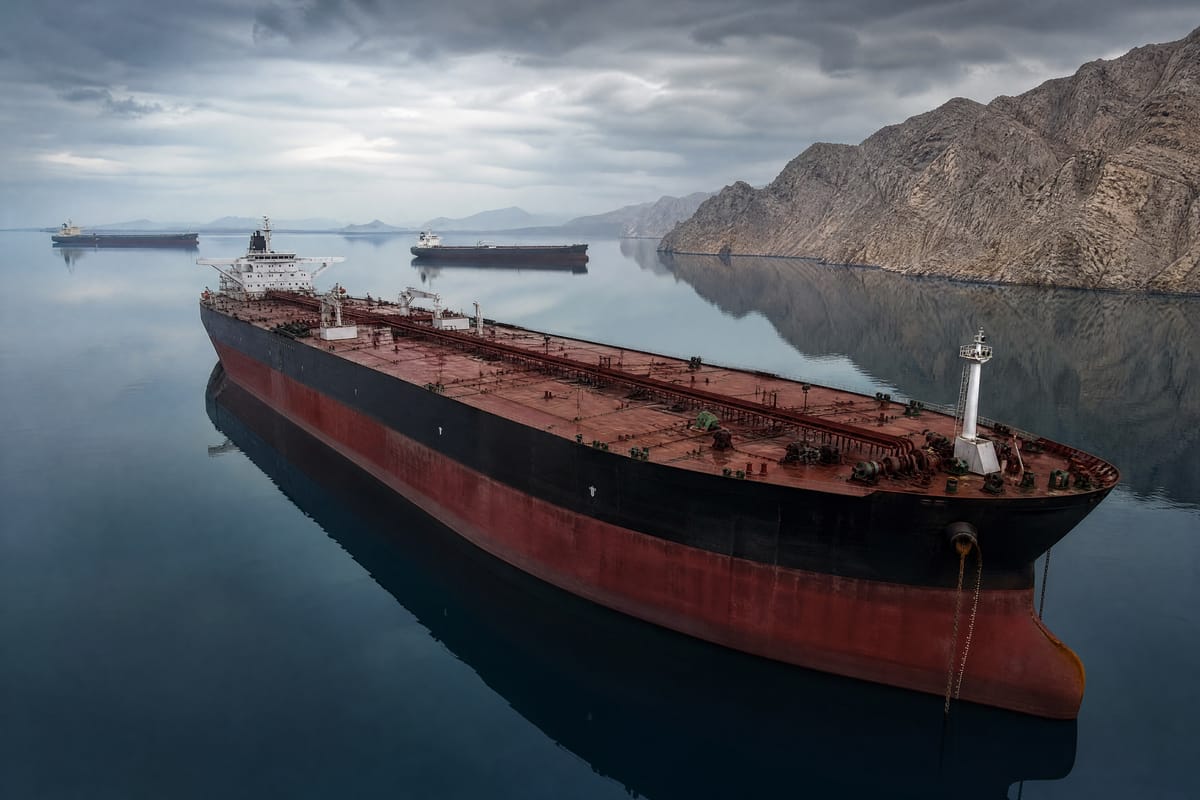
Iran escalated tensions in the Strait of Hormuz on Thursday after a Singapore-flagged cargo ship was struck near the coast of Oman, just hours after the Islamic Revolutionary Guard Corps warned that vessels would only be safe if they followed Iranian-approved routes.
The attack marks the first major test of the U.S.-Iran agreement reached last week, which was intended to end the fighting and reopen the strategic waterway. The Strait of Hormuz remains one of the world’s most important energy routes, and any disruption there immediately raises concerns over oil flows, global shipping, and American credibility in the Gulf.
According to U.S. officials, Iran fired at the vessel as it was moving through the area. Maritime security monitors said the ship reported being struck by a projectile, damaging part of the vessel, but no casualties were reported.
The incident came after the Revolutionary Guards issued an unusual radio warning to ships in the Persian Gulf and the Gulf of Oman. The message declared that passage through the Strait of Hormuz would be permitted only with the approval of the Revolutionary Guards navy and only along routes designated by Iran.
Any vessel attempting to cross without authorization, with its AIS tracking system turned off, or outside the approved routes, the Guards warned, would “bear responsibility for all consequences and dangers.”
Iranian state media later said that navigation in the strait would be considered safe only under what it called the “Iranian arrangement.” It also warned that routes not approved by Tehran, including those south of Hormuz Island, were “unacceptable” and dangerous.
The move directly challenges efforts by Oman and international maritime authorities to reopen safe passage through the strait after weeks of disruption caused by the war. It also appears to expose divisions inside the Iranian system, with hard-line elements seeking to assert control over the waterway even as diplomatic channels with Washington remain open.
The confrontation comes as Iran has reportedly pushed a plan to charge vessels for security, safety, and environmental services in the Strait of Hormuz. Tehran has suggested that such a mechanism could generate tens of billions of dollars annually, while also giving Iran and neighboring Gulf states a share of the revenues.
Washington, Oman, and other Gulf states oppose any transit fee, arguing that international shipping lanes must remain open and free from Iranian coercion.
U.S. Secretary of State Marco Rubio rejected the idea, saying such a system would be impossible to enforce without threatening ships.
“Let’s say we had completely lost our minds and agreed to such a mechanism — how would it actually work?” Rubio said. “If a ship refuses to pay, what do you do? Shoot at it? And what happens after you sink one ship? No other ship will move.”
Rubio also framed freedom of navigation as a central test of the new understanding with Tehran.
“If the ships are moving, that is what we will respond to,” he said. “If the ships are not moving, that is a violation of the agreement, and then we will have a problem with that.”
President Donald Trump said earlier that the ceasefire had given the region’s economy “breathing room,” with more oil tankers beginning to move safely through the strait. Thursday’s attack now threatens to undermine that claim and force Washington to decide whether Iran’s actions amount to a violation of the agreement.
The message from Tehran is clear: even after the deal, Iran intends to retain leverage over the Gulf’s most important maritime artery.
For the United States, the question is now equally clear: whether the agreement restored freedom of navigation — or merely gave Iran time to test how far it can go.