
The shekel is trading at approximately ₪3.085, its strongest position since March 1996.
This "super-shekel" environment is the result of several converging forces:
- The "Iran Peace Dividend": Following the major campaign against Iran in June 2025 and a subsequent de-escalation, Israel’s risk premium (CDS spreads) has collapsed to pre-war levels. Investors are now pricing in a period of regional stability.
- Defense & Energy Bonanza: Massive new defense contracts and a landmark $35 billion natural gas deal with Egypt have ensured a steady, long-term pipeline of foreign currency inflows.
- Institutional Hedging: As global markets (S&P 500 and NASDAQ) hit record highs, Israeli institutional investors are forced to sell dollars and buy shekels to maintain their currency hedge ratios, creating "automated" upward pressure on the local currency.
The Exporters' Crisis: "A Strategic Threat"
Ready for more?
Ready for more?
Avraham (Novo) Novogrotzky, newly elected president of the MAI, has intensified his rhetoric, calling the current situation a "strategic crisis."
The association’s latest data paints a grim picture for the coming fiscal year:
- Revenue at Risk: The MAI estimates that if the shekel remains below ₪3.15, Israeli exporters stand to lose roughly ₪31 billion ($10 billion) in annual revenue.
- The "Dual Squeeze": Exporters are facing a "perfect storm." While the shekel's strength crushes their margins, they are also grappling with a 15% tariff on goods entering the U.S. and rising domestic costs for electricity and labor.
- Brain Drain Warning: Novogrotzky warns that multinational R&D centers, the backbone of Israel's "Startup Nation" brand, are seeing their local operating costs skyrocket in dollar terms, making development centers in Europe or Asia look increasingly attractive.
The Central Bank’s Dilemma
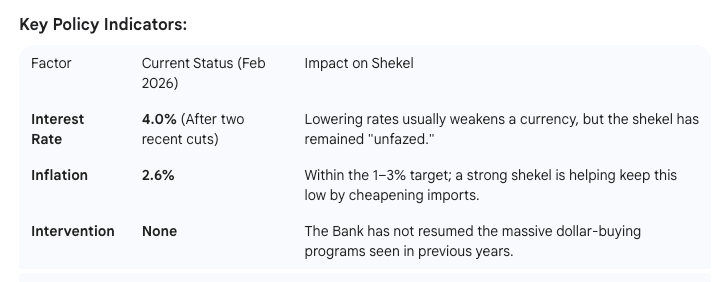
Despite the outcry from the industrial sector, Bank of Israel Governor Amir Yaron has signaled a "wait and see" approach.
"It is clear that a strong shekel adds to exporters' challenges," Yaron told the Finance Committee last week. "At the same time... our role is to ensure price stability. If there are issues with exports, they are often fiscal rather than monetary."