Get our mobile app
Download on the App StoreGet it on Google Play

Israeli Politics

Degel HaTorah May Split From Agudat Yisrael

With three weeks until candidate lists are due, the two factions that make up United Torah Judaism have yet to meet. Senior Degel officials are seriously exploring running separately, citing frustration over draft law strategy and political direction.

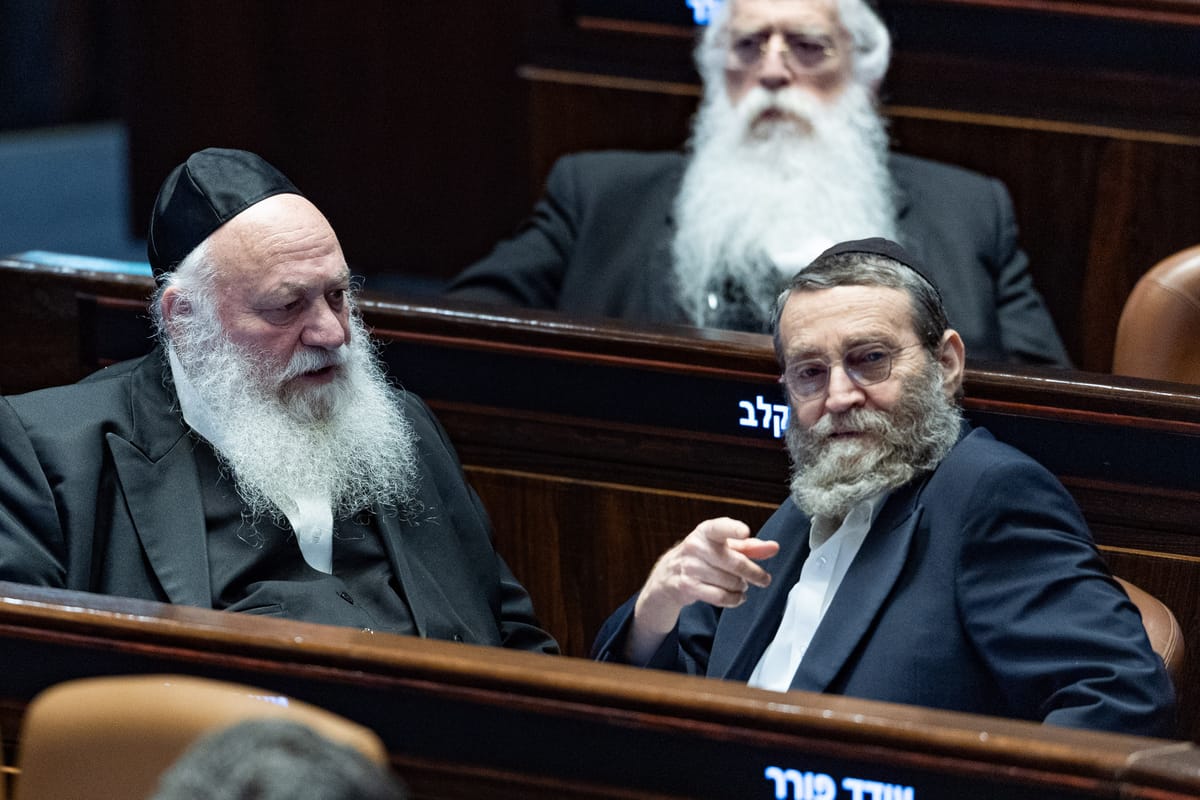
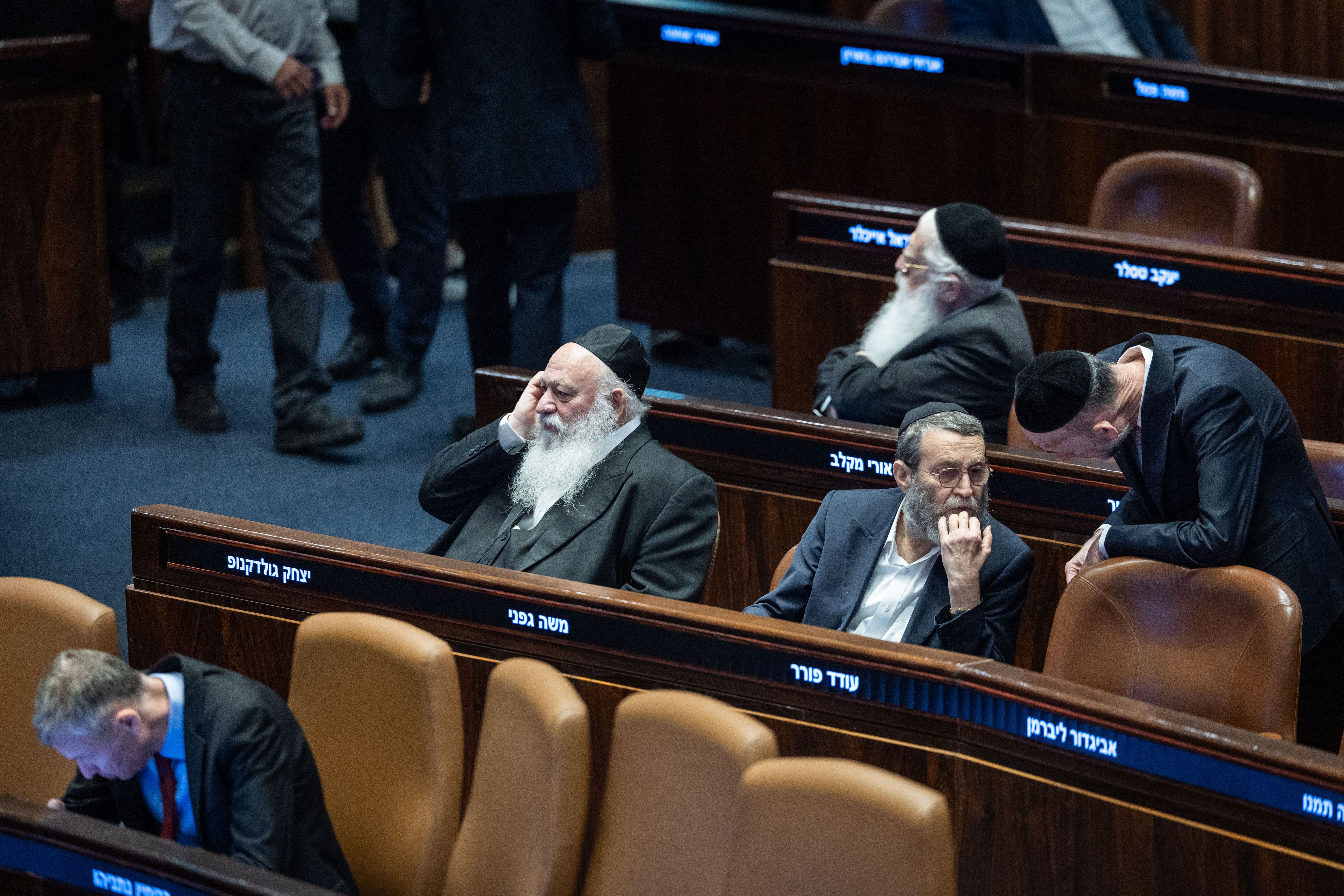
Gafni, Goldknopf and Parush

Less than three weeks remain before Israeli political parties must submit their candidate lists for the upcoming Knesset elections, yet the two factions that comprise United Torah Judaism, Agudat Yisrael and Degel HaTorah, have not convened a single joint meeting to discuss the campaign.

While the haredi political landscape appears calm on the surface, tensions are simmering beneath, particularly within the Ashkenazi ultra-Orthodox sector. The haredi parties face a challenging electoral environment: voter disillusionment is palpable, several new haredi parties have emerged as potential challengers, and internal divisions are deepening.

Within the Lithuanian (non-Hasidic) Degel HaTorah faction, discussions have been ongoing for months about potentially replacing current Knesset members with new representatives. However, these efforts have stalled, partly due to resistance from other members of the Council of Torah Sages and partly because suitable replacement candidates have not been identified or accepted.

People being considered include Eliezer Rauchberger, chairman of Degel HaTorah in Jerusalem and a longtime party activist, and Yitzhak Ravitz, head of the Telz Stone local council and son of the late MK Rabbi Avraham Ravitz, who was himself replaced in the party leadership by current Degel chairman Moshe Gafni. Other names mentioned include Moishi Zelushinsky, considered a close aide to MK Gafni, Dudi Zaltz, deputy mayor of Beitar Illit, Eliyahu Gafni, son of MK Gafni; and several others from various cities.

As of now, it appears the only significant change will be Rauchberger replacing outgoing MK Eliyahu Bruchi in the fifth spot on the list. But with three weeks remaining, an eternity in political terms, especially in the haredi sector, everything remains fluid.
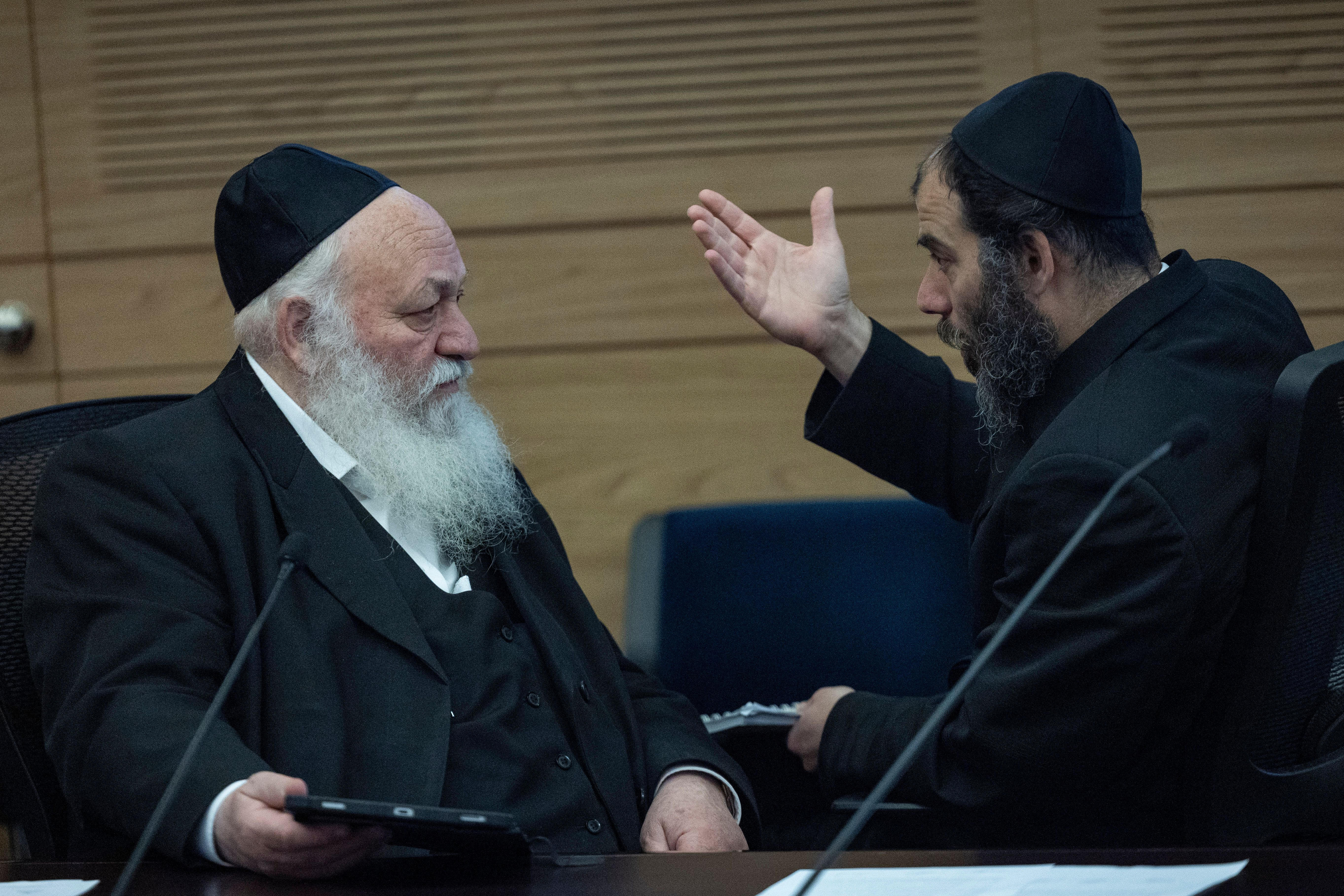
Goldknopf and Moti Babchik
Goldknopf and Moti Babchik (צילום: Yonatan Sindel/Flash90)

The Hasidic sector within Agudat Yisrael is also dealing with serious internal issues. Long-standing rivalries persist between the central faction led by the Ger Hasidic dynasty (which also includes Vizhnitz and other groups) and the Shlomei Emunim faction, which runs alongside the Belz Hasidic community.

Ger-affiliated circles have explored alternative electoral arrangements outside the familiar United Torah Judaism framework, though nothing has materialized. An attempt to launch a party called "Black Color" focused solely on resolving the military draft issue for yeshiva students has not gained traction, but it has heightened existing tensions within Agudat Yisrael.

Now, for the first time, Degel HaTorah officials are seriously considering a dramatic move: running independently in the upcoming elections. The key condition is confirming they can cross the electoral threshold, currently 3.25% of the vote, without the Hasidic electorate. This approach has already proven successful in municipal elections.

The desire among Lithuanian haredi leaders to run separately is not new. During the previous election cycle, such a split nearly occurred but was blocked at the last moment by the late Rabbi Gershon Edelstein, who led the haredi community at the time. Rabbi Edelstein feared Agudat Yisrael might fail to cross the threshold on its own, a concern that still weighs on today's rabbinic leadership as they approach this decision.

Remarkably, no meetings have been held between Degel HaTorah and Agudat Yisrael regarding the upcoming elections, an unprecedented situation. In conversations with both sides, it became clear that both are examining the possibility of running separately, despite publicly projecting unity.

Gafni and Maklev in the Knesset
Gafni and Maklev in the Knesset (צילום: Yonatan Sindel/Flash90)

A senior Degel HaTorah official explained the rationale behind the potential split: "We've had many occasions in the past when we wanted to run alone, for various good reasons, most of them related to achieving genuine representation for our community."

"You need to understand," the official continued, "we know we bring more than fifty percent of the votes to United Torah Judaism. These are numbers we have from our election headquarters. Not only are we larger than the Hasidim, but there's an open secret everyone knows but doesn't discuss, many, many people in the smaller Hasidic groups simply don't vote. They ignore their rabbis' instructions, and even their rebbes don't push them hard to vote. Our situation is different. The vast majority (an absolute majority) goes out to fulfill the religious obligation and votes in massive numbers. On election day, we're much larger than the Hasidim."

"But this time, that's not our trigger for separation," the official explained.

"For nearly a decade, we've been waging a grueling battle over the draft law. Eight years ago, there was a good draft law proposed to us that was acceptable to all our Torah sages. But the problem was that several important rabbis from the Hasidic sector opposed the law and caused everyone to take a more extreme position.

We were swept along with the extremist elements of Agudat Yisrael, and looking at it long-term, we made a big mistake. In the next Knesset, we want to finish the draft saga, that's our first priority. If we're together with Agudat Yisrael again, we risk getting caught in the same tangle we don't want and aren't interested in. Moreover, we've decided to return to the old, good haredi politics and stop making calculations about the right-wing bloc or small interests like Meron and so on. We want to go back to doing politics based on what benefits us. Whoever gives us what we need, we'll go with them. Beyond that, we won't make any more calculations.
I don't know if we'll actually run alone this time, because in the end we might lose mandates from the Hasidic public. But what's clear and already settled with all the relevant parties is that immediately after the elections, we're separating into two official factions. We won't be together anymore."
Ready for more?

Join our newsletter to receive updates on new articles and exclusive content.

We respect your privacy and will never share your information.

Enjoyed this article?

Yes (49)
No (2)
Follow Us:

Unmissable content


Loading comments...

Also of Interest