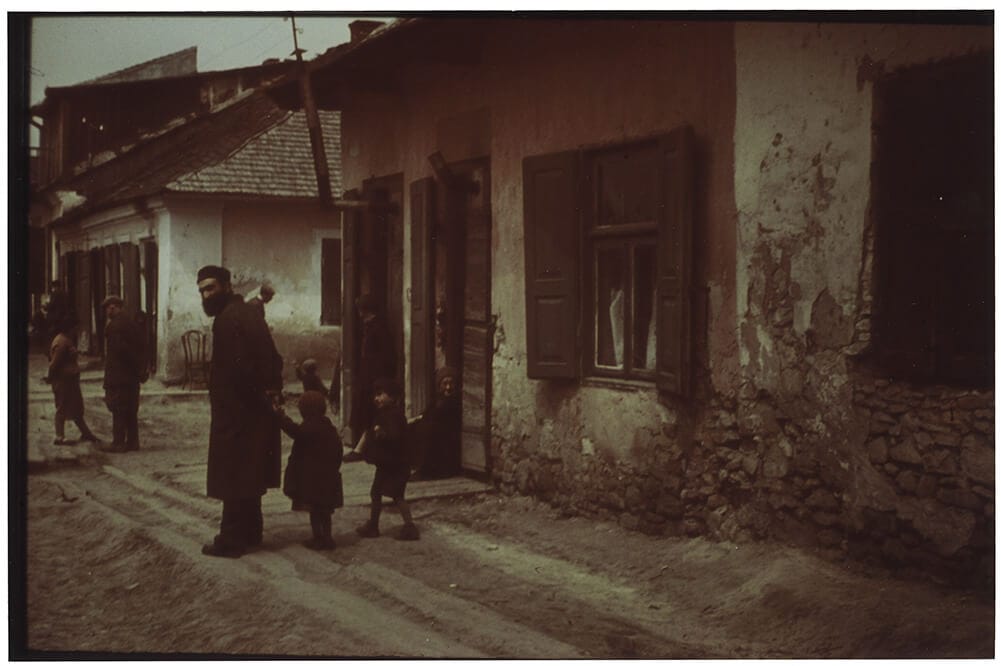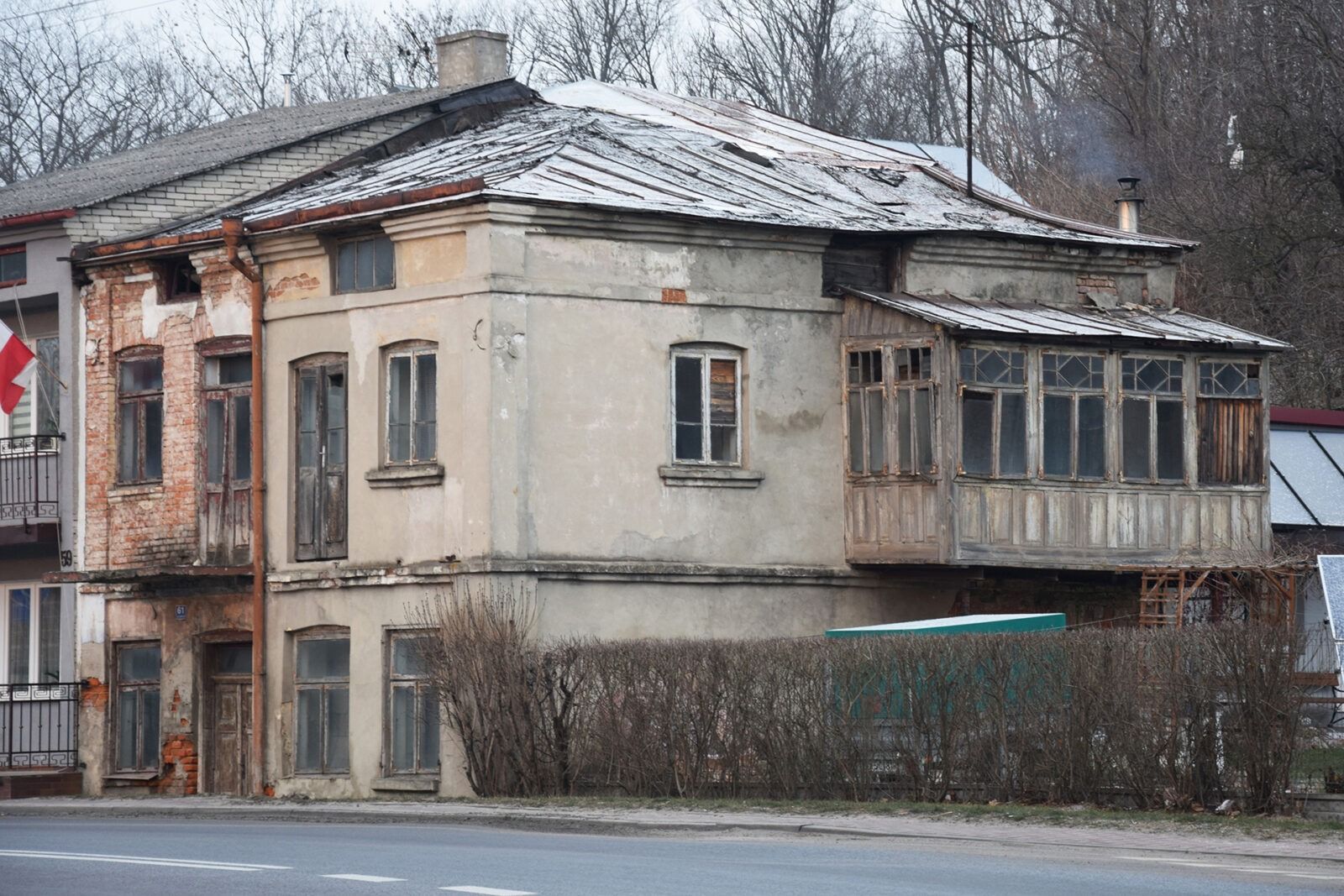
In the years before the war, when the Days of Awe arrived and the east wind began to blow through the alleyways of Izbica, that mud-deep, thought-heavy shtetl in the heart of Poland, the wooden beams in the walls would begin to groan from the cold. Izbica was a town of chassidim, a place where a man's thoughts did not walk at ease as in other places, but entered inward and deeper still, to a depth without end.
And just as the Torah of Izbica was not laid upon the secure ground of routine, so too its sukkahs did not stand upon the earth.
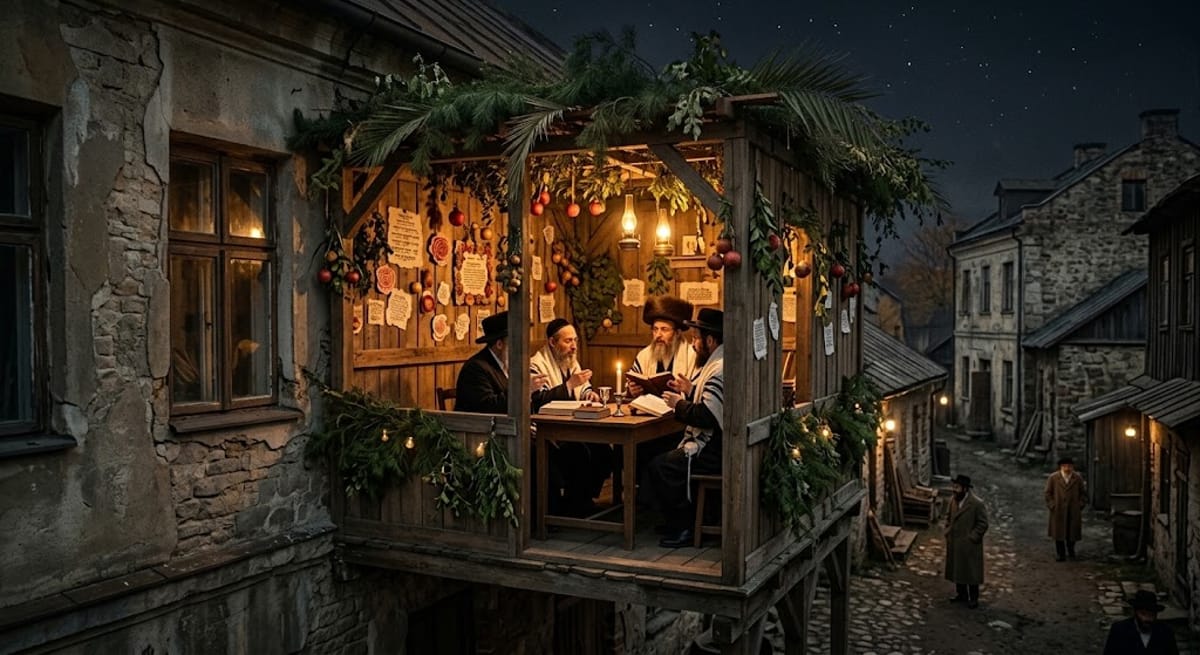
The houses were crowded side by side, their courtyards too narrow to contain. So the Jews of the town took iron beams and drove them into the high plaster walls, and between them they hung square wooden boxes, "kuczkas" they called them in Polish, suspended between heaven and earth, hanging on nothing above the stone alleyways. And anyone who passed there in those hours between the suns, and saw these wooden cells hanging like birds' nests over the abyss, would be reminded on his own of that deep teaching planted there by the Rebbe of Izbica, the Mei HaShiloach zt"l: that a man has no standing or strength of his own at all, and hangs at every moment by a hair's breadth on the simple will of the Creator, blessed be He, and has no support but His providence alone.
And so, when the night of the chag came, the householders would climb up to those hanging boxes. The fur coat thick, the air burning the tip of the nose, and the candle flickering in its cup of oil against the narrow windows.
Architecture of ahavas hamitzvah
A thick rope would dangle from the roof beam, with an old iron pulley. The autumn rains would pour down, the chassid would pull on the rope, and the slanted tin roof would descend with a creak and cover over his head. The rain would stop and the clouds would tear open a window of grey sky, immediately he would raise the cover upward, and the s'chach made of damp pine branches would be revealed again, bringing into the small balcony the scent of the dark forests surrounding the town.
And there, inside that sukkah from Izbica, a man's sitting was both wondrous and exalted. Outside, the East European cold whistling, the darkness covering the tile roofs, and beneath his feet nothing but thin planks shaking from every slight movement. And inside, warmth from above. A wooden table covered with a white cloth, a silver box with a green esrog resting among cotton wool, and white paper cutouts that the children had made swaying slowly in the wind entering through the cracks.
Is there any place that better illustrates "tzila d'mehemnusa"? For the entire matter of that famous teaching from Izbica is nothing but this: to strip from man the illusion of his own strength, to seat him within shaky walls that have no foundation in the earth, and to gaze from within them toward the heavens above with complete knowledge that "all is in the hands of Heaven."