Get our mobile app
Download on the App StoreGet it on Google Play

A New Syria?

Syria after Assad: six Jews, 22 synagogues

The new regime in Damascus is reopening doors to Jews who fled decades ago, but the head of the Jewish community reveals the reality on the ground: only six Jews remain, 22 synagogues need restoration, and the ancient Jobar shul still lies in ruins

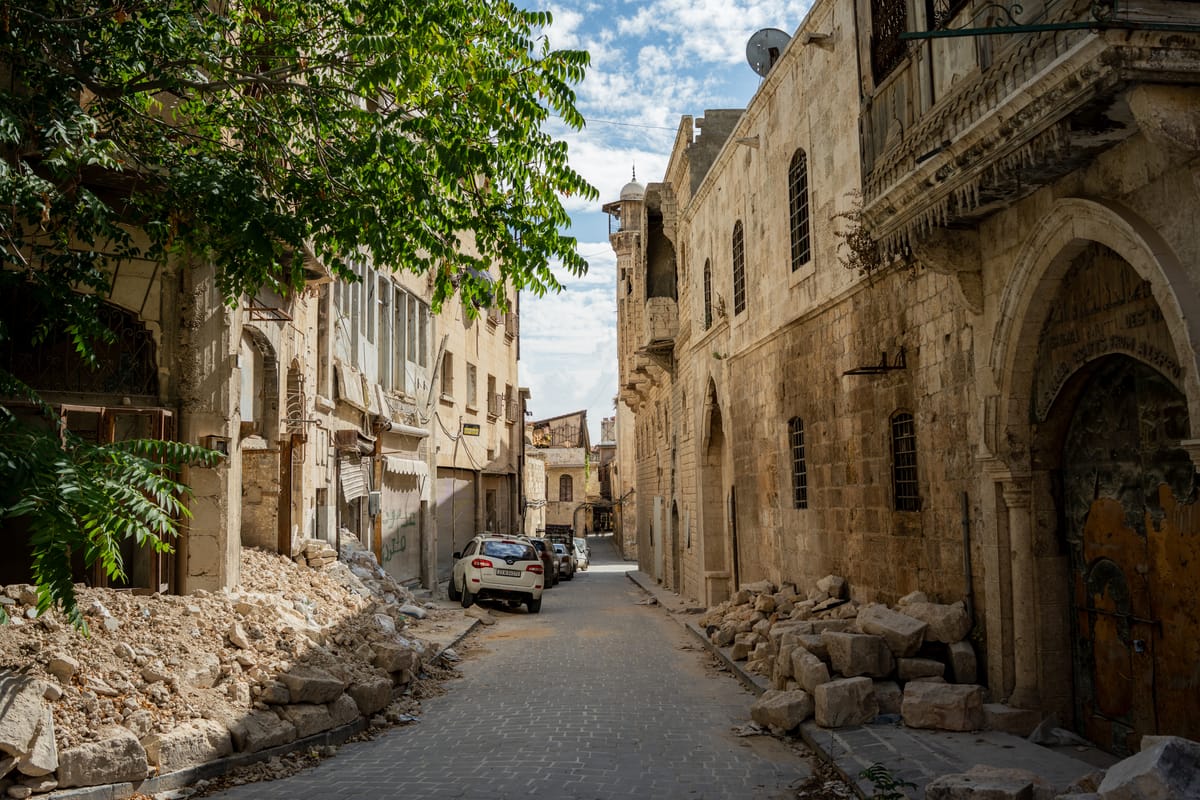
A street in the Old City of Aleppo

Something unimaginable until recently is happening in Syria today. Jews who fled the country decades ago are returning to visit the homes where they grew up, entering old synagogues, and even beginning efforts to reclaim property they left behind.

Since the fall of Bashar al-Assad's regime in December 2024, the new government in Damascus has been trying to present a different reality for minorities in the country, including Jews.

But between the new regime's declarations and the reality on the ground, a large gap remains.

In an interview with the Arabic newspaper Al-Quds Al-Arabi, published also on the Souri Al-Youm website, the head of Syria's Jewish community, Bakhour Chamntoub, reveals just how close to extinction the Jewish community in Syria has come.

According to him, only six Jews live in all of Syria today. All are elderly, and he is the youngest among them.

Under Assad Jews left; now they're starting to return for visits

Ready for more?

To understand the change, we need to go back several decades.

Syria once had tens of thousands of Jews. In Damascus, Aleppo and Qamishli, established Jewish communities operated with synagogues, educational institutions and rich communal life.

But over the years, especially under the rule of Hafez al-Assad, severe restrictions were imposed on Jews' freedom of movement and ability to leave the country.

Only in 1992 were exit restrictions lifted, and thousands of Jews seized the opportunity and left Syria. The civil war that broke out in 2011 led to the departure of many of the Jews who remained.

After Assad's fall, a different reality began to take shape.

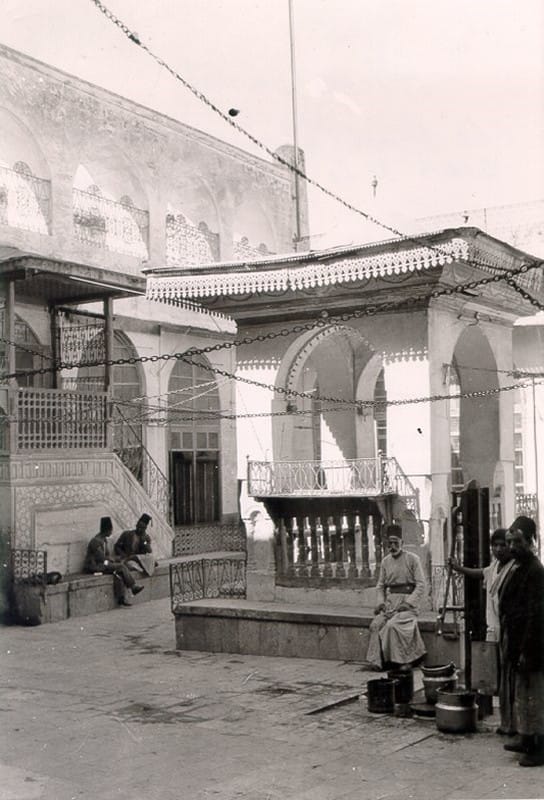
The Aleppo synagogue in the early 20th century

Jews of Syrian origin, some of whom had not visited the country for decades, began arriving again in Damascus and Aleppo. They visited family homes, synagogues and their ancestors' graves.

In February 2025, a joint prayer service of local Jews and Jews who came from the United States was held at the Al-Faraj synagogue in Damascus, for the first time in more than three decades.

The prayer was led by Rabbi Yosef Hamra, who left Syria in 1992 and returned to visit after more than thirty years.

Under a president who was once al-Qaeda: the regime returns Jewish religious property

One of the intriguing aspects of this story is the identity of the man now leading Syria.

President Ahmed al-Sharaa, also known by his former name Abu Mohammed al-Julani, was previously a commander in an organization associated with al-Qaeda. He later broke from the organization, and in December 2024 led the forces that toppled Assad's regime.

And now, specifically under his rule, Syrian authorities have begun taking steps that allow Jews of Syrian origin to return to visit the country and work to restore Jewish heritage.

In December 2025, another significant step was recorded.

The Syrian government granted official registration to the Foundation for the Preservation of Jewish Heritage in Syria, headed by Henry Hamra, a Jew of Syrian origin living in the United States.

The foundation's purpose is to work toward restoring synagogues, preserving Jewish heritage, and assisting Jews who left the country in attempts to reclaim their property.

And this hasn't remained only at the level of declarations.

According to an NPR report from February 2026, the Syrian government transferred control of Jewish religious properties that had been in government hands to the foundation. In Aleppo, Henry Hamra was even documented arriving at the city's synagogue with the keys to the site, after years in which the properties were under state control.

This is a significant step, especially in a country where many Jews were forced to leave their homes and property over the years.

However, it's important to emphasize that the transfer of control over religious properties does not mean that all private Jewish property has already been returned to its owners. On this issue, difficulties and incomplete processes still remain.

The big question is whether this marks the beginning of a Jewish return to Syria, or mainly an attempt by the new regime to show the world that it respects minorities in the country.

22 synagogues in Damascus, but only one restored

In the new interview, Chamntoub reveals the state of Jewish heritage in the Syrian capital.

According to him, Damascus has 22 Jewish synagogues in need of restoration.

But despite the political change and promises, since Assad's fall only one synagogue has been restored by local community initiative — the Al-Faraj synagogue in Damascus's Old City.

Even here, this is not the restoration of a completely destroyed building. According to Chamntoub, one of the wooden pillars in the synagogue's ceiling broke, and the community worked to replace it, clean the site and reorganize it.

The goal was to allow Jews visiting Syria to enter the synagogue.

But the fate of one of the most important synagogues for Syrian Jewry has not yet changed.

The thousand-year-old synagogue still lies in ruins

In the Jobar neighborhood in eastern Damascus stands the ancient Eliyahu Hanavi synagogue, which according to local tradition and an inscription that was in the building, dates back to 720 BCE.

Chamntoub recounts that when he was a child, Damascus Jews would come there on Shabbos to pray.

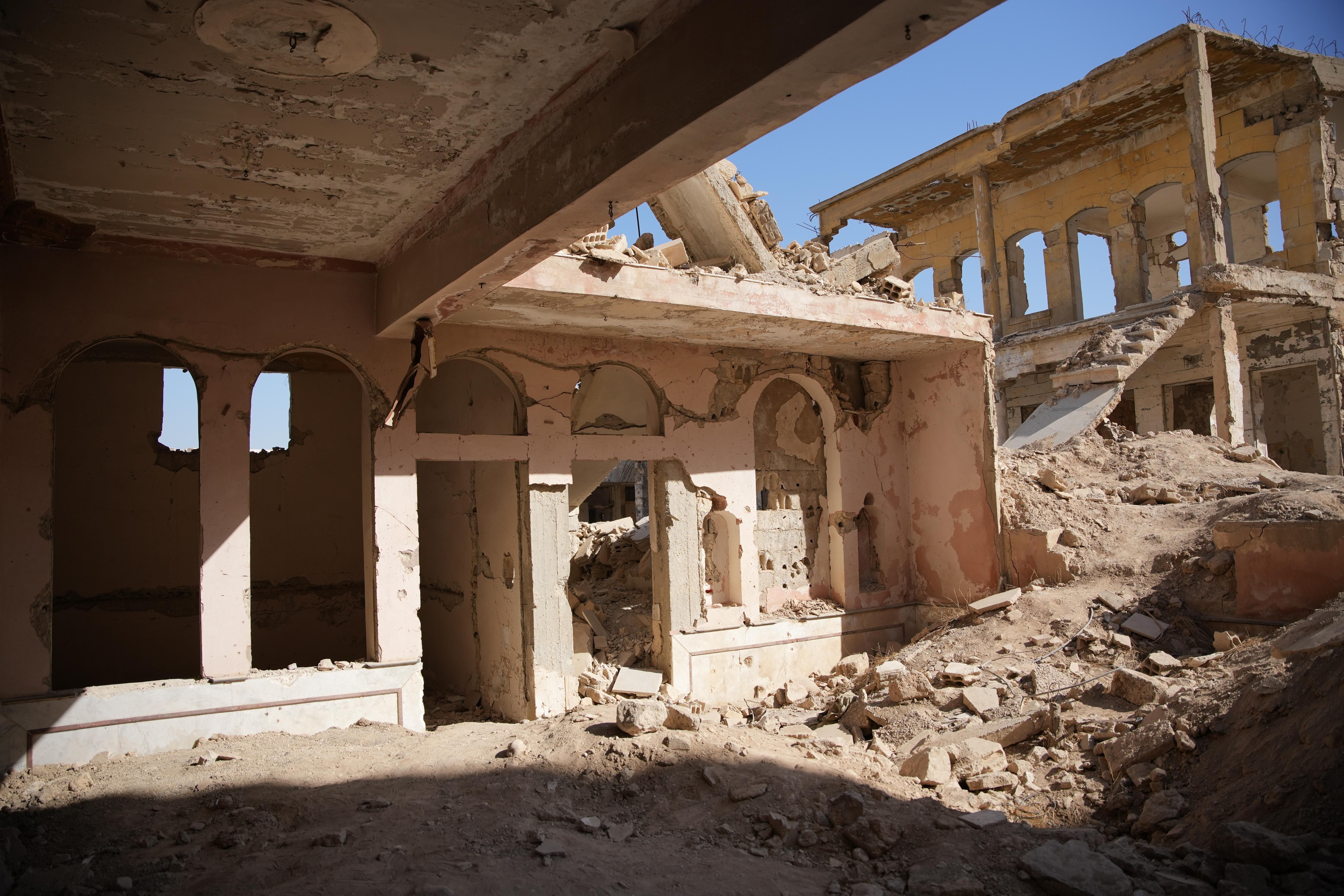
Remains of the Eliyahu Hanavi synagogue in Jobar, near Damascus
Remains of the Eliyahu Hanavi synagogue in Jobar, near Damascus (Photo: Shutterstock)

From the outside, he says, the place looked like a simple Damascus house. But behind the walls was hidden a magnificent synagogue that was an integral part of the city's Jewish history.

The civil war destroyed the site.

Chamntoub says the prayer hall was completely destroyed, and only part of the auxiliary buildings remain standing. According to him, excavations were also conducted at the site in search of valuables.

After Assad's fall, promises began to be heard about restoring the synagogue.

Chamntoub says a figure in the new government expressed willingness to help with restoration and even provide security around the site.

Jews of Syrian origin living in the United States also spoke about the possibility of raising donations.

But according to Chamntoub, to this day no money has been collected for the synagogue's restoration, and no one has yet committed to funding the work.

He explains there is also another problem: the Jobar neighborhood itself is destroyed in large parts, and one cannot ignore the condition of the surrounding residents' homes.

From his perspective, the synagogue's restoration must advance alongside the neighborhood's restoration.

In Syria they fear: are Jews coming back to buy the houses?

The change in attitude toward Jews is also raising rumors and fears among some Damascus residents.

In the Jobar neighborhood, whose residents have been waiting for years for restoration of homes destroyed in the war, claims have begun to spread that Jews are secretly purchasing properties around the ancient synagogue.

In some publications, American companies were even mentioned and the name of Jared Kushner, son-in-law of United States President Donald Trump, was linked.

Chamntoub rejects the claims.

According to him, neither Jews from Syria nor Jews from outside the country have purchased houses around the synagogue, and there is no connection between the site's restoration and Kushner.

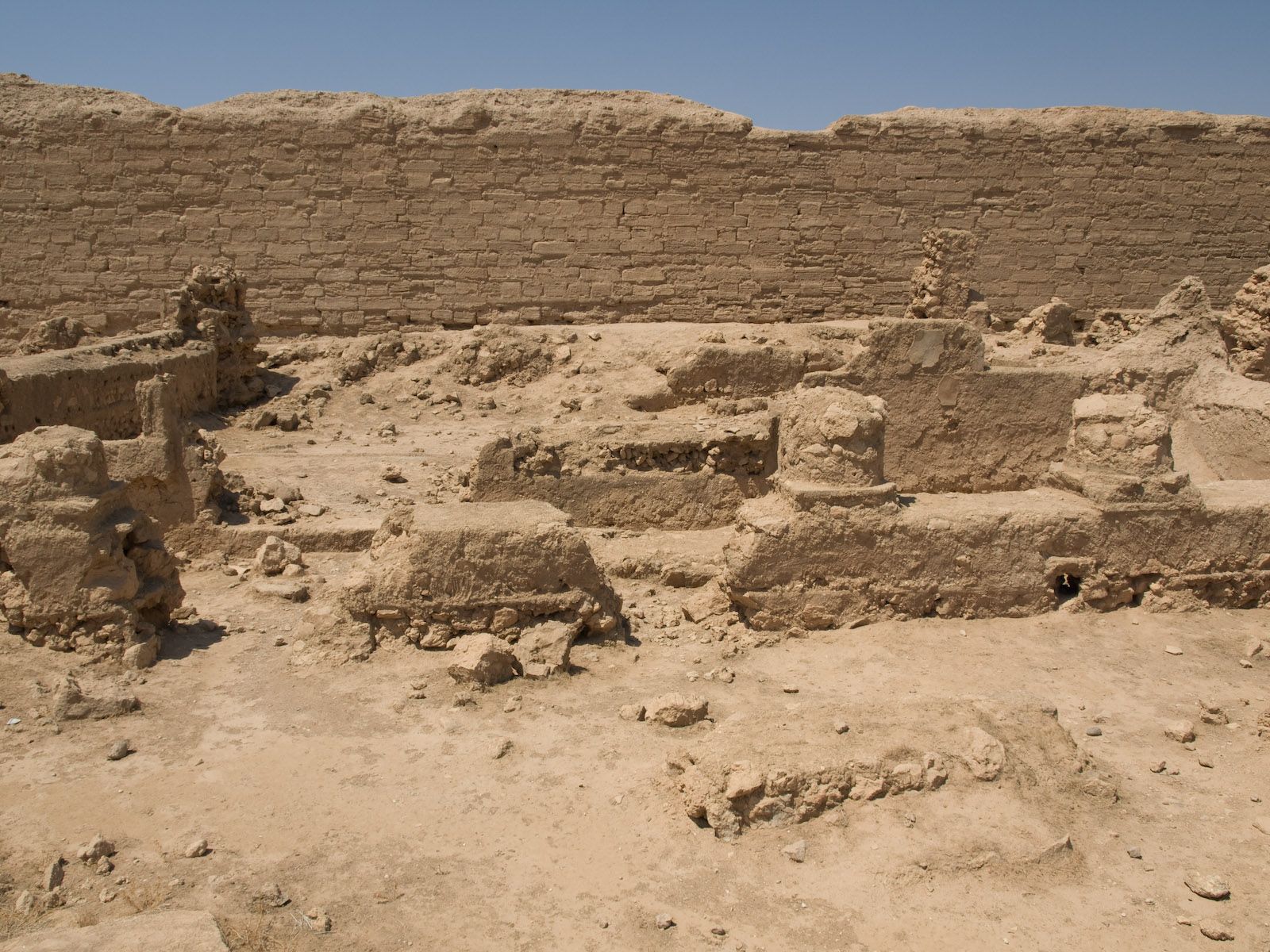
The synagogue at Dura-Europos
The synagogue at Dura-Europos (Photo: By Marsyas - Own work, CC BY-SA 3.0)

Jewish graves also return to the picture

And there is another sign of change.

Last summer, work began to restore Damascus's main Jewish cemetery, which contains hundreds of graves with inscriptions in Hebrew and Arabic.

According to reports, the cemetery itself was not destroyed in the war, but for decades almost no visitors came to it.

After Assad's fall, Jews of Syrian origin began coming again to visit their ancestors' graves, and in July 2026 the start of restoration work at the site was reported.

The work includes cleaning the cemetery, reinforcing gravestones damaged over the years, and plans to restore the wall and install lighting and security cameras.

So is it really better for Jews in Syria? The picture emerging from the reports is complex.

On one hand, the changes cannot be ignored. Jews are returning to visit Syria, a Damascus synagogue has reopened, a Jewish foundation has been established and received official recognition, control of some religious properties has been transferred to it, and work has begun to restore the Jewish cemetery.

These are steps that were not taken for granted during the Assad family period.

On the other hand, the local Jewish community barely exists. Only six Jews remain in the country, most synagogues still need restoration, and the ancient Jobar synagogue continues to stand in ruins.

The question of the security of Jews and minorities under the new regime also remains unresolved. During 2025 and 2026, serious violent incidents against minorities were recorded in Syria, including Alawites and Druze, raising questions about the new government's ability to ensure the security of all the country's citizens.

And ultimately, there is a reality here that is hard to ignore: for decades Jews tried to leave Syria. Now the new regime is actually inviting their descendants to return and visit, and allowing them to work toward restoring the heritage they left behind.

But the big question remains open: will the change in Syria amount to restoring synagogues and visits by Jews from abroad, or will real Jewish life one day return to the streets of Damascus and Aleppo?

Meanwhile, from a Jewish community thousands of years old, only six Jews remain in Syria.

Ready for more?

Join our newsletter to receive updates on new articles and exclusive content.

We respect your privacy and will never share your information.

Enjoyed this article?

Yes
No
Follow Us:

Unmissable content


Loading comments...

Also of Interest