The five-month U.S. military campaign against Iran has significantly depleted America's precision missile stockpiles, exposing a critical vulnerability as the Pentagon grapples with potential conflicts on multiple fronts, particularly a hypothetical confrontation with China over Taiwan.
Defense industry leaders warn that restocking precision weapons systems could take years, even with accelerated production timelines. The issue has prompted the Pentagon to issue urgent demands to defense contractors for rapid acceleration of manufacturing.
Armin Papperger, chief executive of Rheinmetall, the German defense giant partnering with Lockheed Martin on accelerated ATACMS production, was direct in recent comments: refilling the U.S. arsenal "will not happen in two years. It will take much longer."
Scope of Depletion
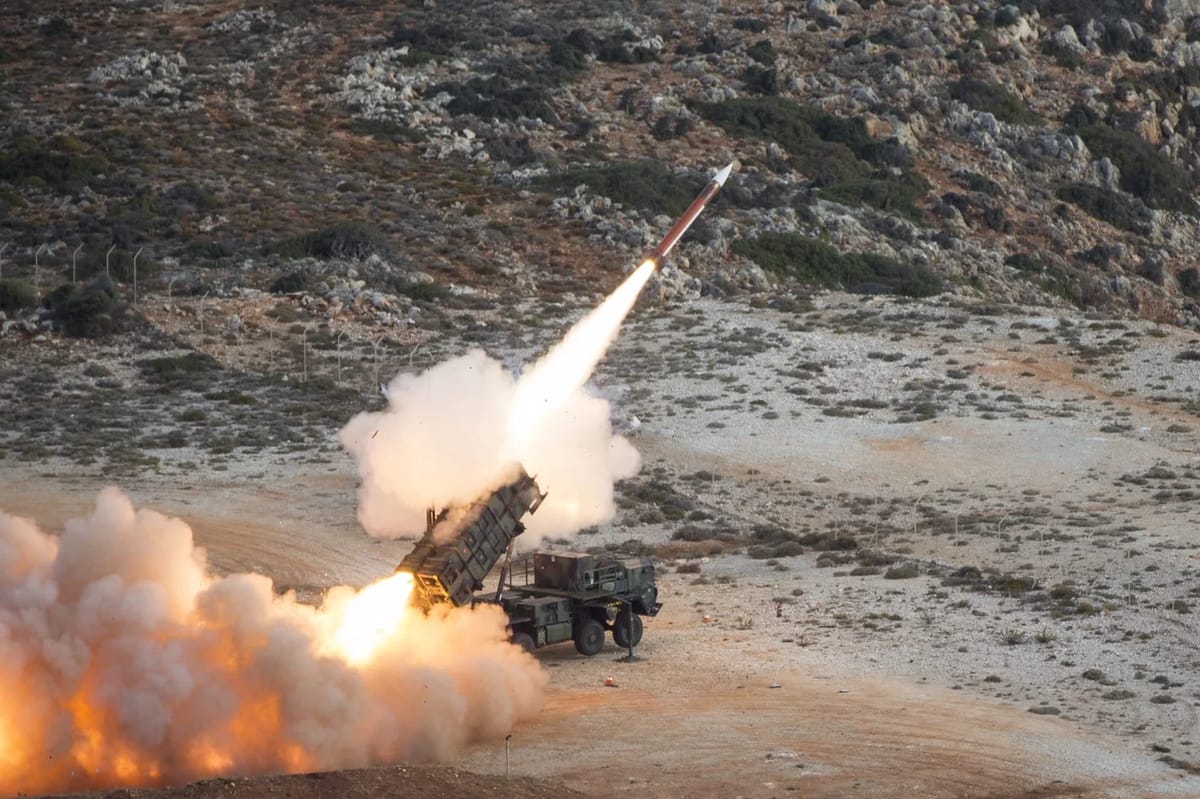
Two sources familiar with U.S. military operations told Reuters that the Iran conflict consumed significant quantities of two critical missile systems: the ATACMS ground-to-ground missile and the PrSM, a newer precision-strike weapon. The conflict also burned through approximately 80 percent of the THAAD air defense system's interceptor stockpiles, according to reporting by CNN.
Additionally, roughly half of the U.S. Navy's Tomahawk cruise missile inventory—deployed from naval platforms—was consumed in the campaign, a threshold that Pentagon officials view as strategically dangerous.
The Pentagon's Alarm
The rapid attrition of precision-guided weapons has triggered serious concern within the U.S. defense establishment. Despite the losses, President Donald Trump attempted to downplay the severity of the situation in recent remarks, acknowledging that supplies of certain munitions had decreased but asserting that the U.S. maintains "nearly unlimited" reserves of other ammunition types.
However, operational data contradicts that optimism. The depletion of precision weapons—particularly long-range, stand-off systems—represents a genuine readiness challenge, military analysts argue.
Retired Admiral Eliezer (Chienie) Marom, former commander of the Israeli Navy, outlined the strategic implications in conversation with N12 News. "When America looks at its military, it doesn't look only at Iran. It looks at the whole globe," Marom explained. "The real challenge they face is China. If Beijing decides to invade Taiwan, America could be drawn into direct confrontation. In that scenario, the available missile inventory becomes catastrophically important."
The Taiwan Contingency
A potential China-Taiwan conflict would differ fundamentally from the Iran campaign in scale and intensity. Taiwan's geographic position, the sophistication of Chinese air defenses, and the sheer scale of forces involved would demand precision missiles in quantities that dwarf recent expenditure rates.
"They're currently fighting Iran alone, but what happens tomorrow morning if they have to deal with China while a Taiwan situation is unfolding?" Marom asked rhetorically. "This is a completely different kind of war, with different orders of magnitude."
Precision missiles serve as the backbone of American air warfare doctrine, particularly in opening phases of conflict. Stand-off weapons—missiles launched from safe distances—allow U.S. forces to degrade enemy air defenses before committing manned aircraft to contested airspace. Without adequate stocks of these systems, the U.S. military loses a crucial tactical advantage.
The ATACMS missiles, proven effective in the Ukraine conflict against Russian targets, are particularly valued. The newer PrSM system offers improved range and precision. Tomahawk cruise missiles, launched from Navy ships and submarines, provide strategic reach independent of regional basing agreements.
The Basing Problem
That last point carries particular significance. Ground-based missiles like the ATACMS require forward deployment in allied territory—proximity to targets. In recent operations, ATACMS systems were based in Kuwait. However, regional anxiety has intensified sharply.
"Most countries in the region, after seeing the results of the Iran conflict, are worried and don't want to give the Americans permission to operate from their territory," Marom noted. Regional allies fear Iranian retaliation if they host U.S. strike platforms. This tactical reality reinforces the strategic importance of sea-based systems like Tomahawks, which operate from international waters without requiring regional host nations.
Manufacturing Reality: No Quick Fix
Last month, Rheinmetall and Lockheed Martin signed a memorandum of understanding to establish a joint ATACMS production line in Germany. Yet production will not begin until next year, and reaching meaningful output levels remains years away.
In a rare display of urgency, Deputy Secretary of Defense Steve Feinberg issued a demand to major U.S. defense contractors this week: within 21 days, submit detailed action plans for accelerating production under "aggressive timelines." The ultimatum reflects Pentagon desperation to close the missile gap quickly.
Yet industry experts caution that money alone cannot solve the problem. "Expanding production requires building new production lines, constructing infrastructure, and recruiting skilled workforce," Marom emphasized. "This is a process measured in months and years, not days. Money doesn't solve it here."
Papperger echoed that reality, warning Reuters that even with the joint production effort, meaningful replenishment "will take significantly longer than two years."
The Accountability Question
The rapid depletion of stockpiles raises fundamental questions about U.S. force planning. Marom stressed the need for rigorous internal Pentagon review.
"Someone built the models that determined how much inventory America needs. Were those numbers correct? What kind of war were they designed for, and why did America accept those numbers in the first place?" he posed. "This requires deep inquiry."
Israel's Parallel Crisis
Marom drew an explicit parallel to Israel's own inventory challenges. "We also face serious problems with our interceptor stockpiles. When it comes to Arrow missiles, the quantities we possess are lower than we'd like. Current production capacity is very low," he warned.
Israel's Arrow air defense system has borne significant strain during recent conflict cycles. Interceptors are expensive, time-consuming to produce, and consumption rates consistently outpace manufacturing. The U.S. depletion crisis carries direct implications for Israel's own strategic planning.