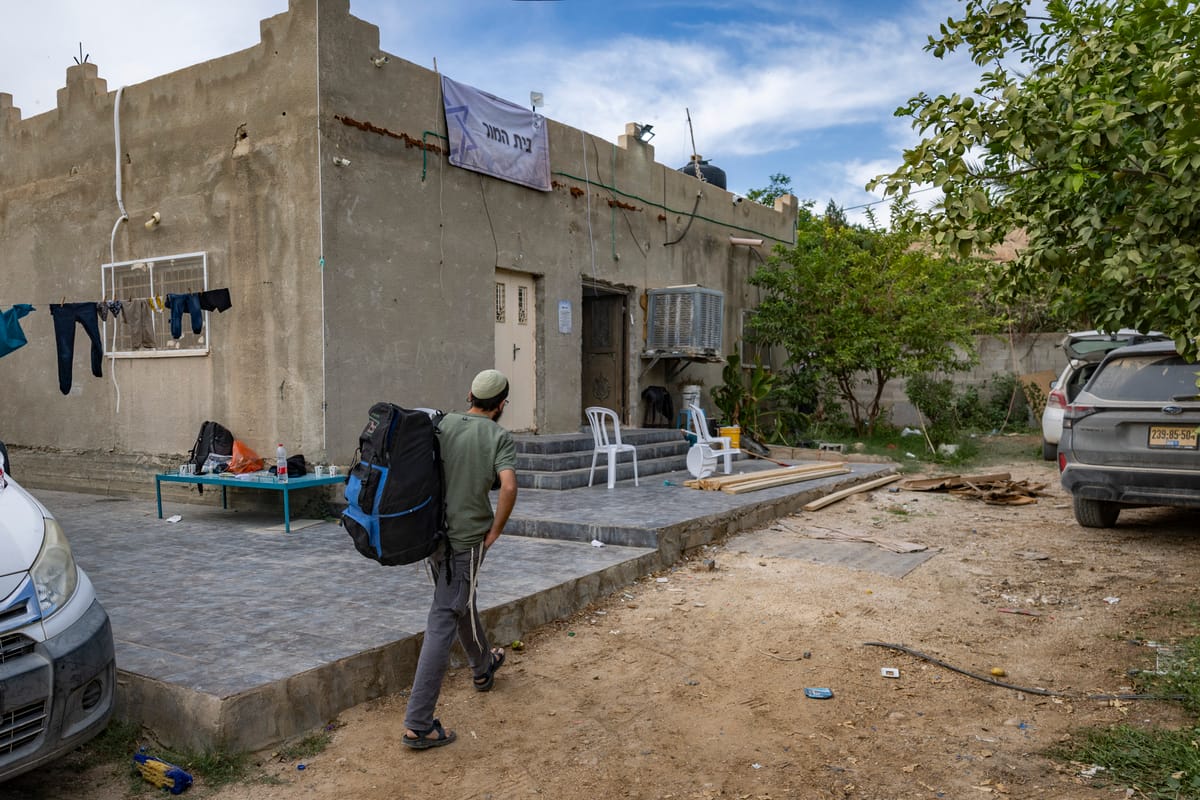
Jews are returning to Jericho, and weddings will likely follow. That raises a halachic question worth addressing now: how should the city's name be written in a kesubah?
The question has been asked before. HaRav Yitzchak Zilberstein shlita brings a case in his sefer Tuvcha Yabiu (vol. 2, p. 157) of a chosson who wanted to hold his chuppah in Jericho. The local rav told him to check carefully how the city's name should be written in the kesubah. The question was whether to write "Yericho" without a yud after the reish, as the name appears in the Torah, or "Yericho" with a yud, as it appears in Navi: "Go, see the land and Yericho" (Yehoshua 2:1).
Rav Zilberstein ruled according to the view of the Rama miPano in his sefer Me'ah Keshitah (chapter 12), who explains that the name Jericho has two meanings.
The first is from the word charon af, wrath. When Bnei Yisrael were in the desert, Jericho was a place of Divine wrath. Therefore the name is written there without a yud, in the same way the word charon is written.
The second is from the word rei'ach tov, a good fragrance. When Bnei Yisrael entered Eretz Yisrael, the scent of the ketores from Yerushalayim reached Jericho. Therefore it is proper to write the name with a yud, from the word rei'ach. As the Mishnah teaches (Tamid 3:8): "From Jericho they would smell the fragrance of the ketores."
According to Rav Zilberstein, even today it is correct to write "Yericho" with a yud in a kesubah. Though we can no longer smell the ketores in Jericho, we recite "Pitum HaKetores" every day.
The halachah is that a person who holds a chuppah in Jericho writes Yericho in the kesubah with a yud, from the language of a good fragrance.