A striking series of developments has fueled speculation that the United States could be preparing for new military action in the Middle East: B-1 bombers are reportedly active from Britain, U.S. aerial-refueling activity is being closely watched over the Gulf, and both President Donald Trump and Defense Secretary Pete Hegseth have abruptly returned to Washington.
The developments come just hours after Iran-backed Houthi forces attempted to strike Saudi Arabia with a ballistic missile aimed at Riyadh, opening another potentially dangerous front in the already expanding regional conflict.
For now, there is no official confirmation that the United States has ordered a new strike. But the combination of military movements and political activity has drawn considerable attention.
Trump abruptly returns to the White House
Trump had been spending the weekend at Camp David and was expected to remain there through Sunday.
Instead, the president unexpectedly returned to the White House on Saturday evening.
The White House did not give a reason for the change in his schedule. The development came as the State Department issued a new warning to Americans in the Middle East, saying the security environment could deteriorate rapidly and warning of possible flight cancellations, airspace closures and other disruptions.
The timing was particularly notable because Saudi Arabia had just reported an attempted Houthi ballistic-missile attack on Riyadh.
The missile was intercepted, according to Saudi authorities, with no casualties reported. The Houthis also claimed to have targeted Saudi oil infrastructure, although those claims have not been independently verified.
Hegseth also heads back
Defense Secretary Pete Hegseth likewise returned to Washington, adding another unusual element to the weekend's developments.
The Pentagon chief would be directly involved in any decision to launch a new U.S. military operation, making his movements particularly significant in the context of the latest escalation.
The United States has so far stopped short of directly entering Saudi Arabia's renewed fight against the Houthis. Earlier this month, Saudi Crown Prince Mohammed bin Salman sought U.S. military assistance against the group, but Washington told Riyadh it was not prepared to take direct military action at that point, while offering intelligence and targeting assistance.
That position could now face renewed pressure following the attempted attack on Riyadh.
B-1 bombers are already in Britain
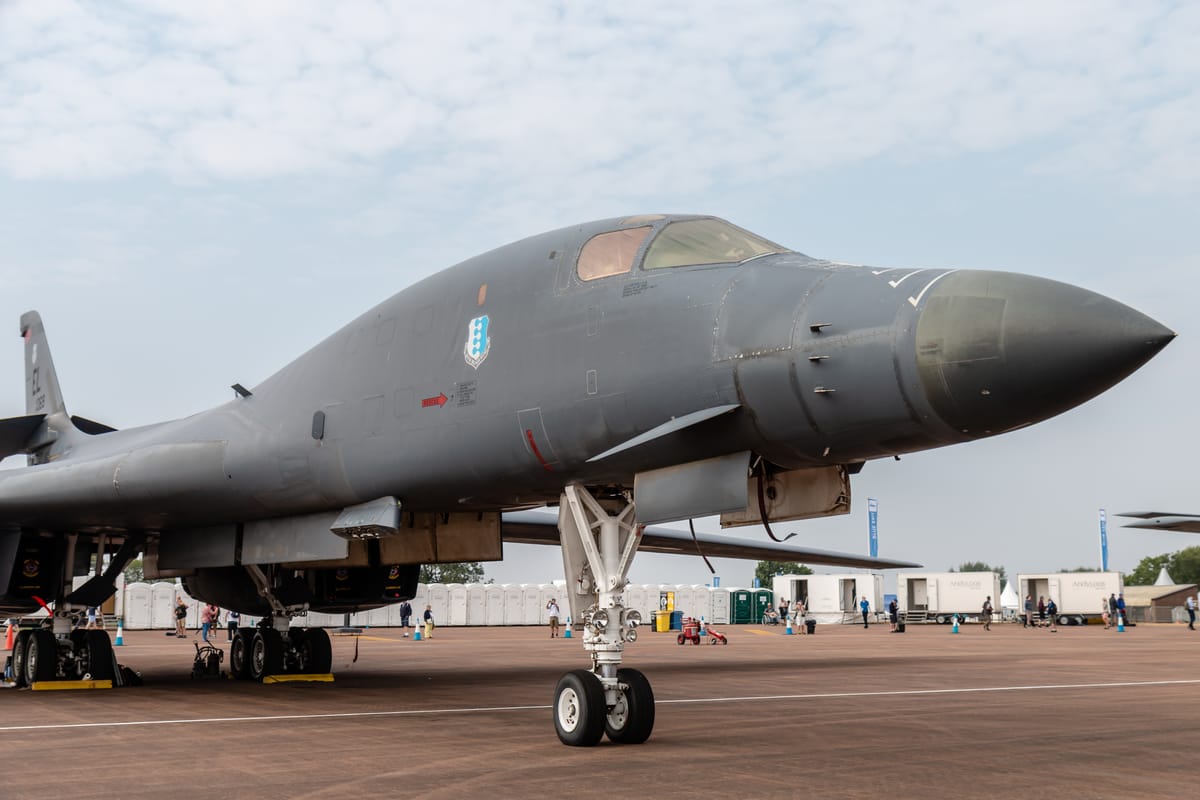
Open-source tracking also shows that RAF Fairford in Britain has been hosting a substantial U.S. Air Force B-1B Lancer presence.
Publicly available movement data shows B-1s arriving and departing from Fairford throughout September, with numerous aircraft listed at the base.
The significance of the bombers is clear. The B-1B is a long-range strike aircraft capable of carrying a large weapons load, and the United States has previously used the aircraft in its military campaign against Iran.
A major B-1 buildup at Fairford was also documented earlier this year, when as many as a dozen B-1s were reported at the British base.
But there is an important caveat: the presence or movement of B-1s does not by itself prove that an attack is imminent.
Military aircraft routinely reposition for exercises, training, deterrence missions, logistics and contingency planning. Flight-tracking data can reveal movements, but it generally cannot reveal the purpose of a particular sortie.
And then there are the tankers
The reported increase in aerial-refueling activity over the Gulf has added to the speculation.
Tankers are essential for long-range military aviation because they allow combat aircraft to remain airborne for much longer and to operate far from their home bases.
Their presence can therefore be consistent with preparations for military operations.
But again, it is not proof of an impending strike.
The United States already maintains substantial military infrastructure and aircraft in the region because of the ongoing Iran conflict. Earlier reporting has documented the extensive deployment of fighters, bombers, surveillance aircraft and aerial-refueling tankers.
The Saudi front is getting worse
What makes the latest movements more significant is the rapid deterioration of the situation around Saudi Arabia.
The Houthis have intensified attacks as the wider Iran war has expanded. Saudi Arabia has reported attacks on cities and critical infrastructure, while its missile-defense stocks are reportedly under growing pressure.
The kingdom has sought assistance from several countries, including Britain, France, Pakistan and Egypt.
Turkey has also said it is prepared to help Saudi Arabia meet military needs under a recently signed defense agreement, although Ankara has simultaneously called for de-escalation.
The threat extends beyond Saudi Arabia's borders.
The conflict is already disrupting shipping and energy markets. Reuters reported Sunday that shipping through the Strait of Hormuz had slowed dramatically following attacks on tankers, with only five commodity vessels recorded crossing on Saturday and none registered for Sunday in the cited tracking data.
Is Washington preparing something?
That remains the unanswered question.
There are several pieces of information that can be independently established:
- Trump unexpectedly returned to the White House from Camp David.
- Hegseth also returned to Washington.
- The United States issued a fresh warning about rapidly escalating regional tensions.
- Saudi Arabia reported an attempted Houthi ballistic-missile attack on Riyadh.
- B-1 bombers remain active at RAF Fairford.
- U.S. military aircraft, including refueling tankers, continue operating in the region.
- The Houthis have opened an increasingly serious new front against Saudi Arabia.
Taken together, those developments explain why speculation about possible U.S. military action is spreading.
But there is still no public confirmation that Trump has ordered a new attack, and flight-tracking information alone cannot establish what the United States intends to do.
The timing is nevertheless striking.
Only days ago, Trump told Axios that he was approaching a major decision point over the Iran war and was considering whether to resume major military operations in an effort to bring the conflict to an end. U.S. forces have meanwhile been instructed to maintain their existing presence in the Middle East through the end of the year, keeping them ready should major combat resume.
Now, with Saudi Arabia under renewed attack, B-1 bombers active in Britain, tanker movements drawing attention and both Trump and his defense secretary back in Washington, the question being asked across the region is increasingly direct:
Is Washington preparing for its next move?
For now, the answer remains unclear.