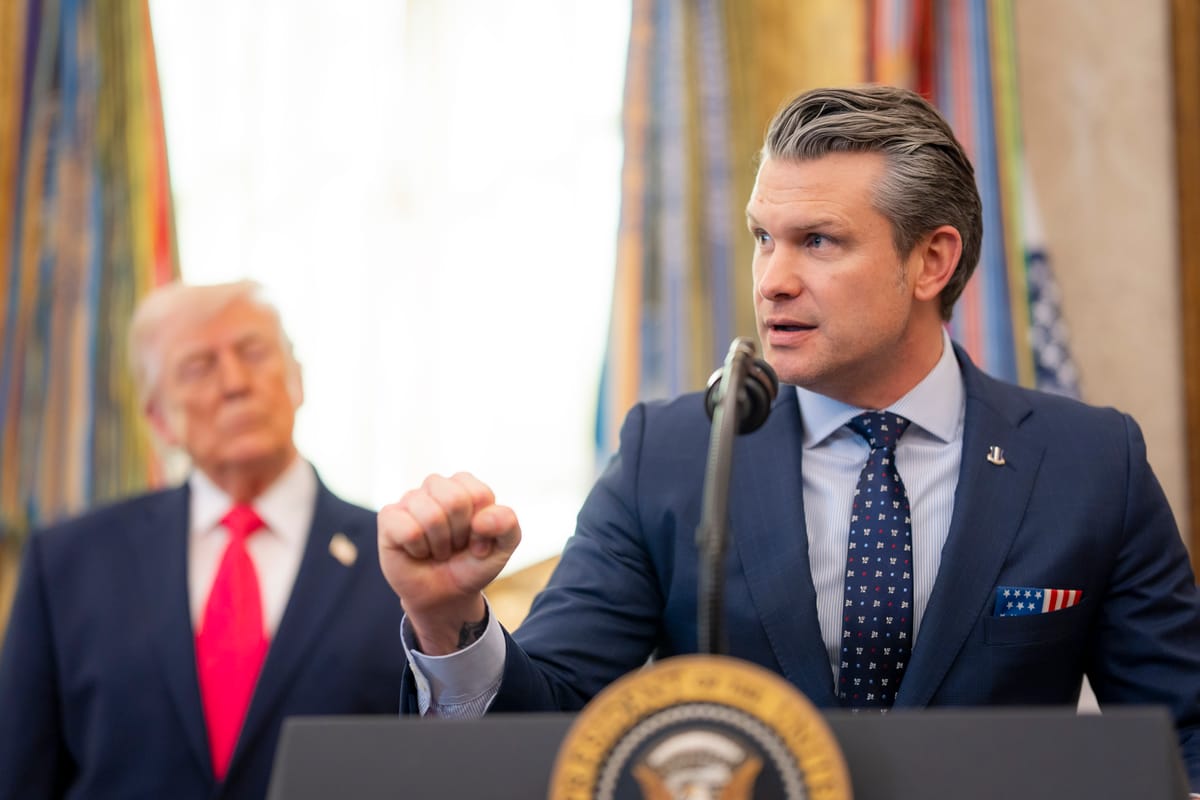
President Donald Trump abruptly returned to the White House from Camp David, while Defense Secretary Pete Hegseth also rushed back to Washington from Texas, as the United States weighs possible military strikes against the Iran-backed Houthis in Yemen.
The unusual movements by two of the Trump administration's most senior figures came amid a sharp escalation in the Middle East and growing concern that the conflict could spread to another front.
Trump had been expected to remain at Camp David until Sunday. Instead, he returned to Washington a day early on Saturday evening.
At almost the same time, Hegseth left a college football game at Texas A&M University and began making his way back to the capital. A U.S. delegation in Copenhagen was also reportedly recalled to Washington.
Other senior Trump administration officials are currently making their way to the White House, including Joint Chiefs of Staff Chairman Gen. Dan Caine and additional top U.S. military and administration figures, CBS News reported.
The White House has not publicly explained Trump's early return.
But the timing has drawn attention because the administration is considering military options against the Houthis following a missile attack directed at Saudi Arabia.
Houthis target Riyadh
Saudi Arabia said Saturday that the Iran-backed Houthi movement had launched a ballistic missile toward Riyadh.
The missile was intercepted, according to Saudi authorities, after a fire was reported near the Saudi capital's international airport. The Houthis claimed that they had launched a broader attack involving ballistic and cruise missiles and drones aimed at Riyadh and Saudi oil facilities.
The attempted strike represents a significant escalation because Riyadh has become increasingly exposed to attacks connected to the wider regional conflict.
The Houthis, who control large areas of Yemen, are backed by Iran and have repeatedly attacked shipping and regional targets during the conflict.
US weighing a major response
The sudden movements in Washington come as the Trump administration considers how to respond.
According to reporting cited by Israel Hayom, the administration is weighing potentially wide-ranging military operations against the Houthis in Yemen.
CNN national security analyst Alex Plitsas reported that Trump's Camp David meeting was focused on reviewing possible strike options against Yemen. He also linked the president's early return to Washington to those deliberations.
There has been no official announcement that a U.S. strike has been ordered.
That distinction is important: Trump's return to the White House and Hegseth's return to Washington are confirmed, but the precise military decisions being considered have not been publicly disclosed.
Hegseth's sudden departure
Hegseth's decision to leave a Texas A&M football game and return to Washington was particularly notable because the Defense Department would be central to any decision to launch a new U.S. military operation.
His return came as American officials were assessing the possibility of further attacks on Saudi Arabia and other U.S. or allied targets in the region.
The simultaneous movements of Trump and his defense secretary have therefore intensified speculation about the possibility of imminent military action, although officials have not publicly confirmed that strikes are about to begin.
New warning to Americans
The developments were accompanied by a new warning from the State Department.
Americans in the Middle East were urged to exercise heightened vigilance, with the department warning that the security environment could deteriorate rapidly.
The advisory also warned of possible disruptions to flights and other travel and urged Americans to be prepared for a rapidly changing situation. (Yahoo News)
The warning came after the Houthi attack on Saudi Arabia and amid continuing fighting involving Iran and its regional allies.
Why this matters
The Houthis have already become a major factor in the wider regional conflict.
Their attacks have threatened shipping routes through the Red Sea and surrounding waters, while their ability to strike Saudi territory creates another potential pressure point for the United States and its regional partners.
Saudi Arabia has faced growing security pressure as the conflict has expanded, and Riyadh has sought greater defensive cooperation from its regional allies.
For Washington, the challenge is now whether and how to respond to the Houthis without opening another major front in an already expanding conflict.
Trump's abrupt return from Camp David, Hegseth's decision to abandon his Texas trip and the recall of U.S. personnel to Washington all came within the same tense period.
The administration has not announced a new U.S. military operation against the Houthis. But the unusual movements at the highest levels of the U.S. government come as Washington considers its response to a direct Houthi attack on Saudi Arabia — and as the possibility of a broader regional escalation grows.