Get our mobile app
Download on the App StoreGet it on Google Play

"They fell so we could live meaningful lives"

Golani fighter on moments he was shot

Two and a half years after he was critically wounded in Shuja'iyya, Yochai Badalov returned to the beis medrash at Yeshivat Yerucham and shared the story of the firefight, the neder he made when he was certain he was about to die, the long rehabilitation, and the choice to return to life.

Yochai Badalov at the yeshiva

Yochai Badalov, a Golani fighter and talmid at Yeshivat HaHesder Yerucham, returned recently to the beis medrash, two and a half years after he was critically wounded in combat in the Shuja'iyya neighborhood of Gaza. He shared with the bochurim the story of the firefight and the rehabilitation that followed.

"There's a line they say at memorial services, on Yom HaZikaron: 'Thanks to them we can live in peace.' And I really hate that line," he told the yeshiva. "My friends didn't fall so we could live here in peace. They fell so we could live here meaningful lives."

During the fighting, Badalov lost his battalion commander, Tomer Greenberg hy"d, and his company commander, Roi Meldasi hy"d, in the battle in Shuja'iyya. Months later he returned to the same neighborhood. "On one hand you're dying to go in, to kill everyone there, to destroy every building. On the other hand you're afraid, because last time it wasn't easy."

He also described the anger that stayed with him. "I wanted to tell the chief of staff that it felt like we were playing hide-and-seek: we go into Shuja'iyya, kill all the terrorists, leave, count to ten, they go back in, and then we come back." That sense of anger, he said, was never answered.

"Badalov is dead!"

During the battle, Badalov was hit by gunfire. He was struck in the legs and abdomen, fell to the floor, and realized he couldn't speak. When he heard one of his soldiers shouting, "Badalov is dead! Badalov is dead!" he thought he had only moments left.

"I say: 'Shema Yisrael, Hashem Elokeinu, Hashem Echad. Baruch shem kevod malchuso le'olam va'ed,'" he recounted. And in those moments, he made a neder: "Hashem, if You save me, everything I have I'm giving to tzedakah."

Badalov was hit by nine bullets, he said. Four were stopped by the gear he was carrying, and five struck his body, including one in the neck that damaged his spinal cord. He described how one of his friends, Aharon Elkan, came back for him under fire, tried to drag him, and finally rolled with him down a flight of stairs to get him out of the line of fire.

Even after the extraction, his condition was critical. Medical forces initially could not detect a pulse, he said, and during the evacuation there were several moments when the teams thought he was no longer alive. A doctor in the armored ambulance checked his eyes and saw that he was responding. Later, after receiving blood transfusions in the field, Badalov was evacuated by helicopter to Soroka Medical Center.

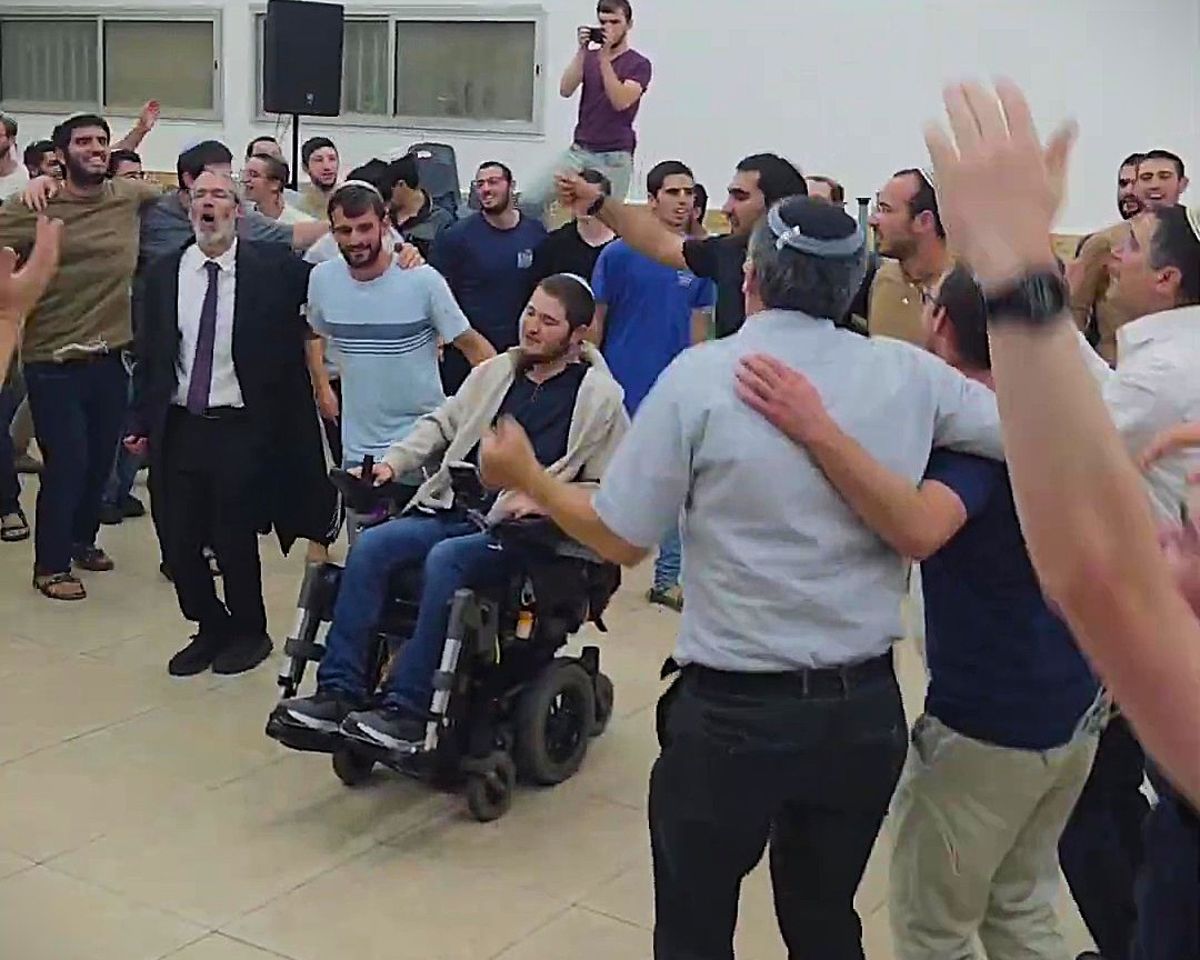
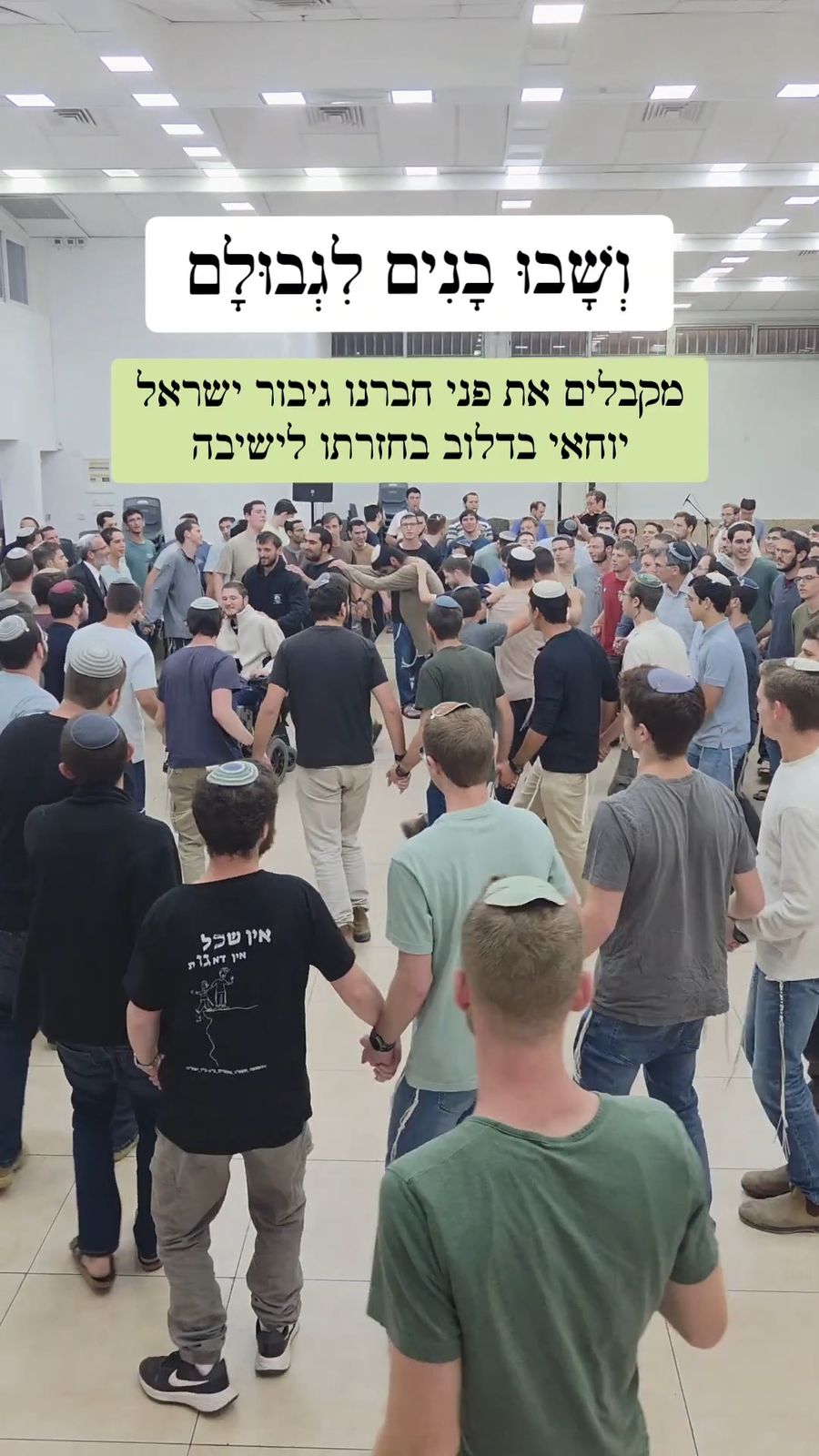
Welcoming Yochai Badalov back to the yeshiva
Welcoming Yochai Badalov back to the yeshiva (Photo: Yeshivat HaHesder Yerucham)

Back to the beis medrash

After the injury it became clear that Badalov had suffered spinal cord damage and was paralyzed from the neck down. He went through a prolonged period of hospitalization and rehabilitation, and for a long time was completely dependent on those around him. That transition, from a fighter and independent commander to someone who needed help with the most basic tasks, became one of his central lessons.

Badalov said that after a year of rehabilitation, he realized he could continue intensive therapy for years, because there is always more progress to be made. "If I stay another year in intensive rehab, I'll gain more abilities, and then I'll live the next hundred and twenty years better. But next year you can say the same thing, and the year after that," he said.

In the end, he decided that after two years he would return to yeshiva. "It was clear to me that I'm going back to yeshiva. I mean, I left yeshiva, I was wounded, I'm doing rehab, now I'm coming back." The return, he said, allowed him on one hand to leave the hospitals and the intensive rehabilitation, and on the other to arrive at a familiar place that gives him support.

Ready for more?

Join our newsletter to receive updates on new articles and exclusive content.

We respect your privacy and will never share your information.

Enjoyed this article?

Yes
No
Follow Us:

Unmissable content


Loading comments...

Also of Interest