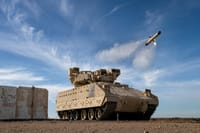
In March 2025, US Central Command released a video of a strike on a camouflaged Iranian missile launcher and the circle closed. Experts from the British defense intelligence firm Janes identified the struck truck as an Iveco model, of the type Iran imported in large quantities. It cannot be determined with certainty whether this was one of the trucks purchased through that agency, but the similarity dramatically demonstrates the possible military use of the "innocent" vehicles.
The trucks are only the tip of the iceberg. An entire sophisticated supply apparatus for the Iranian missile and drone industry lies behind the network of companies lies. In February 2025, less than three weeks before the current war broke out, a ship arrived at Bandar Abbas port carrying 93 tons of titanium from China, a strategic metal also used for manufacturing missile bodies and engine casings. The timing was not coincidental.
That same month, hundreds of tons of dangerous chemicals also arrived in Iran, including nitrocellulose and other materials used for manufacturing explosives and rocket fuel. Previous shipments included hundreds more tons of chemicals from China, including materials used for manufacturing solid rocket fuel, the building blocks of the Iranian missile industry.
One of these shipments was also linked to a severe disaster: between January and April 2025, 886 tons of chemicals from China were transferred to Bandar Abbas port. Three days after the last shipment, a fire broke out there that ended in a massive explosion on April 26. At least 70 people were killed and more than 1,200 injured. Two sources involved in the incident's details told Reuters the explosion was caused by ignition of sodium perchlorate in containers at the port.
Even after the war began, the blockade failed to sever the supply routes. While military imports dropped 47% in March, recovery was already recorded in May. In June, a shipment arrived from Russia containing explosives worth $1.9 million, part of a series of Russian shipments totaling $7.6 million since early 2025.
The most sophisticated part of the Iranian mechanism is actually in the financial realm. According to the shipping data examined by Reuters, 97% of the transactions involved no international currency transfer. Instead of transferring funds from Iran to suppliers, network operatives used money held in foreign bank accounts, including from revenues from illegal oil sales. Straw men and foreign companies purchased the equipment and shipped it to Iran, without the money needing to cross borders in a way that might arouse suspicion.
Some of the funds passed through Iran's Sepah Bank, which handles among other things salary and pension payments for Revolutionary Guards personnel. Examination of the accounts revealed that 36 of the agencies held foreign currency balances totaling $1.2 billion at the end of 2024, and the rest of the network had about $1.8 billion in local currency.
The network is linked to the Revolutionary Guards, to economic foundations controlled by regime cronies, and to senior officials involved in the missile and drone industry. Among other things, documents were exposed indicating fund transfers to finance Revolutionary Guards structures, including funds transferred through Defense Ministry agencies.
The documents indicate the goods did not come only from China and Russia. Hundreds of millions of dollars worth of trucks, aircraft engine components and advanced electronic equipment were recorded as imported from Germany and other European Union countries, even though the EU imposed sanctions on the Iranian Defense Ministry. The United Arab Emirates also appears in the import data: since the war broke out, goods worth $27 million passing through its ports were recorded.