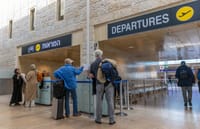
Ben Gurion Airport ground to a halt Thursday afternoon as baggage and passenger processing systems hit full capacity, forcing authorities to stop all incoming flights. Transport Minister Miri Regev didn't wait long to respond. "I have instructed the Israel Airports Authority management to immediately petition the labor court against the workers' committee to force them to stop this thuggish and illegal strike," her office announced. "Whoever made the decision to take tens of thousands of Israeli citizens hostage will pay a heavy price."
The breakdown hit during one of the year's busiest travel days. Check-in counters received orders to stop processing arrivals. Service desks shut down. Baggage intake froze. More than 100,000 passengers and over 600 scheduled flights got caught in the chaos—hours-long waits at security, luggage piling up in the arrivals hall, aircraft sitting on the tarmac unable to offload.
As congestion mounted, airport operations officially declared a crisis event. The baggage sorting channel was maxed out, planes that had landed had their unloading stopped, luggage stuck on the tarmac with no way to move it. Ground crews and counter staff were left dealing with angry, frustrated passengers while stuck aircraft created a domino effect of delays for incoming flights.
Reports indicated that pilots had been asked not to come to the airport, if they had not yet left, in order to prevent a situation where their permitted working hours would begin being counted while they are waiting.
In addition, an Air France plane that was on its way to Israel reportedly turned back to France. Another 81 flights were expected to turn around and head back as well.
The Israel Airports Authority pinned the blame squarely on the workers' committee, calling the disruptions deliberate sabotage. Management demanded an immediate return to work and said they'd go to labor court if it didn't happen.
The Histadrut labor federation shot back, rejecting the "wildcat strike" label. The Transport Workers Union said this was a predictable collapse from chronic staff shortages, poor summer planning, and worker burnout—people working hundreds of overtime hours monthly to cover management's failures.
The staffing crisis isn't new. Ground sources have been warning for months about roughly 400 missing workers in sorting and transport operations. There's a toxic employment model at the airports authority: temporary workers get fired each winter to prevent them from getting permanent status, which kills turnover and makes workers reluctant to come back in summer. Back in June, workers' committee chairman Pinchas Idan flagged the problem with senior officials after about 250 temp workers got dismissed. He warned the system wouldn't handle August traffic. Thursday proved him right.