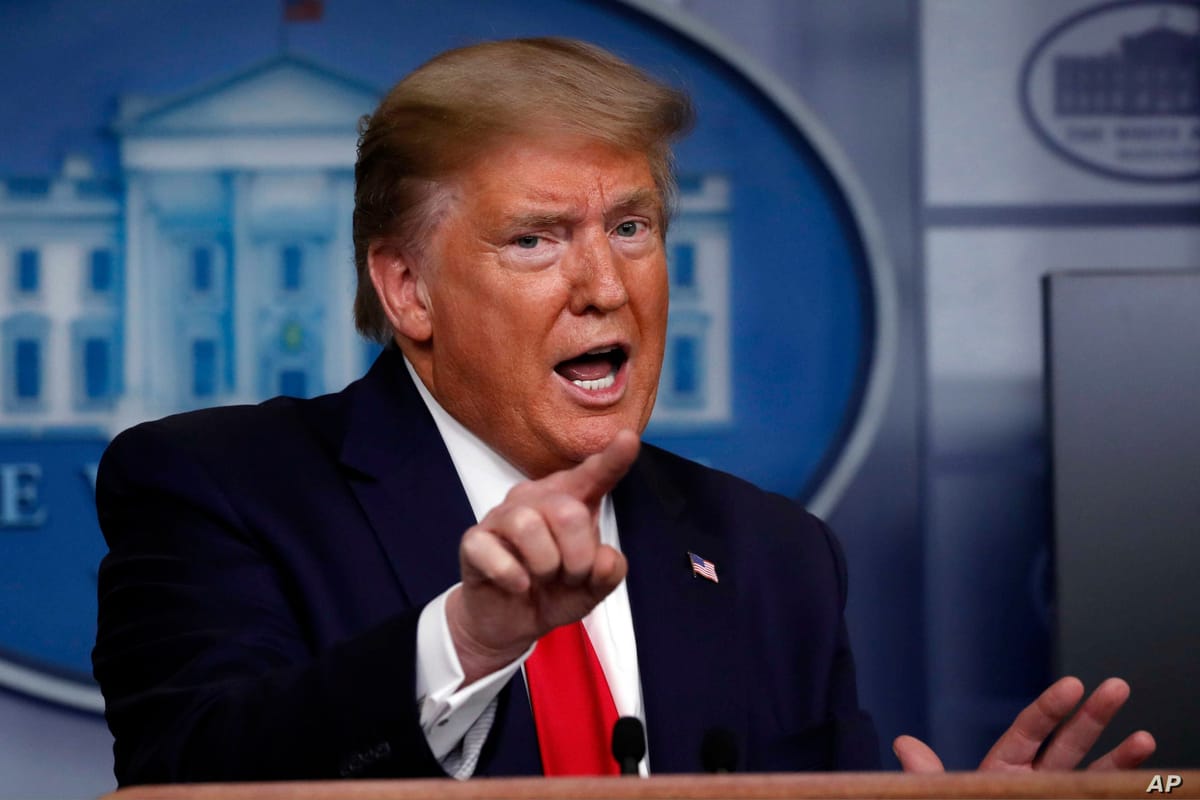
President Donald Trump announced the opening of an unprecedented economic campaign against Iran on Wednesday, threatening punitive measures against any country or institution that continues helping or trading with Tehran.
In a Truth Social post, Trump described the new campaign as “ECONOMIC D-DAY” and called it the “most crushing economic operation ever” directed against a foreign country.
Trump claimed that Iran’s military infrastructure has been reduced to rubble and that its currency has become nearly worthless. The president said the next stage would target the foreign networks keeping the Iranian economy alive.
According to Trump, “severe economic consequences” will be imposed on any country that permits its financial institutions, businesses, airports or government agencies to provide Iran with economic assistance.
The White House has not yet published the full list of sanctions or enforcement measures expected under the campaign. However, the announcement suggests that Washington intends to move beyond restrictions on Iranian entities and impose secondary penalties on foreign governments and companies trading with Tehran.
Such a policy could place significant pressure on China, which remains one of the principal destinations for Iranian crude oil. It could also affect transportation companies, banks, insurers and ports involved in facilitating Iranian trade.
The announcement comes amid indications that the Trump administration is shifting from an effort to defeat Iran rapidly through military pressure toward a longer campaign intended to isolate and economically exhaust the regime. CNN reported that administration officials have described the emerging strategy as an attempt to “strangle” Iran over time.
Iranian officials responded defiantly. Parliament Speaker Mohammad Bagher Ghalibaf mocked senior members of the Trump administration and argued that further pressure would not force Tehran to make concessions.
Iran’s armed forces also warned Gulf states against assisting American military operations. Iranian Chief of Staff Ali Abdollahi said that providing logistical support or facilities to U.S. forces would be considered participation in the American campaign.
The warning followed reports of an increased American military presence across the region, including refueling aircraft and other assets positioned to support operations against Iran.
Meanwhile, the United Arab Emirates announced an immediate severance of economic ties with Tehran following what Emirati authorities described as an attempted Iranian missile attack.
UAE officials said two ballistic missiles were detected approaching Emirati territory from Iran. Neither missile caused casualties or significant damage. Tehran denied launching the missiles, but the incident triggered emergency alerts and further damaged relations between the two countries.
The confrontation is also continuing in the Strait of Hormuz, where Iranian attacks and threats have disrupted international shipping.
Data from the maritime intelligence company Kpler suggests that the U.S. Navy is gradually weakening Iran’s control over the strategic passage. According to figures cited by CNN, more than 80 percent of liquid cargo movements through the strait during the previous two weeks either used the Omani shipping route or traveled without transmitting location data, likely while using the same route.
The Omani channel operates under international authorization and is strongly opposed by Tehran, which claims considerable authority over navigation through the strait.
Despite the apparent American gains, commercial shipping companies remain reluctant to return to normal operations. The possibility of Iranian attacks continues to threaten vessels, cargo and crews traveling through one of the world’s most important energy corridors.