Ironic Legal Twist

Criminal Case May Help Yeshiva Deserter

Moshe Steiner was transferred to military authorities after questioning in a driver's license fraud case. Legal experts say the pending criminal investigation could delay or even exempt him from IDF service.

Jail 10

An unusual legal development has emerged in the case of Moshe Steiner, a 21-year-old yeshiva student from Bnei Brak who was transferred from Israel's national fraud unit to military police custody this week.

Steiner, a relative of Rabbi Eliezer Yehuda Finkel who heads the Mir Yeshiva, was summoned for questioning by Lahav 433—Israel's serious crimes investigation unit—regarding suspected involvement in a driver's license fraud scheme. According to investigators, he allegedly served as an intermediary, connecting individuals seeking licenses with others who would take the practical driving test in their place, enabling people to obtain licenses without personally passing the exam.

While at the Lahav 433 facility on Monday, authorities discovered Steiner was wanted by military police for desertion. He was subsequently transferred to military custody and taken to military prison for a 20-day detention.
The irony of the situation has not been lost on legal observers: the very criminal investigation that brought Steiner into police custody may now work in his favor regarding military service.

Under Israeli military regulations, an open criminal case—particularly one that has progressed to formal police investigation and potentially to indictment or court proceedings—can affect draft proceedings. In cases where criminal proceedings are underway against a potential conscript, the IDF may delay induction processes. In certain circumstances, the military may even grant an exemption from service on criminal grounds.

This means that while police transferred Steiner to military authorities due to his deserter status, the fraud investigation that initially brought him to Lahav 433 could ultimately help him delay his draft or potentially secure an exemption from service altogether.

The arrest has sparked controversy within haredi (ultra-Orthodox) communities, with some claiming police had previously committed not to transfer yeshiva students to military authorities when they came to police stations for civilian criminal matters. Police rejected these claims, telling Kikar Hashabat: "The suspect was summoned for questioning under caution at Lahav 433 regarding serious criminal offenses. When it became known that he was wanted by military police, a report was filed as customary and required. Any other publication is false and intended to strengthen a tendentious and false narrative."

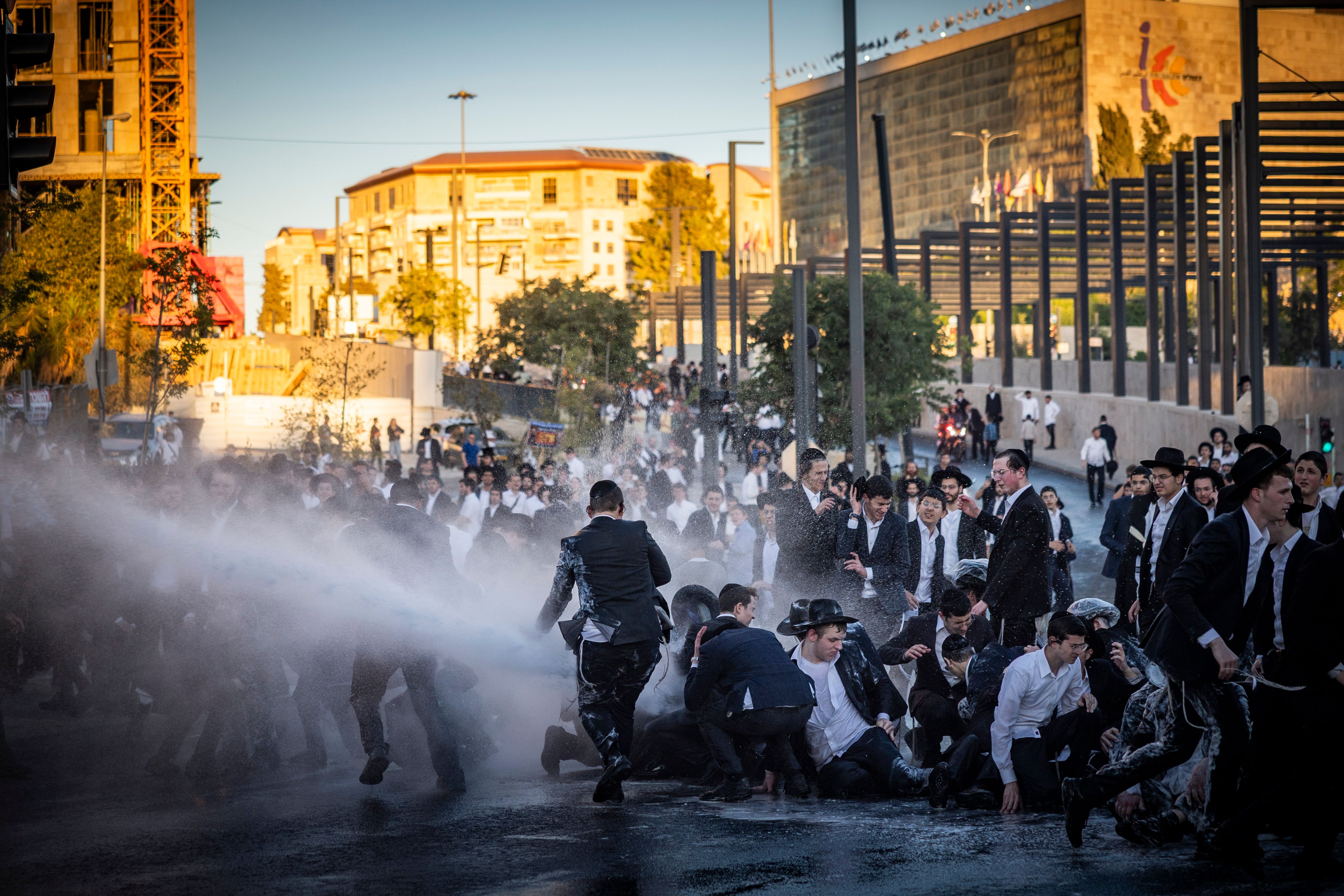
Peleg Yerushalmi demonstrates against the draft
Peleg Yerushalmi demonstrates against the draft (צילום: Yonatan Sindel/Flash90)

In response to the arrest, the Peleg Yerushalmi faction—led by Rabbi Tzvi Friedman—has called for a demonstration today at 5:15 PM at the entrance to Bnei Brak. Under the slogan "shake the world," protesters plan to demonstrate against Steiner's transfer to military police. Organized transportation to the protest is departing from haredi areas including Jerusalem, Ashdod, Modiin Illit, and Beit Shemesh.

Steiner's arrest comes after a relatively quiet period regarding yeshiva student detentions. Despite concerns about a wave of arrests during the recent "bein hazmanim" (intersession break), when yeshiva students are outside their study halls and traveling around the country, the break passed almost entirely without arrests. Steiner is the first arrested during this period, just days before the start of the Elul semester.

Currently, only about 20 yeshiva students and married scholars are being held in military prison—the lowest number in recent months. In previous periods, the number of detainees exceeded 40 and at its peak stood at more than 50.

Those involved in the issue attribute the decline partly to increased awareness among yeshiva students to avoid going to military recruitment offices to "regularize status" when classified as draft evaders, as well as to a more lenient period regarding exemption approvals. However, the temporary order law designed to freeze arrests remains under sharp legal criticism, with the Knesset legal adviser determining that the law was enacted through a flawed process contrary to Knesset regulations and Basic Law.

Ready for more?

Join our newsletter to receive updates on new articles and exclusive content.

We respect your privacy and will never share your information.

Enjoyed this article?

Yes (33)
No (1)
Follow Us:

Unmissable content


Loading comments...

Also of Interest