Get our mobile app
Download on the App StoreGet it on Google Play

New corridor through Sinai

Egypt's 500km Sinai rail reaches Israel

Cairo pushes ahead with massive infrastructure project linking Suez Canal to Taba, metres from Eilat, a move Israeli security officials are watching closely

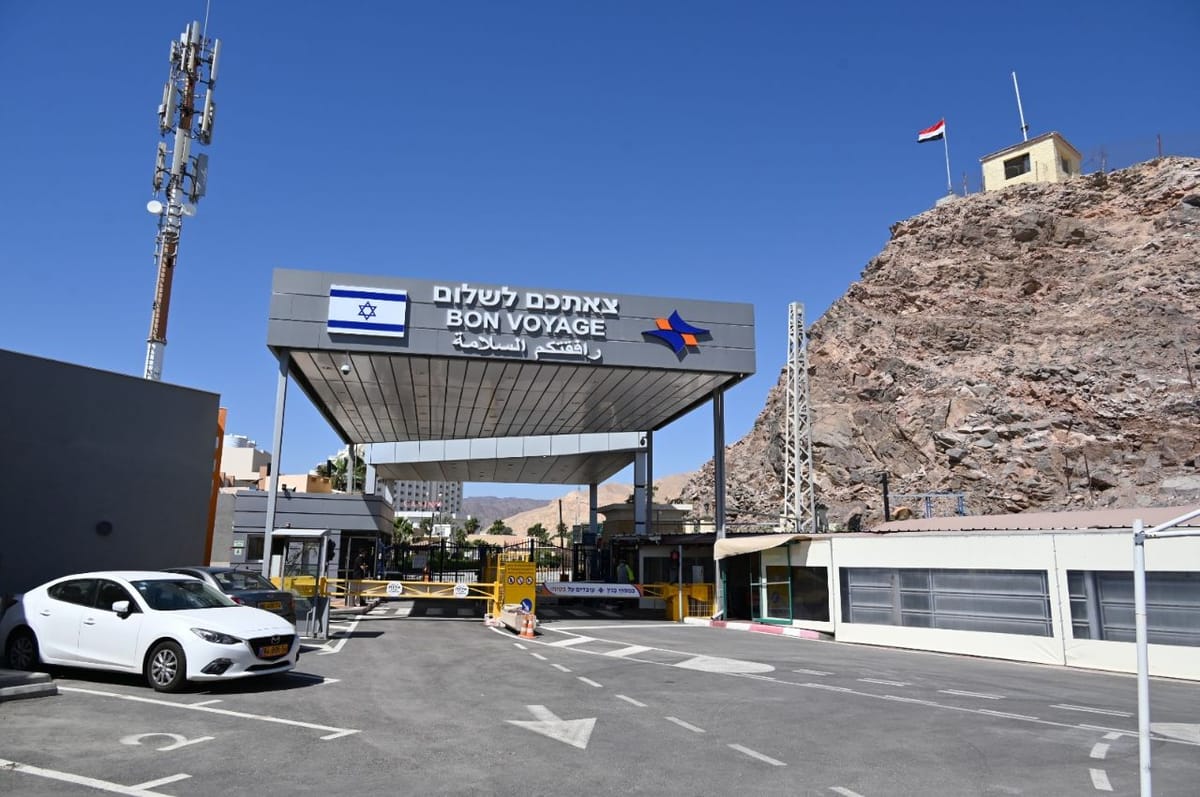
Taba border crossing

Egypt is advancing one of the most ambitious infrastructure projects in the Middle East: a railway line stretching roughly 500 kilometres from the al-Ferdān Bridge over the Suez Canal to Taba, within touching distance of Eilat.

The project, known as the "al-Arish–Taba" international logistics corridor, is designed to link the Mediterranean to the Red Sea overland, inject economic life into the desert interior and strengthen Egyptian sovereignty in the region. Transport Minister Kamel al-Wazir is leading the work under the direct supervision of the prime minister and according to instructions from President Abdel Fattah el-Sisi.


The ambitious undertaking begins at the al-Ferdān Bridge, the world's longest swing bridge, which crosses the Suez Canal. After some 50 to 57 years of disuse following the 1967 and Yom Kippur wars, the 100-kilometre stretch to Bir al-Abed has already returned to full operation: freight trains began running in summer 2024, and passenger services joined them in the autumn.

The next phase, covering 83 kilometres from Bir al-Abed to al-Arish, is now underway with dozens of Egyptian firms building embankments, bridges, tunnels and seven new stations that will serve villages, Sinai University and the international airport. At the same time, a 12-kilometre spur is being laid directly to the port of al-Arish, which is undergoing a massive expansion.

From there, the line will continue south through Hasana and Wadi in the heavy industry and mining zones, all the way to Ras al-Naqab and Taba, another 260 kilometres.

Strategy and security

For the Egyptian government, this project is a first-tier strategic tool. A single train can move enormous volumes of cargo, equipment and people quickly and at far lower cost than convoys of lorries across desert roads.

Following the bitter fight against an Islamic State affiliate in northern Sinai, Cairo came to understand that a civilian vacuum breeds a terror incubator. The railway is therefore intended to help settle millions of Egyptians, develop new cities, connect Bedouin tribes to the national economy and establish centres of industry, mining and agriculture.

The corridor may also serve as an alternative or backup to the Suez Canal for certain types of cargo, and in doing so compete with longstanding Israeli initiatives for a rail link between Eilat and Ashdod or Haifa.

Murals uncovered during the project
Murals uncovered during the project (Photo: Egyptian Ministry of Tourism and Antiquities)

The railway's arrival at Taba is expected to transform access for Egyptian domestic tourism into the Sinai interior. Connecting Sinai to the national Egyptian network, which is currently undergoing a high-speed rail revolution, may in the distant future open the door to broader regional links.

Though the project is explicitly civilian and economic, Israeli security officials understand full well that infrastructure of this kind, capable of moving military logistics at high speed, changes the entire regional equation.

Work is proceeding around the clock under Transport Minister Kamel al-Wazir, with direct oversight from the prime minister and according to the precise instructions of President Abdel Fattah el-Sisi.

Ready for more?

Join our newsletter to receive updates on new articles and exclusive content.

We respect your privacy and will never share your information.

Enjoyed this article?

Yes
No
Follow Us:

Unmissable content


Loading comments...

Also of Interest