
Get our mobile app
Download on the App StoreGet it on Google Play

Economic Warfare

Iran Threatens Neighbors' Airports

Tehran's national security chief warns regional states against cooperating with American sanctions targeting Iranian aviation, as 80-90% of Iran's international flights already grounded

Qatar-Turkey military exercise
Joint Qatari-Turkish forces exercise
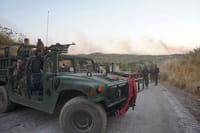
Joint Qatari-Turkish forces exercise (Photo: State of Qatar Ministry of Defense)

As Washington tightens its economic stranglehold on Iran and threatens to cut off any entity that aids the Tehran regime from the global financial system, Iran is issuing an explicit threat to its neighbors: countries that cooperate with the United States and ground Iranian flights will find their own airports unable to operate.

Mohsen Rezaei, secretary of Iran's Supreme National Security Council, stated in an interview with Iranian state television (IRIB) that "if neighboring countries cooperate with the United States and stop Iranian flights, their airports will also be unable to operate." The message was unambiguous: Tehran will not sit idly by while its neighbors submit to what Rezaei called "American adventurism."

Rezaei's threat comes in response to an aggressive American move announced by U.S. Treasury Secretary Scott Bessent: beginning September 23, any company or country that provides fuel, ground services, landing rights, or tickets to Iranian airlines will be financially blacklisted and immediately cut off from the dollar system and the American financial network. The operation, dubbed "Economic Outcast," has already proven effective on the ground: American officials report that between 80 and 90 percent of all Iranian international flights have been completely shut down.


American pressure is already showing results in the field. Flights from Tehran to Baghdad and Muscat have been canceled after destination countries refused to take risks with Washington. Meanwhile, Azerbaijan and Georgia have also announced suspensions, and reports indicate severe disruptions on routes to Turkey, Qatar, and other destinations.

Neighboring countries, including the United Arab Emirates, Saudi Arabia, Iraq, Oman, and others, find themselves wondering whether to submit to U.S. sanctions and face Tehran's wrath, or continue risking loss of access to the global banking system.

Rezaei avoided precise tactical details of the threat, but Western security establishments understand well what the regime intends. Lacking conventional air capability, Iran's response is expected to be asymmetric: cyber attacks on flight control systems and airports in the Persian Gulf, or use of proxies for direct strikes on civilian aviation infrastructure owned by U.S. allies in the region.

The current confrontation has long since exceeded the boundaries of the military battlefield, becoming a chokehold war over energy routes, air corridors, and commerce in the Middle East. The central question that remains open is whether Rezaei's threats will succeed in deterring the neighbors, or whether the American stranglehold will drag the entire region into an uncontrolled escalation.

Ready for more?

Join our newsletter to receive updates on new articles and exclusive content.

We respect your privacy and will never share your information.

Enjoyed this article?

Yes
No
Follow Us:

Unmissable content


Loading comments...

Also of Interest