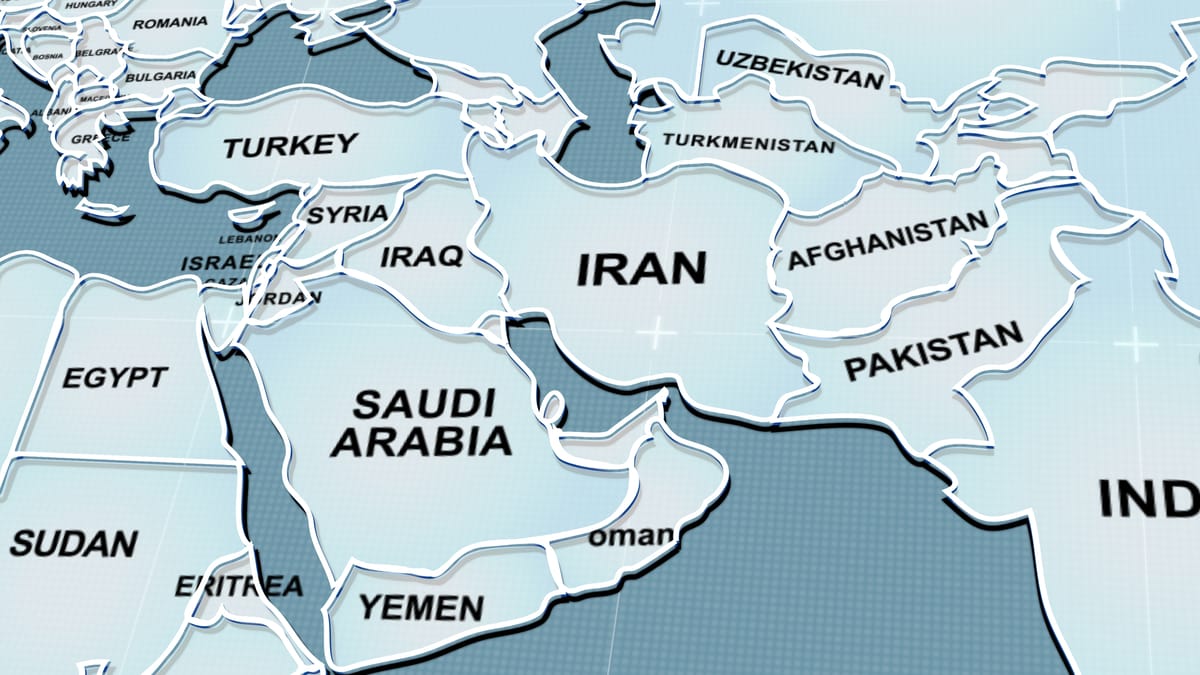
Saudi Arabia, Pakistan, and Turkey signed a defense agreement in Mecca on August 7 that establishes collective deterrence equivalent to NATO's Article 5 mutual defense principle, treating an armed attack on any member as an attack on all. The accord marks a structural shift in Middle Eastern security architecture and signals that regional powers are constructing alternatives to traditional American military guarantees.
Turkish Foreign Minister Hakan Fidan confirmed that Egypt could join the pact once certain technical matters are resolved, and that the alliance will establish a ministerial committee similar to NATO's structure, with a general secretariat based in Saudi Arabia. Egyptian participation would anchor the agreement with control of the Suez Canal and Africa's largest regional military, fundamentally altering the security balance.
The agreement comes as Iran tensions simmer and the Trump administration's political capacity to sustain regional commitments deteriorates. The pact was signed as Saudi Arabia faces escalating attacks from Yemen's Iran-backed Houthi rebels, and as U.S. Chairman of the Joint Chiefs Gen. Dan Caine has privately signaled that the military options on the table to escalate the Iran conflict could backfire.
Turkish officials framed the alliance as defensive and geographically open. Fidan stated that the agreement is based on collective deterrence and includes cooperation in security, defense, joint defense industry projects, and counterterrorism, adding that the accord is not targeting Iran. He emphasized that cooperation on Red Sea security navigation is a core component, directly addressing the maritime chokepoint disruptions caused by Houthi attacks and Iranian strategy.
The political subtext is sharp: Turkey emphasized that the defense agreement does not contradict its NATO commitments, yet the parallel structure—ministerial committee, general secretariat, mutual defense trigger—explicitly models NATO's institutional architecture. The move reflects what Turkish leadership views as necessary autonomy from American security umbrellas that may not reliably activate under a weakened Trump administration.
Iranian reaction was swift. A senior Iranian official warned that Saudi Arabia's new pact with Turkey and Pakistan would not guarantee the kingdom's security, arguing that "decades of one-sided dependence on the Americans failed to do so" and urging Saudi Arabia to "change your policies so you don't have to beg others for security."
For Israel's strategic calculus, the agreement presents complications. The alliance does not include Israel, yet it reshapes the regional security map in which Israeli operations occur. An expanded Mecca framework including Egypt would create a formal collective defense structure encompassing the Suez Canal, Turkey's military capacity, Pakistan's nuclear weapons, and Saudi Arabia's regional influence—a configuration that forces Israeli planners to account for potential multi-front deterrence even as a U.S. security umbrella weakens.
The alliance is also, implicitly, a statement about trust. Saudi Arabia has had mutual defense agreements with Pakistan since September 2025 and with GCC states since 2000, yet in practice none have triggered Article 5-style responses. The establishment of NATO-equivalent institutional structures suggests the three powers intend to make this agreement functionally real—a test of collective will that transcends previous paper arrangements.
The timing is strategic. As Washington negotiates ceasefire terms with Iran while simultaneously maintaining maximum military reinforcement in Israel, regional powers are signaling that they are constructing their own security architecture independent of American decision-making. Whether that architecture stabilizes or fractures the region depends on whether Iran's leadership views it as reassurance or provocation.