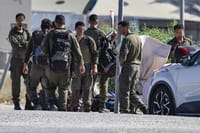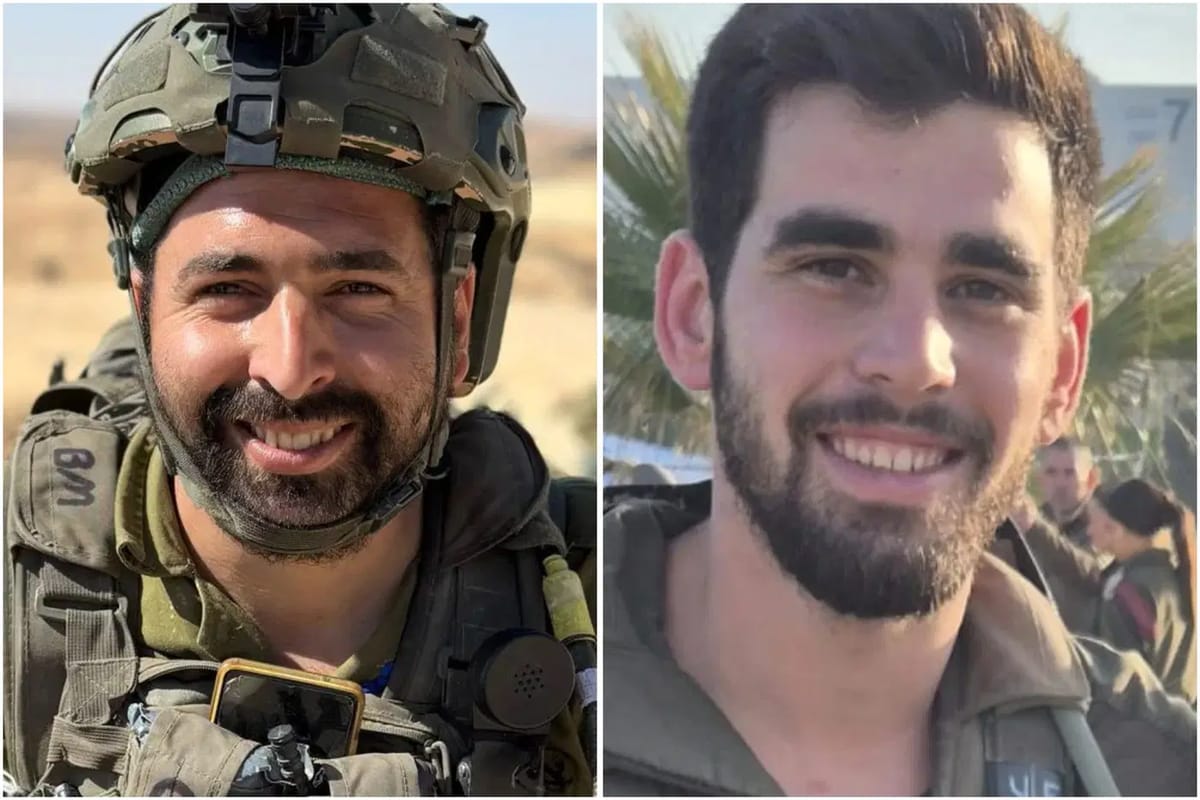
An investigation into a chaotic July 24 clash in the Judea and Samaria village of Kfar Tel—in which a Palestinian assailant seized a weapon and fatally shot two Israeli soldiers—has exposed significant procedural breakdowns in how the Israeli military responds to security threats in occupied territory, according to findings presented this week to IDF Chief of Staff Lieutenant General Eyal Zamir.
The incident left Major Yuval Ezra, 27, an artillery battery commander, and Captain Benayahu Mellet, 32, a civilian defense coordinator, dead, along with four Palestinians. It also raised an uncomfortable question that investigators could not definitively answer: whether one of the Israeli casualties was killed by Palestinian gunfire or by Israeli return fire aimed at neutralizing the attackers.
The investigation, conducted by Central Command and presented to military leadership on Tuesday, identified a cascade of failures that military officials acknowledge should never have occurred. An unauthorized hiking tour proceeded through Palestinian territory without military coordination. The responding force was too small for the scale of violence. And a wounded soldier lay on the ground for an extended period without military protection while receiving treatment from a civilian medic—a lapse that military officials said violated fundamental IDF protocol requiring protection of all Israeli civilians.
Yet the investigation also documented acts of individual bravery that, military officials said, likely prevented far greater loss of life. Major Ezra charged at the gunman, engaged him at close range, and killed him before being fatally shot himself. The findings paint a picture of tactical heroism undermined by institutional missteps—a pattern that underscores persistent tensions in how Israel manages security across Judea and Samaria, where thousands of Israeli settlers live among millions of Palestinians.
"This was a grave incident with profound implications," a summary of the investigation findings stated, according to documents reviewed by The Washington Post. "Both courage and systemic failure were present."
The clash illuminates the precarious situation along Israel's fractious borders. Dozens of hiking tours traverse Judea and Samaria territory weekly. Military coordination procedures exist to prevent precisely the kind of uncontrolled encounter that unfolded on July 24. Yet enforcement remains inconsistent, and the consequences of lapses can be fatal.
An Uncoordinated Expedition
The investigation traced the catastrophe to a fundamental procedural failure: the hiking group departed from the settlement of Har Brecha at 5:30 a.m. without informing or receiving authorization from IDF security forces, despite requirements to do so.
Hours before departure, military officials in the Samaria Brigade had received preliminary intelligence about a potential tour in the area. "Efforts were made to obtain details about the hike," the investigation noted, but those efforts failed. No one in the hiking party coordinated with military command.
The group, consisting of settlers of various ages, proceeded along a route that traversed both Area B (jointly controlled Israeli-Palestinian territory) and Area A (Palestinian-controlled territory under the Oslo Accords). No IDF personnel knew they were coming. No military escort had been arranged.
By 7:27 a.m., the situation had spiraled into violence. IDF observation posts detected what they described as a confrontation between the hikers and Palestinians near Kfar Tel's mosque. Then came word that rocks were being thrown at the Israeli civilians.
The Gunman and the Weapon
What happened next, investigators found, was a rapid escalation triggered by access to a firearm. Two Palestinians confronted Benayahu Mellet, the armed civilian security coordinator from the nearby settlement of Havat Gilad, who raised his weapon to threaten them. One Palestinian, identified as Farouq Ramadan, seized the rifle and opened fire.
Mellet was fatally shot. Major Ezra, who had been dispatched to the scene, charged at the gunman, engaged him at close range, and killed him before being fatally shot himself during the confrontation.
But Ezra's death from enemy fire was clear. Mellet's was not.
"It is not possible to determine conclusively the cause of Captain Mellet's death," the investigation concluded. "He may have been killed either by terrorist gunfire or by incidental fire aimed at neutralizing the terrorists. The matter was examined during the investigation, but no definitive conclusion was reached."
The possibility of friendly fire—that Mellet may have been struck by Israeli return fire directed at the Palestinian gunman—represents one of the investigation's most troubling findings. That ambiguity remains unresolved despite extensive inquiry.
Clear Orders, Muddled Execution
Despite the procedural failures, the investigation determined that the rules of engagement issued to responding forces were explicit and appropriate. "Fire orders were clear," the military concluded, and they "enabled forces to open fire to remove the threat as required."
The problem was not authorization to use force. It was the adequacy of the force deployed and the coordination of its response.
A Force Too Small
The investigation also documented what officials describe as a critical imbalance in military response. The initial force that arrived on scene was, by the IDF's own assessment, too small relative to the number of attackers, the scale of the violence, and the number of civilians at risk.
Reinforcements eventually arrived. A platoon commander who was stationed nearby opened fire, killing the Palestinian gunman and three others, and wounding additional attackers. Two of the wounded Palestinians were later arrested at a Nablus hospital, where they had been taken by Palestinian ambulance services.
But the investigation noted that "other forces in the area did not operate in an optimal manner to construct a complete situational picture, deploy additional units, and activate medical teams as required."
The Evacuation Question
Perhaps most damaging to the IDF's institutional standing was what the investigation found about the evacuation of the wounded.
According to the findings, Captain Mellet remained on the ground for an extended period—investigators used the phrase "many minutes"—without military presence while being treated by a civilian medic. This represented, the investigation concluded, a serious breach of protocol inconsistent with IDF values that prioritize the protection and security of all Israeli civilians.
The lapse occurred during active combat conditions, when IDF resources were stretched thin responding to the initial assault. Still, military investigators said it should not have happened.
"This constitutes a failure that does not align with the ethical and professional obligations that establish civilian protection as paramount," the investigation stated, according to a summary reviewed by The Washington Post.
IDF Chief of Staff Zamir "noted to the negative assessment" the delayed evacuation when presenting findings to his office, indicating dissatisfaction with how that aspect of the response unfolded. The implications are stark: in the confusion of the moment, with Major Ezra being evacuated first, Captain Mellet—shot and bleeding—was left to fend for himself with only civilian aid, vulnerable to further attack or complications from his wounds.
Implications and Lessons
The investigation has prompted military officials to reconsider how the IDF enforces coordination requirements for civilian movement through sensitive territory. Central Command chief Major General Avi Bluth told the chief of staff that incidents involving confrontations at village edges and open areas are occurring with increasing frequency, requiring the military to better anticipate and prepare for such scenarios.
The IDF said it would distribute new guidance to all residents of settlements requiring coordination before any tours or civilian movements through Judea and Samaria territory. The military also indicated it would review procedures for medical evacuation under fire and ensure adequate force sizing for anticipated threat levels.
Investigators recommended that the IDF strengthen intelligence collection capabilities to better identify emerging security threats and that military commands accelerate deployment of reinforcements when initial force assessments prove inadequate.
Yet as the investigation makes clear, procedural improvements alone may not eliminate the underlying risk. The July 24 incident occurred in a region where thousands of Israeli settlers live in close proximity to hundreds of thousands of Palestinians, with security protocols frequently tested by proximity and circumstance.
"This was a grave incident," the military summary concluded, "that demands learning at every level—tactical, operational, and institutional."
The investigation has been adopted by Chief of Staff Zamir, who directed immediate implementation of the findings. Major Ezra, killed in action, was posthumously honored. Captain Mellet was promoted to the rank of captain in recognition of his actions, leaving behind a wife and two daughters.