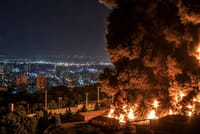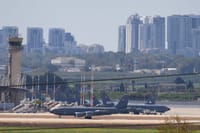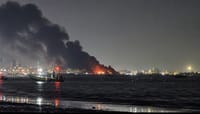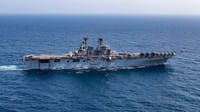
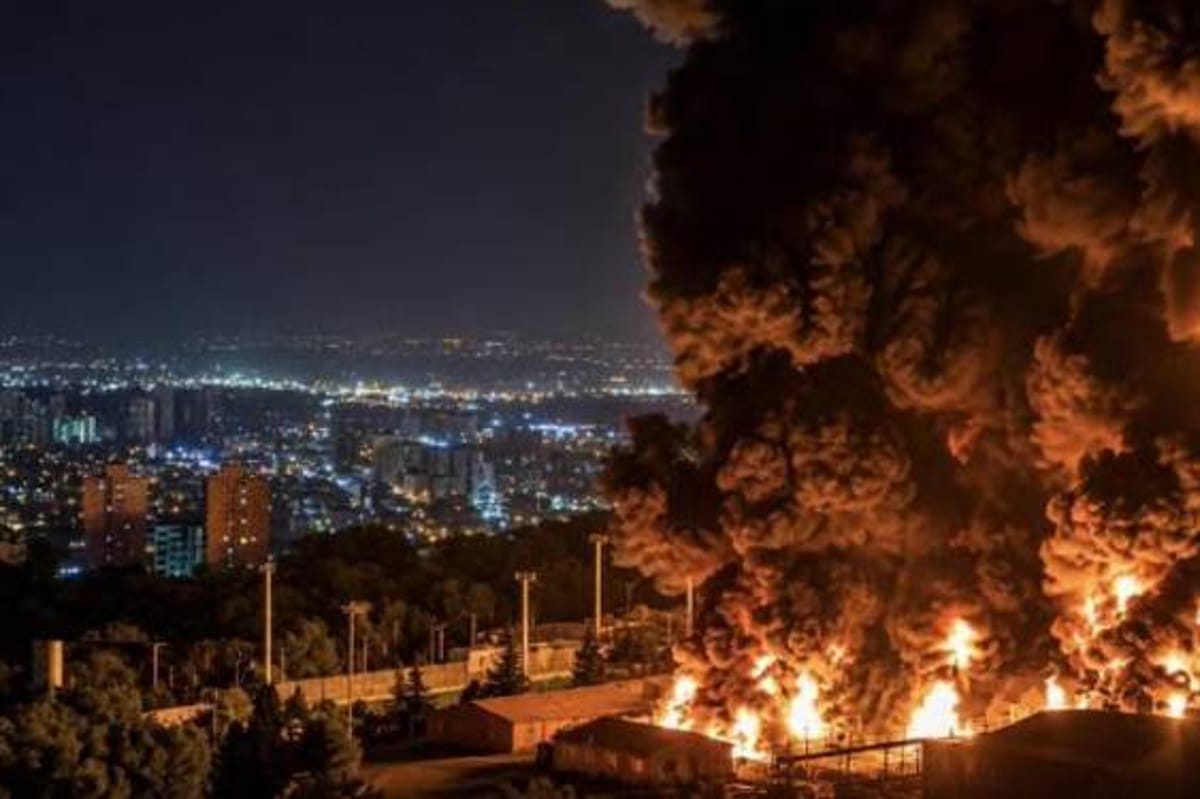
According to multiple regional reports, air raid sirens sounded across Bahrain, Kuwait and Qatar as Iranian missiles targeted U.S. military facilities, including Al Udeid Air Base in Qatar, Ali Al Salem Air Base in Kuwait, and military installations in Bahrain. Gulf states said their air defenses were activated to intercept incoming threats.
The Iranian attacks came just hours after the United States carried out another round of strikes against Iranian military infrastructure, reportedly targeting Revolutionary Guard naval bases, coastal radar systems, anti-ship missile batteries and air defense sites near the Strait of Hormuz.
President Donald Trump confirmed that the U.S. operation was retaliation for recent Iranian attacks on commercial shipping in the Gulf.
"This is in retribution for yesterday's bombing of ships by Iran. If it happens again, it will get much worse," Trump wrote on Truth Social.
During remarks at the NATO summit, Trump also warned that additional military action could follow if Iran continues its attacks, while insisting that Washington's objective remains preventing Iran from obtaining nuclear weapons rather than pursuing regime change.
Iran Threatens Further Escalation
Iranian officials accused Washington of violating the recent Memorandum of Understanding that had reduced hostilities between the two countries. Tehran announced that negotiations with the United States have been suspended and warned that any further American attacks would receive a significantly stronger response.
Iran also renewed threats regarding the Strait of Hormuz, declaring that it would continue asserting control over the strategic waterway and warning that the United States could lose both freedom of navigation and any remaining diplomatic channel if the conflict intensifies.
Oil Prices Surge
The renewed fighting immediately shook global energy markets.
Brent crude climbed above $80 per barrel, while traders increasingly priced in the risk of further disruptions to shipping through the Strait of Hormuz, one of the world's most important energy corridors.
Shipping insurers and maritime security firms also warned that continued attacks on commercial vessels could significantly delay any return to normal traffic through the Gulf.
Regional Tensions Continue to Rise
The latest exchange represents one of the most serious escalations since the ceasefire reached earlier this year. With both Washington and Tehran signaling they are prepared to continue military operations, fears are growing that the conflict could expand beyond Iran and draw additional regional actors into the confrontation.