Get our mobile app
Download on the App StoreGet it on Google Play

$25 Billion Arms Deal

Israel's Demands for Saudi F-35 Deal

Washington notifies Jerusalem of planned $25 billion sale of stealth fighters to Riyadh. Israel's security establishment responds with sweeping list of advanced weapons, space technology, and future interceptor systems.

F-35 stealth fighters
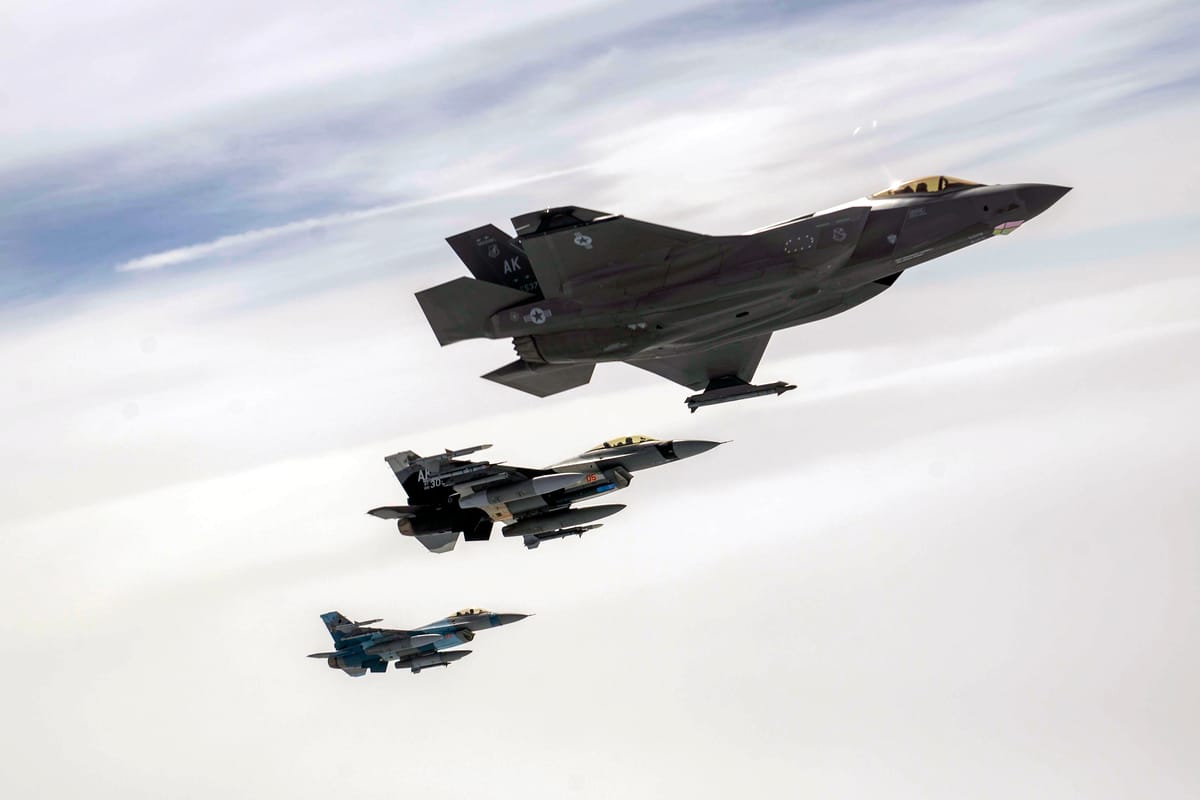
U.S. fighter jets
U.S. fighter jets (Photo: U.S. Army CENTCOM)

Washington has formally notified the Prime Minister's Office of its intention to execute one of the largest arms deals in history, the sale of approximately 48 advanced F-35 stealth fighters to Saudi Arabia for roughly $25 billion. According to initial reports from Walla and The Jerusalem Post, Jerusalem has no intention of letting the move pass quietly and has compiled a pointed list of compensation demands that will force the Pentagon to fall in line.

The deal, which now requires approval from the U.S. Congress within a roughly 30-day window, breaks all policy precedents. While actual delivery to the Saudis remains at least five years away, Israel is already presenting an unprecedented table of security demands that Washington has until now rejected outright.


Israel's security establishment is demanding advanced "bunker-buster" munitions for penetrating fortified underground structures, full partnership in future development and production of Arrow 4 and Arrow 5 interceptors with direct American participation, and accelerated integration into classified space and satellite projects.

Israel is also seeking access to autonomous strike systems based on artificial intelligence and drone swarm management, alongside research cooperation in sensitive military technologies. While the U.S. administration attempts to reassure by claiming the move "will not change the balance of power," senior defense officials make clear that Israel's true operational advantage rests first and foremost on human quality, but extensive technological backing is a non-negotiable condition for any acceptance of the dangerous move.

The planned deal joins a troubling regional trend. In recent years, military ties between Egypt and China have deepened, with Cairo purchasing advanced Chinese fighter jets and even conducting joint exercises with the Chinese air force. According to foreign reports, Israel is working behind the scenes to convince the White House to approve F-15 sales to Egypt, aiming to prevent permanent Chinese military presence on its western border.

The Saudi move unfolds against a backdrop of ongoing regional tensions. The Houthis in Yemen, backed by Iran, recently carried out extensive strikes on the Saudi capital Riyadh and even succeeded in downing a Saudi F-15 fighter jet using a surface-to-air missile. President Donald Trump canceled a planned military strike against the Houthis at the last moment, with American fighter jets already armed on the runways.

Germany, which recently joined the F-35 operators club with an order for 35 aircraft, demonstrates the growing appeal of the advanced stealth fighter. The first F-35A designated for the Luftwaffe took its maiden flight over Texas as part of the German air force's strengthening process.

The Saudi deal is expected to be debated in the U.S. Congress in coming weeks, as Israel continues to apply heavy pressure on the Washington administration. The central question is whether the Pentagon will agree to Israel's exceptional demands, or whether the deal will advance without meaningful compensation for Jerusalem's security establishment.

Ready for more?

Join our newsletter to receive updates on new articles and exclusive content.

We respect your privacy and will never share your information.

Enjoyed this article?

Yes (100%)
No (0%)
Follow Us:

Unmissable content


Loading comments...

Also of Interest