Israeli defense officials oppose any move that would erode the IDF's qualitative military edge in the Middle East, but Israel has made no public objection. The State Department approved the $24.3 billion sale on Thursday, leaving the deal to a 30-day congressional review.
Israeli defense officials oppose breaking the IDF's qualitative military edge in the Middle East and believe the sale of F-35 fighter jets to Saudi Arabia could do exactly that. For now, official Israel is keeping silent and has voiced no public objection to the move.
In the past, the American administration linked the sale of advanced weaponry to Saudi Arabia to progress in the normalization process with Israel. On Thursday, however, the State Department announced its approval of the deal, which now depends on the continuation of the approval process in Congress.
What the deal includes
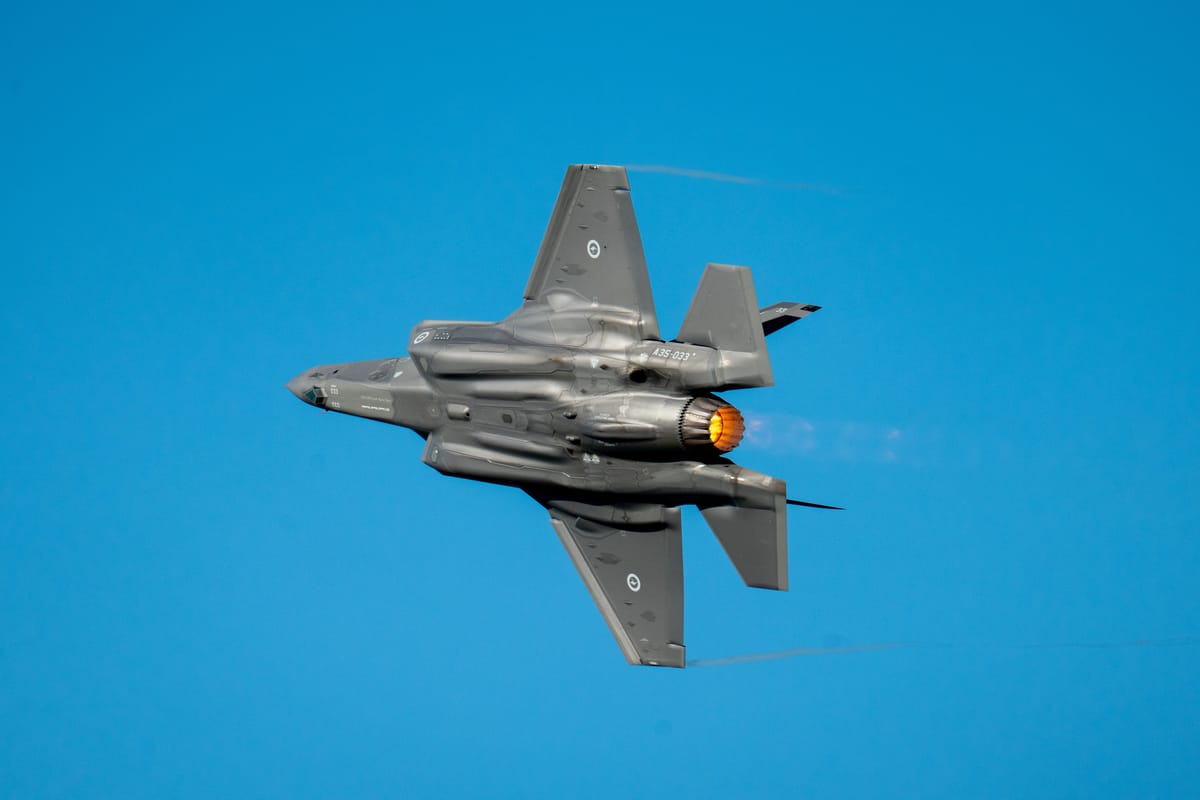
The package covers 48 F-35A Lightning II aircraft with conventional takeoff and landing, and 49 Pratt & Whitney F135-PW-100 engines, 48 installed and one spare. It also includes cryptographic and secure communications equipment, electronic warfare support, training simulators, spare parts and years of maintenance and logistics support. The estimated total cost is $24.3 billion. Lockheed Martin Aeronautics of Fort Worth, Texas, and Pratt & Whitney Military Engines of East Hartford, Connecticut, are the principal contractors.
In its notification to Congress, the State Department said the sale would support American foreign policy and national security objectives by improving the security of a major non-NATO ally, and said the transfer "will not alter the military balance in the region" and would not require additional U.S. government or contractor personnel in the kingdom. That assurance reflects long-standing American policy, anchored in U.S. law, requiring Washington to preserve Israel's qualitative military edge over potential regional adversaries. It is the legal backdrop to the Israeli concern, and it is what makes official Israel's silence notable.
If completed, the sale would make Saudi Arabia the second country in the Middle East after Israel cleared to fly the aircraft. The Royal Saudi Air Force currently operates F-15s and Eurofighter Typhoons, both fourth-generation aircraft.
The congressional review
A congressional notification is not a signed contract. It opens a 30-day window in which lawmakers can object before formal negotiations between the two governments begin. Congress can block a sale by passing a joint resolution of disapproval, though such a measure could face a presidential veto, and overriding a veto requires a two-thirds majority in both chambers. Congress has rarely succeeded in blocking major Gulf arms sales. The 1981 AWACS sale to Saudi Arabia, which Israel also opposed, went ahead despite fierce opposition.
Opposition has already surfaced. Rep. Raja Krishnamoorthi, a Democrat from Illinois and a senior member of the House Intelligence Committee, opposed the sale on Thursday, warning that it could put "the crown jewels of American military technology" within reach of the Chinese Communist Party. Other Democratic lawmakers and some American defense officials have raised similar concerns that Riyadh could share sensitive technology with Beijing under the two countries' security partnership.
Those concerns were detailed in a Defense Intelligence Agency assessment reported by The New York Times, which examined Chinese military personnel's access to Saudi bases and the presence of Huawei and ZTE equipment in the kingdom's telecommunications infrastructure, and questioned whether access to F-35 maintenance sites could be limited to authorized American and Saudi personnel.
Lawmakers are also moving against a separate, conventional arms package approved on September 4 that includes more than 10,000 JDAM guidance kits. Sens. Ed Markey, Jeff Merkley and Bernie Sanders introduced a joint resolution of disapproval targeting that sale, which was referred to the Senate Foreign Relations Committee. Markey cited Saudi human rights abuses and the escalating Iran-Saudi proxy war in Yemen, and warned that further escalation "risks setting off a nuclear arms race between Iran and Saudi Arabia." A Markey spokesperson said a senator could move to force a vote after 10 days, though the Senate is expected to recess soon.
Lockheed Martin told Axios that the F-35's capabilities support the kingdom's defense goals, adding that the company "looks forward to continued collaboration as the U.S. congressional review process advances."
How the deal got here
President Donald Trump first said the United States would sell F-35s to Saudi Arabia in November 2025, ahead of Crown Prince Mohammed bin Salman's visit to Washington, during which the two countries signed an agreement designating Saudi Arabia a major non-NATO ally. Trump repeated the commitment in March. Saudi Defense Minister Khalid bin Salman traveled to Washington roughly two months ago to lobby senior administration officials, with Riyadh hoping to advance the deal ahead of the U.S. midterm elections.
The approval also comes as Saudi Arabia fights an escalating war with the Houthis, who have claimed repeated missile and drone attacks on Aramco facilities and, the day before the notification, claimed to have shot down a Saudi F-15 over Marib governorate. In August, Saudi Arabia signed the Mecca Joint Defense Agreement with Turkey and Pakistan, a sign that Riyadh is broadening its security partnerships beyond Washington.
There is precedent for Israeli objections stalling such a sale. In 2020, after Trump agreed to advance an F-35 sale to the United Arab Emirates, similar reservations emerged, and that deal later stalled in part over American concerns about Abu Dhabi's ties to Beijing.