Get our mobile app
Download on the App StoreGet it on Google Play

Media Law Precedent

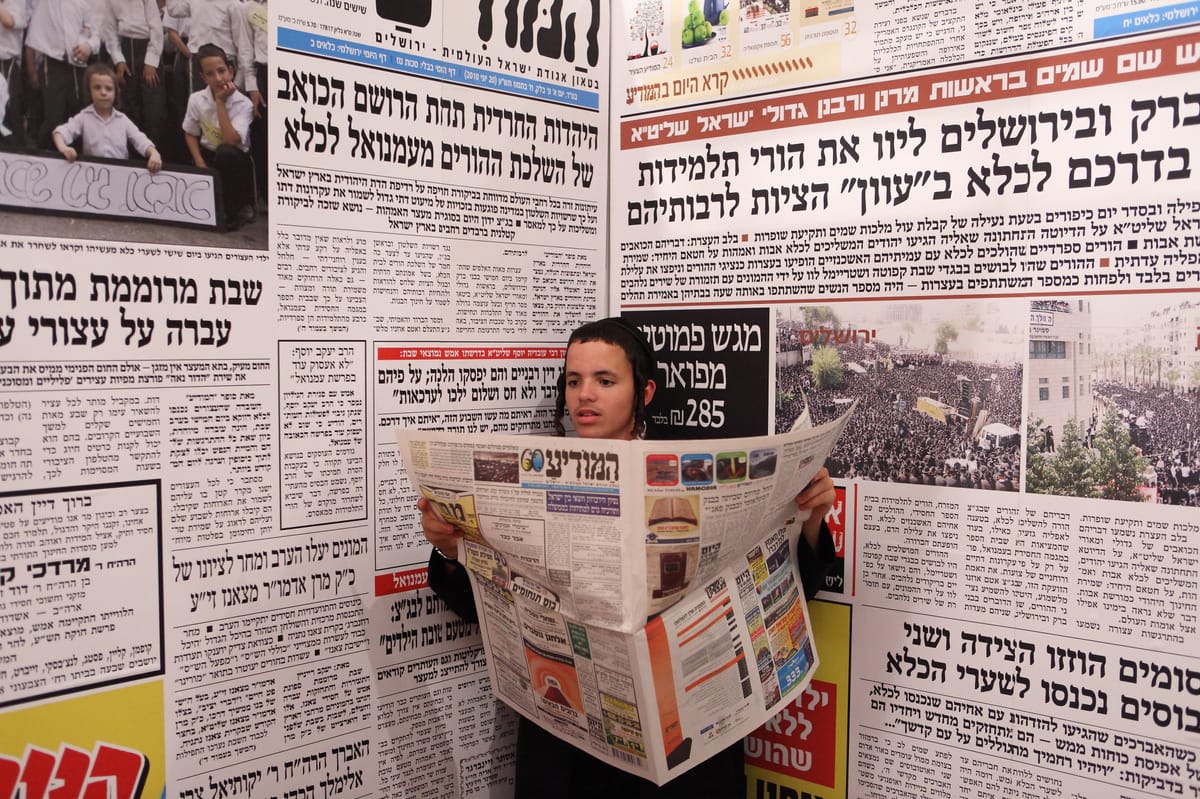
Haredi Paper Pays $65K in Defamation Case

Jerusalem court rules HaModia must compensate four residents of Maaleh Amos after article questioned their religious standing and portrayed them negatively without seeking their response

Hamodia

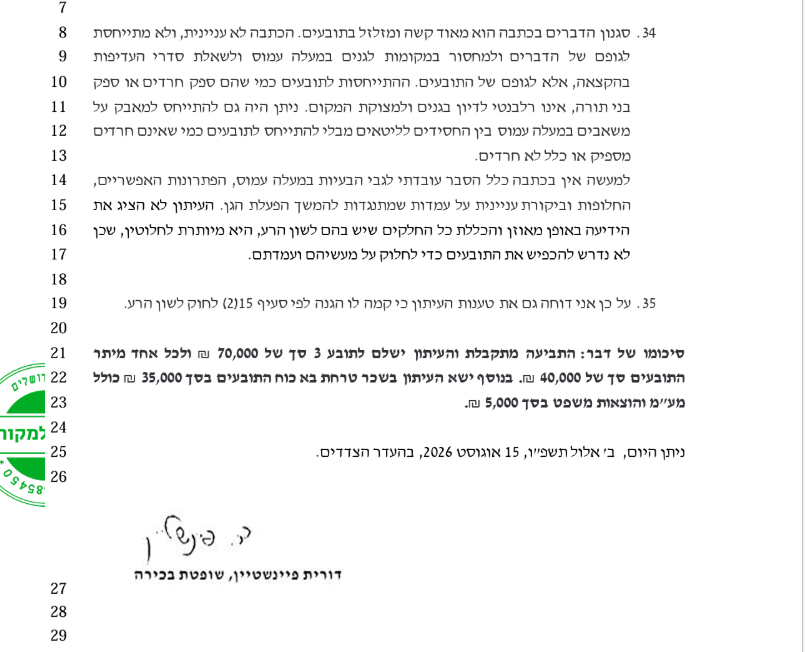
A Jerusalem court has issued a significant ruling against Hamodia, one of Israel's leading haredi (ultra-Orthodox) newspapers, ordering it to pay 230,000 shekels (approximately $65,000) in damages to four residents of Maaleh Amos, a settlement in Judea and Samaria.

The case centered on an article that portrayed the four haredi residents in what the court deemed a defamatory manner, questioning their religious credentials and status as Torah scholars. The plaintiffs, represented by attorney Dr. Harel Arnon, filed a defamation lawsuit that resulted in a decisive legal victory.

According to the ruling, the article employed quotation marks around the term "haredi" when describing the residents and openly cast doubt on their standing as "bnei Torah" (Torah scholars). The court found that the newspaper's approach crossed the line from legitimate criticism into personal defamation.

The ruling establishes an important legal principle: even when deep disagreements exist within the haredi community, media outlets cannot resort to personal vilification, dismissive punctuation, or attacks on individuals' reputations.
Suing Hamodia
Suing Hamodia (Photo: Psak Din)

The presiding judge issued sharp criticism of the newspaper's journalistic approach. The court determined that the article was written in a "very harsh and dismissive" style, failing to present the matter in a balanced or fair manner. The judge's central message was unequivocal: "There was no need to defame the plaintiffs in order to disagree with their actions and position."

The ruling also faulted Hamodia for failing to contact the four residents for comment before publication, a basic journalistic standard. The court emphasized that the newspaper could have covered the controversy and even criticized the residents' conduct without casting doubt on their haredi identity. "There was no need to defame the plaintiffs in order to disagree with their actions and position," the judge stated.

In determining damages, the court distinguished among the four plaintiffs. Yitzhak Glazer, who held no official public role, was awarded 70,000 shekels. The three other plaintiffs were each awarded 40,000 shekels. Additionally, Hamodia was ordered to pay 35,000 shekels in attorney's fees and 5,000 shekels in court costs, bringing the total to 230,000 shekels.

A representative of the Maaleh Amos local council stated: "The court's ruling speaks for itself. We are pleased that other haredi media outlets did not publish the fake news in question. We thank Dr. Harel Arnon and his team for their exemplary representation."

The decision sets an important precedent for sectarian media in Israel. The court made clear that even within the haredi community, where sharp internal disputes sometimes arise between different streams and viewpoints, media outlets must adhere to fundamental standards of fair and balanced journalism.

The case raises broader questions about the responsibilities of community-specific media. Does targeting a specific audience permit greater latitude in criticism? The legal answer, according to this ruling, is no. Sectarian journalism must meet the same professional standards of fairness, balance, and prohibition against defamation as mainstream media.

Ready for more?

Join our newsletter to receive updates on new articles and exclusive content.

We respect your privacy and will never share your information.

Enjoyed this article?

Yes (16)
No (1)
Follow Us:

Unmissable content


Loading comments...

Also of Interest