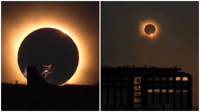
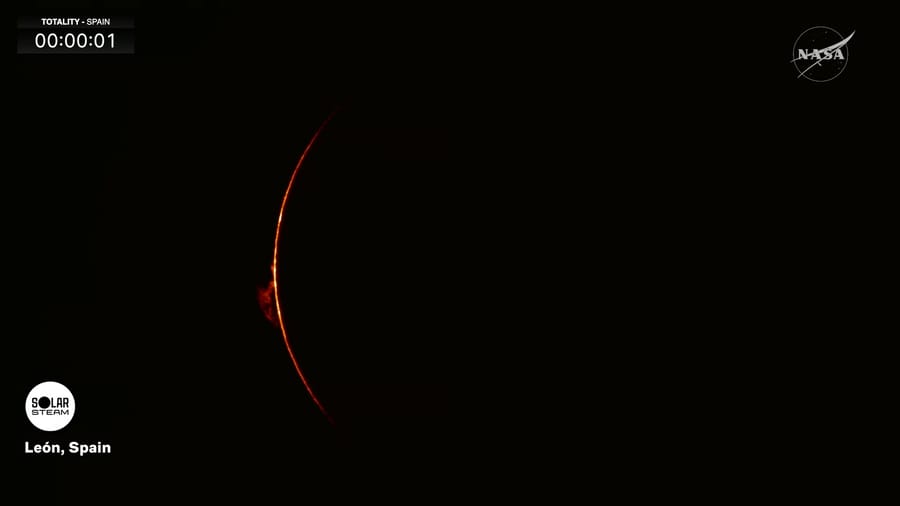
A rare celestial spectacle unfolded Wednesday across European skies as millions of people in Spain and Iceland witnessed a total solar eclipse for the first time since 1999. The moon passed directly between Earth and the sun, completely obscuring it for a brief period and transforming daylight into near-total darkness.
Spanish authorities prepared for an influx of up to 6 million visitors, many heading to rural areas in the country's north and the Balearic Islands, where viewing conditions were optimal. Police deployed in large numbers to manage expected traffic congestion and monitor wildfire risks amid an ongoing heat wave.
Iceland also became a prime destination for astronomy enthusiasts and tourists from around the world. Crowds gathered throughout the country to witness the moment when the moon completely blocked the sun. In Reykjavik, the capital, excitement ran high, with special eclipse-viewing glasses selling out in some locations.
The phenomenon occurs when the moon passes between Earth and the sun, blocking sunlight either partially or completely. A partial eclipse happens when the moon covers only part of the sun, while a total eclipse occurs when it obscures the entire solar disk.
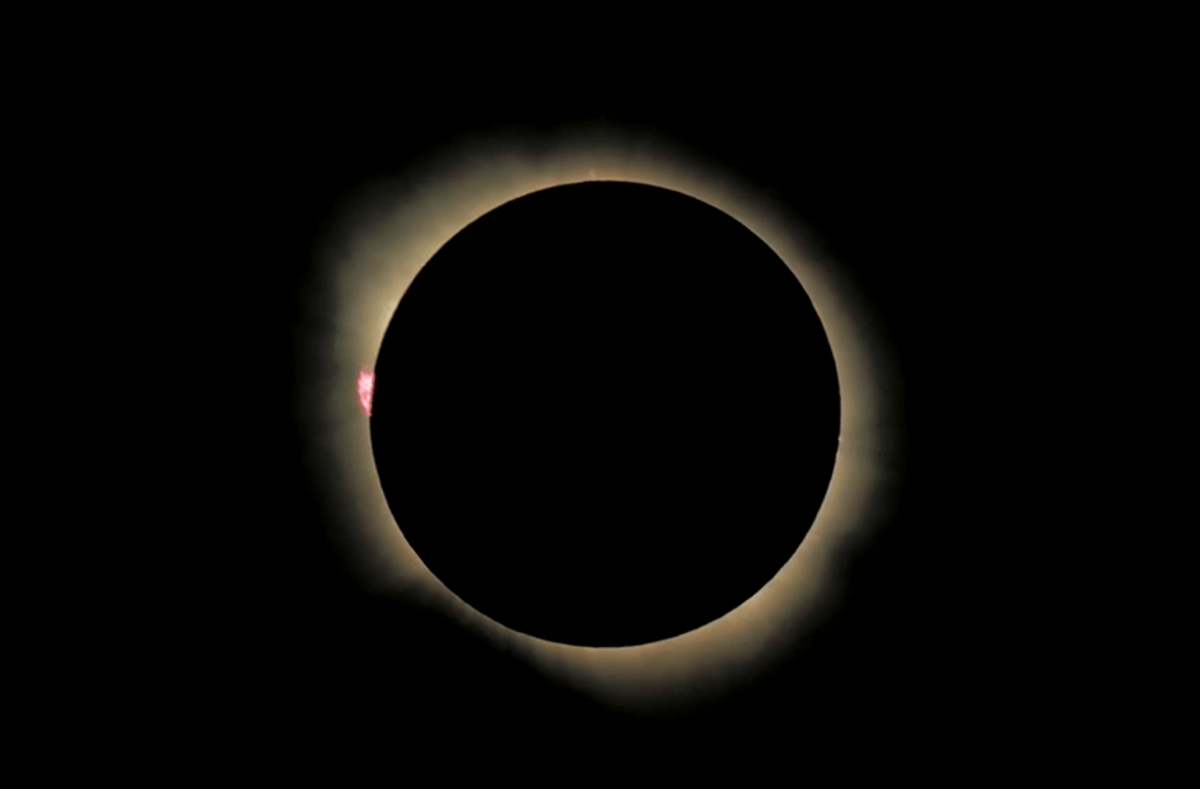
During totality, the moon hides the sun's face for a short time, revealing only the sun's outer atmospheric layer, known as the corona, which appears as a glowing halo. Meanwhile, areas beneath the moon's shadow can transition from full daylight to darkness within minutes.
Total solar eclipses are rare at any given location because the moon's full shadow covers only a relatively narrow path across Earth's surface. People located just outside this path may see only a partial eclipse, while those within the "path of totality" experience near-complete darkness.
Wednesday's eclipse traveled along a path that included Greenland, Iceland, and northern Spain. In certain Spanish regions, the phase of complete darkness lasted less than two and a half minutes.
From a Jewish legal perspective, the sages did not institute a special blessing for witnessing a solar eclipse, unlike other natural phenomena. The reason for not reciting a blessing stems from the eclipse being viewed as a phenomenon with negative significance. As stated in the Talmud: "When the sun is eclipsed, it is a bad omen for the entire world."