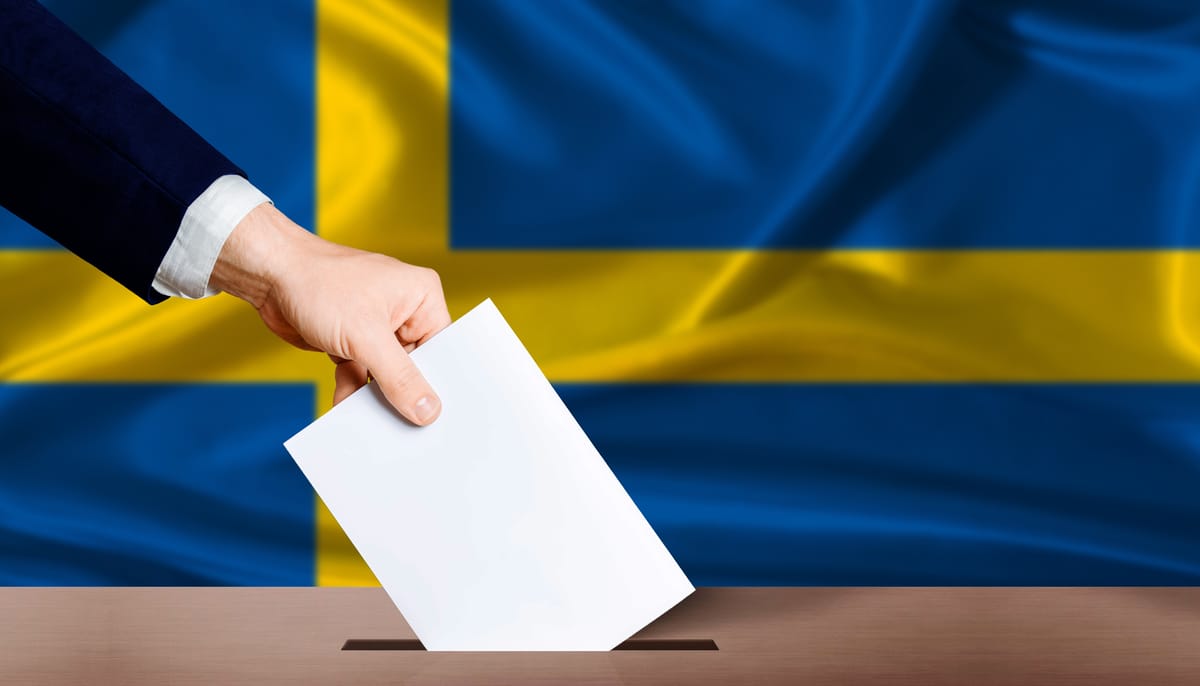
Sweden's centre-left opposition holds a three-seat lead over Prime Minister Ulf Kristersson's governing alliance in preliminary results, in an election neither side was willing to call on Monday.
The Swedish Election Authority's projection, based on 6,195 of the country's 6,312 electoral districts, gives the four-party bloc behind Social Democratic leader Magdalena Andersson 176 seats in the 349-seat Riksdag against 173 for Kristersson's alliance. That is one seat above the 175 needed for a majority. The gap stands at roughly 20,000 votes with about 94 percent of ballots counted. Earlier in the night the margin was a single seat, 175 to 174, before widening slightly as more districts reported.
Neither leader has moved. Kristersson has not conceded and Andersson has stopped short of claiming victory. Late postal ballots and votes from abroad are counted on Wednesday, and the final result may not be confirmed until Thursday. Both campaigns have reason for caution: in 2022 an exit poll projected an Andersson win that the final count reversed, and she conceded three days after polling day.
The clearest shift is on the right. The Sweden Democrats took 20.5 percent in 2022, overtaking the Moderates to become the country's second-largest party, and Kristersson had promised them cabinet seats if his alliance won, which would have brought them into government for the first time. Preliminary figures put them at around 17.6 percent and back in third place, behind the Moderates on roughly 19.9 percent. The Social Democrats remain the largest party at about 28.1 percent. Party leader Jimmie Åkesson said on Sunday night that the country would not learn who forms the next government before morning.
An SVT exit poll of 13,709 voters had given the centre-left 51.3 percent against 46.8 for the right, a far wider margin than the count has produced.
Andersson's path to power is not straightforward even if the lead holds. Her bloc spans four parties divided over migration policy, nuclear power and a proposed tax on the very wealthy, and a one to three seat majority leaves no room for defections. Kristersson has governed since 2022 with a three-party minority coalition of Moderates, Christian Democrats and Liberals, relying on Sweden Democrat support from outside government under the Tidö Agreement.
For Jewish observers the outcome is mixed. The Sweden Democrats emerged in the late 1980s from Sweden's white nationalist fringe, a history the party has spent years trying to bury, and their exclusion from cabinet will be welcomed by communal organisations. The incoming bloc offers little comfort on Israel, however. It was a Social Democrat government that made Sweden the first major Western European state to recognise Palestine, in 2014, and the Left Party, one of the four parties backing Andersson, is among the most consistently critical of Israel in the Riksdag.