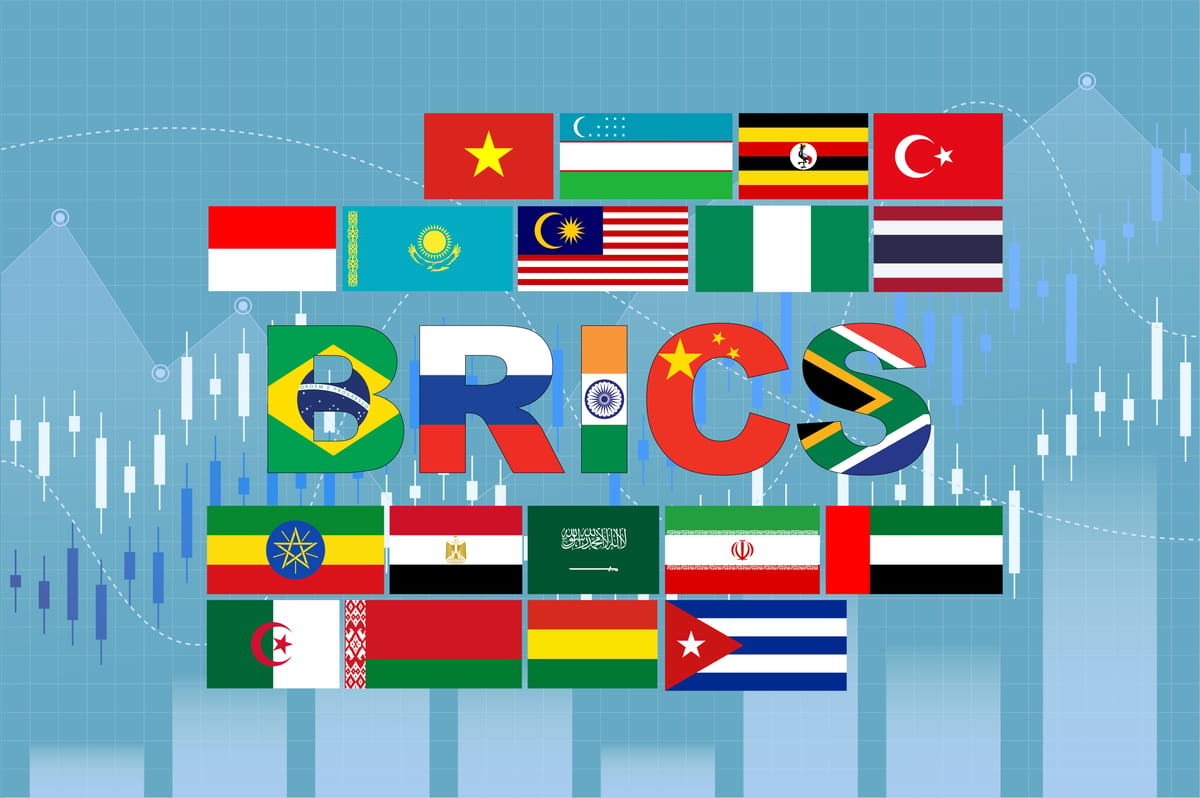
BRICS leaders adopted the New Delhi Declaration by full consensus at their summit in India this weekend, a text condemning aggression in general terms and warning of growing risks of nuclear danger and conflict, while making no direct reference to the American strikes on Iran or to Iranian attacks on Gulf Arab states.
Iranian President Masoud Pezeshkian was in the room when Prime Minister Narendra Modi announced the adoption, alongside Chinese President Xi Jinping, Russian President Vladimir Putin and Abu Dhabi Crown Prince Khaled bin Mohamed bin Zayed Al Nahyan, who represented the UAE. Modi said the draft encapsulated the substance of the discussions and reflected the bloc's perspectives on global and regional issues. It passed with no opposition. Securing consensus had been one of India's declared objectives for its chairmanship, and Indian officials treated the outcome as a diplomatic success.
For Tehran the value is more direct. Iran has spent the past six months at war with the United States, has kept the Strait of Hormuz effectively closed to commercial traffic, and is accused by Bahrain and Saudi Arabia of striking infrastructure across the Gulf. It nonetheless secured a place at a summit that produced a unanimous statement about peaceful dispute resolution without naming any of it.
Pezeshkian arrived in New Delhi on Friday for his first visit to India since taking office in 2024, and held a bilateral meeting with Modi that evening and a separate meeting with President Droupadi Murmu on Saturday. He met Modi last month on the sidelines of the Shanghai Cooperation Organisation summit in Bishkek. Speaking to reporters, Pezeshkian pushed for expanded trade among BRICS members in national currencies, a priority for a government whose oil sales have been reduced to zero by the American naval blockade. He also told India Today television on the sidelines that Iran is not at war with Saudi Arabia and that the Houthis have their own problems, distancing Tehran from the campaign against the kingdom as Riyadh seeks outside help against the group.
Modi held 15 bilateral meetings over the two days, including with Xi, whose presence marked his first visit to India since 2019. For India the summit was an exercise in holding its partnerships with Moscow and Tehran while deepening ties with Washington and Europe. The result is that the country conducting the blockade of Hormuz and the countries whose exports it has halted signed the same document.