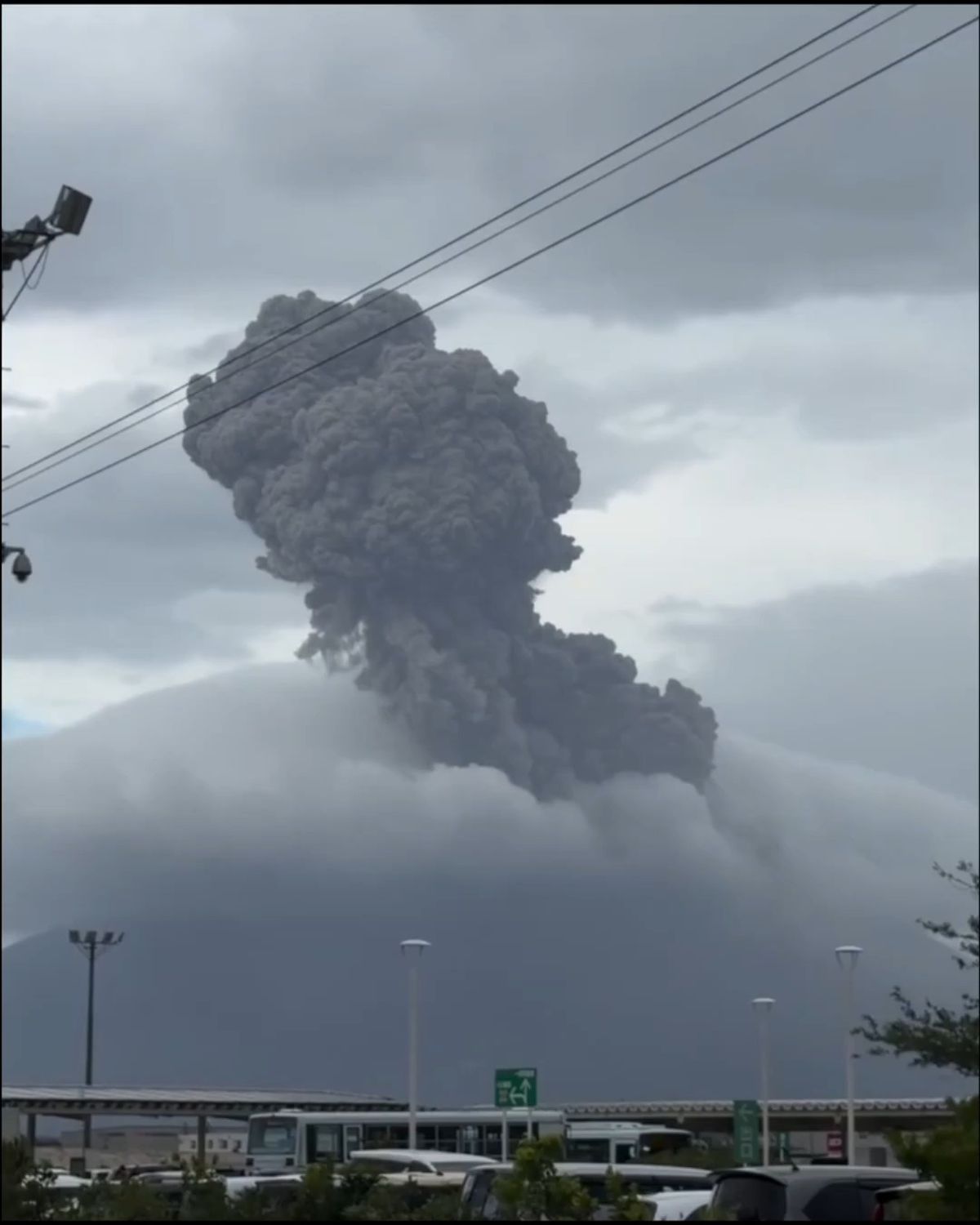
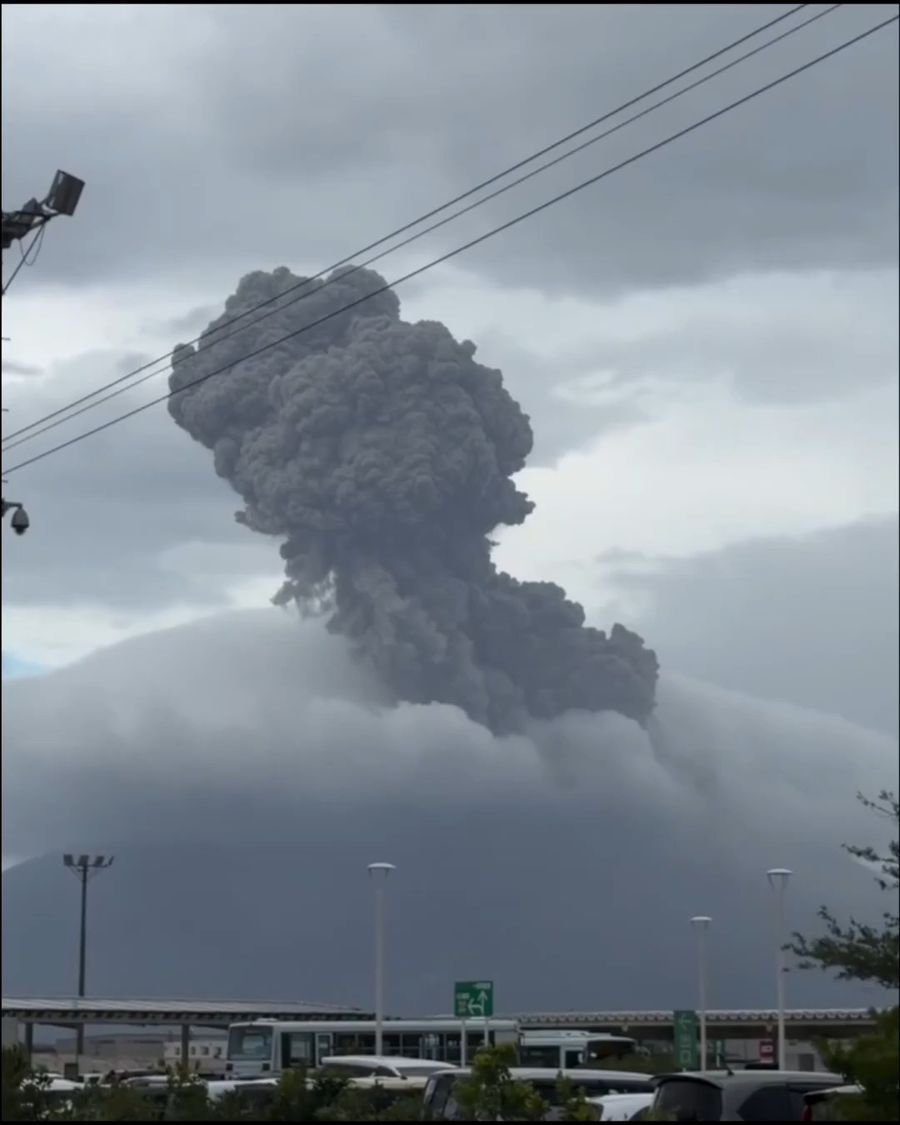
Mount Sakurajima, located in Kagoshima Prefecture on the island of Kyushu in southwestern Japan, erupted and sent a towering column of volcanic ash and smoke thousands of meters into the atmosphere.
The eruption occurred at the Minamidake crater and was accompanied by secondary bursts that scattered heavy ash deposits across surrounding communities. The ashfall and reduced visibility caused significant transportation disruptions, including the cancellation of dozens of flights at Kagoshima Airport.
Japan's Meteorological Agency maintained the alert level at 3 out of 5 and imposed a no-entry zone extending approximately two kilometers from the volcano due to the danger of flying rocks and pyroclastic flows—fast-moving currents of hot gas and volcanic matter.
Japan's Deputy Chief Cabinet Secretary, Yoshihiko Isozaki, addressed the incident, stating that "we will put people's lives first and make every effort to assess the situation and respond to any emergency." Local authorities urged residents to remain indoors and wear protective masks when venturing outside.
Tsuyoshi Nakazuji, a representative from the Japan Meteorological Agency, clarified that "the likelihood of further violent eruptions is low, but residents must still remain vigilant against falling rocks, mudslides, and pyroclastic flows." No casualties or direct structural damage have been reported thus far.