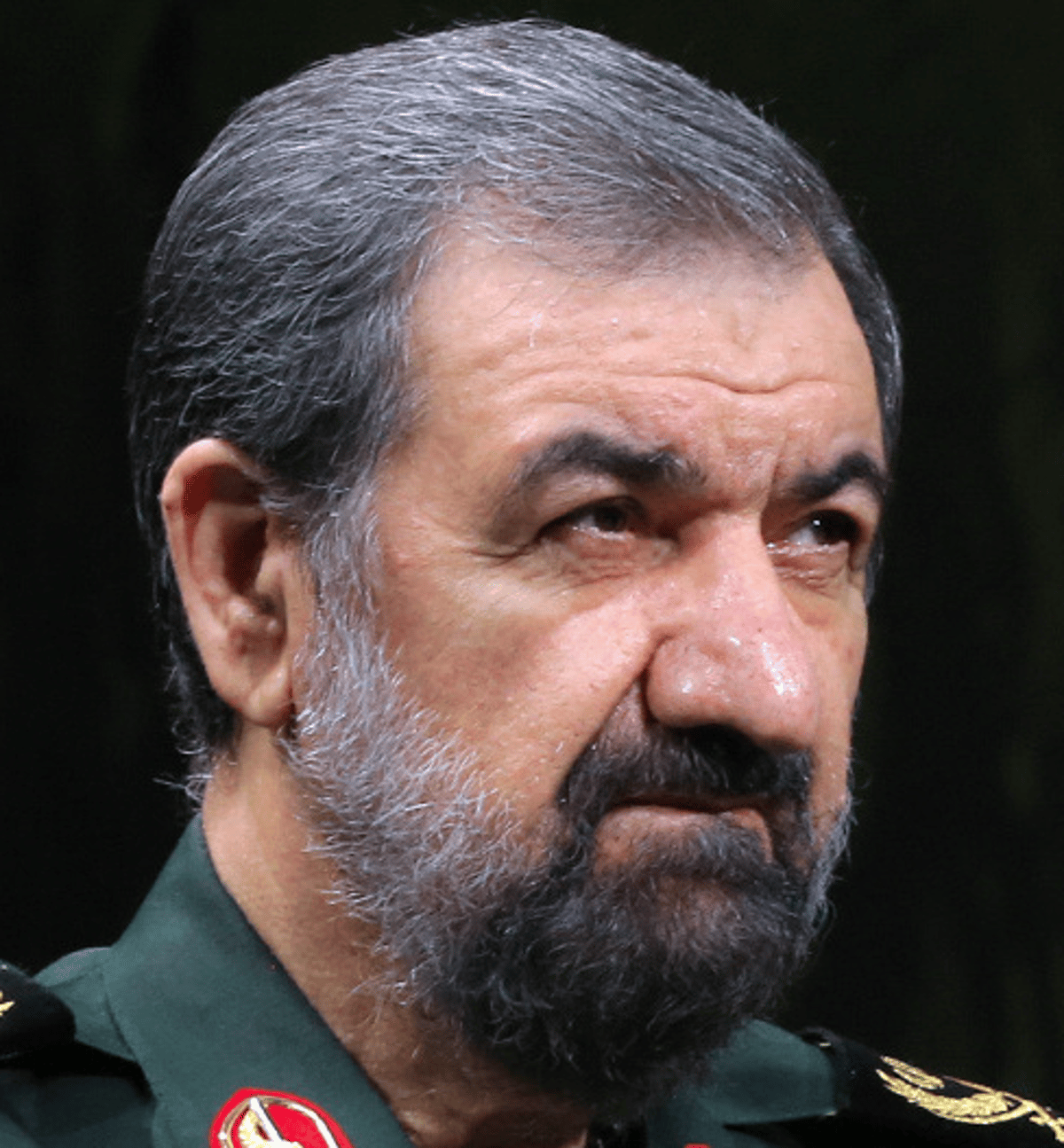
Iran has appointed Major General Mohsen Rezaei, a longtime IRGC hardliner and former commander-in-chief of the Revolutionary Guards, as the Supreme Leader's representative to Iran's Supreme National Security Council (SNSC), according to reports from Iranian domestic media outlets first published August 6, 2026.
The appointment of Rezaei, 71, represents a significant consolidation of hardline control over Iran's top security apparatus at a critical moment for Tehran's strategic posture following the five-month U.S.-Iran war (the "40-Day War").
Rezaei's designation to represent Supreme Leader Mojtaba Khamenei directly on the SNSC strengthens hardline influence over Iran's military strategy, nuclear policy, and diplomatic negotiations with the United States. The move reflects a broader shift toward greater IRGC control of Iran's security decision-making.
Rezaei's Background and Political Trajectory
Rezaei, born September 1, 1954, served as commander-in-chief of the IRGC from 1981 to 1997—a 16-year tenure during which he oversaw Iranian military operations during the Iran-Iraq War and established himself as one of the Islamic Republic's most hardline security figures.
Since leaving the IRGC command, Rezaei has held significant positions within Iran's political apparatus: secretary of the Expediency Discernment Council (1997-2021) and vice president for economic affairs under Ebrahim Raisi (2021-2023). He has also made four unsuccessful presidential bids, with his candidacies consistently rejected by Supreme Leader Ali Khamenei and later Mojtaba Khamenei.
Despite his political defeats, Rezaei has remained an insider within circles close to the Supreme Leader and is known as a steadfast advocate for revolutionary Islamic principles and hardline security postures.
The appointment signals several shifts in Iranian strategy following the 40-Day War:
First, it represents consolidation of hardline control over Iran's post-war strategic recalibration. The SNSC is Iran's highest decision-making body on defense, intelligence, and foreign policy. Rezaei's appointment as the Supreme Leader's direct representative amplifies hardline voices in this body.
Second, it reflects Iranian perceptions of vulnerability following the U.S.-Iran conflict. By placing a veteran military commander with extensive IRGC experience in a direct supervisory role on the SNSC, the leadership appears to be reinforcing military-centric decision-making over diplomatic or moderate approaches.
Third, the move suggests resistance to potential U.S.-Iran negotiations on nuclear or strategic issues. Rezaei's hardline background and consistent opposition to compromises with Western powers position him to advocate for military-first approaches rather than diplomatic solutions.
The exact nature of Rezaei's appointment remains ambiguous following contradictory reporting. IRGC-affiliated media outlets including Tasnim briefly published reports identifying Rezaei as SNSC secretary, but these accounts were rapidly removed. Semi-official channels including IRNA and Mehr News have since published messages still identifying Mohammad Bagher Zolghadr as SNSC secretary, creating confusion about whether Rezaei's appointment replaces or supplements Zolghadr's role.
Reports indicate Rezaei is being named as Supreme Leader's representative—but also mention Saeed Jalili in a similar capacity. This dual-representative arrangement is unusual within SNSC protocol. Analysts note that traditionally, one of the Supreme Leader's representatives also serves as secretary, making the current setup structurally anomalous.
The ambiguity may be deliberate. Framing Rezaei as "representative" rather than secretary could allow Tehran to claim Zolghadr remains in his formal position while effectively demoting his standing and authority by placing a hardline IRGC figure in direct supervisory capacity above him.
Current Security Council Composition
The SNSC operates under two structural authorities: a secretary (currently Mohammad Bagher Zolghadr, since March 2026, though this is now contested) who coordinates operations, and a Supreme Leader representative who directly represents the leader's interests. Rezaei's appointment to a representative role—alongside Saeed Jalili as a second representative—creates an unusual authority structure potentially placing both officers in supervisory positions over the secretary, creating a two-track or three-track hierarchy answerable directly to the Supreme Leader but through different channels.
The appointment occurs as Iran's new Supreme Leader, Mojtaba Khamenei (who assumed the position following his father Ali Khamenei's death), is still consolidating control over the security apparatus. Placing trusted hardliners like Rezaei in key positions represents an effort to ensure that military and security policy remain aligned with the new Supreme Leader's perceived preferences.