Saudi Arabia has pushed back firmly against U.S. President Donald Trump's attempt to make a civilian nuclear cooperation agreement contingent on the kingdom normalizing relations with Israel, signaling that Riyadh will not be pressured into abandoning its Palestinian statehood condition.
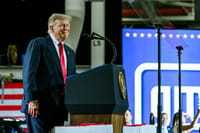
Trump submitted the proposed Saudi nuclear agreement to Congress on Monday, and according to administration officials, the pact will only go into effect if Saudi Arabia normalizes relations with Israel. Trump claimed the deal "will be approved, but is totally subject to Saudi Arabia joining the very respected and successful Abraham Accords."
The Saudi response was swift and unambiguous. Saudi Arabia's Foreign Ministry issued a statement emphasizing that the kingdom's position remains "firm and unwavering," reaffirming that it will not normalize relations with Israel without the establishment of an independent Palestinian state based on 1967 borders with East Jerusalem as its capital.
A Non-Negotiable Position
Sources close to the Saudi royal family told Channel 12 that the civilian nuclear program and Israeli normalization must be treated as separate issues. According to the sources, the nuclear agreement is part of broader U.S.-Saudi partnership and should not be leveraged to extract political concessions on the Israeli question.
More pointedly, Saudi officials indicated that the Gaza war fundamentally altered the regional calculus, causing Riyadh to establish more stringent requirements for any future normalization agreement and to put US-brokered Israeli normalization talks on hold.
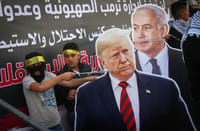
Saudi sources said that with Prime Minister Benjamin Netanyahu's "current far-right government," and absent substantive change on Palestinian issues, normalization remains off the agenda. Saudi Arabia intends to wait and see what government forms in Israel and what position it takes on Palestinian statehood before resuming any discussions.
A Long-Standing Saudi Condition
Saudi Arabia's demand for Palestinian statehood predates recent developments. The kingdom first raised the prospect of normal relations with Israel in 2002, when Crown Prince Abdullah proposed full Arab normalization if Israel withdrew from the territories it occupied since the Six-Day War. That position, now known as the Arab Peace Initiative and adopted by the Arab League, has defined Saudi diplomacy for over two decades.
The 2002 Arab Peace Initiative established Saudi leadership in Arab diplomacy but also created a rigid benchmark that subsequent Israeli governments have found difficult to meet. These historical positions continue to influence Saudi public discourse and official statements.
The Nuclear Deal Dispute
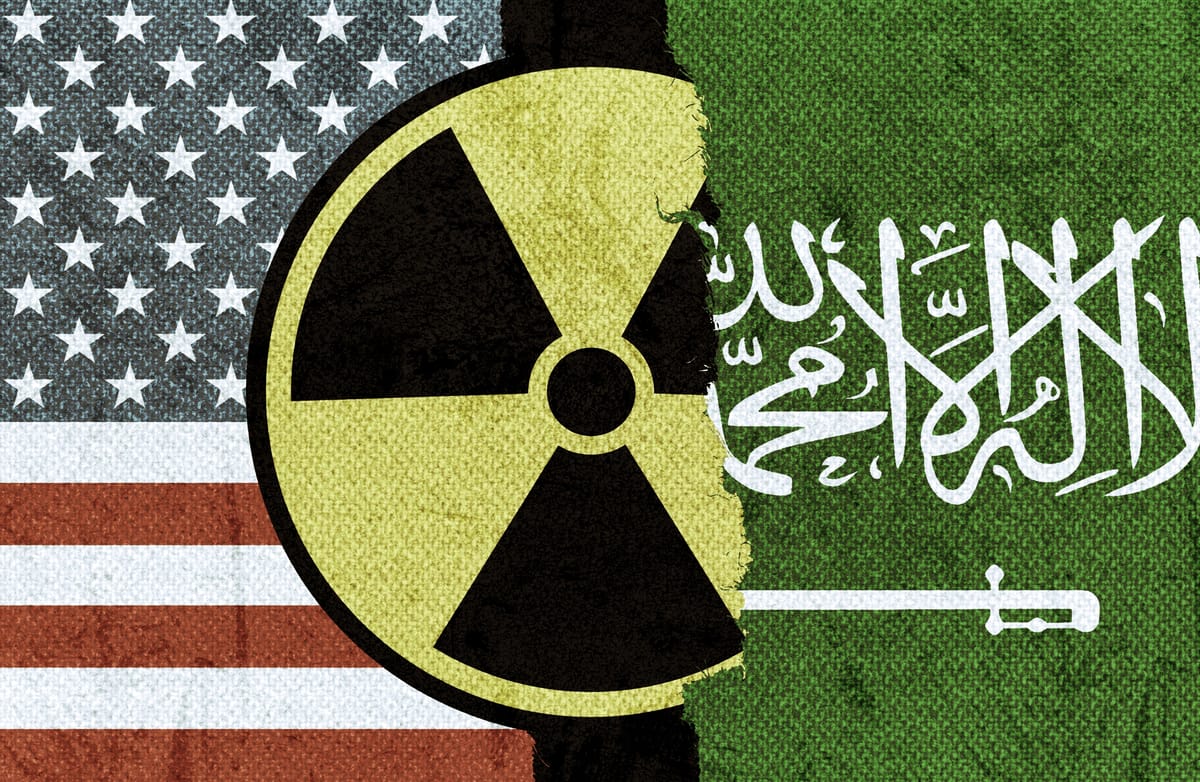
Saudi Arabia signed the nuclear agreement with the United States in July 2026 for the two countries to cooperate in building a civilian nuclear program in Saudi Arabia using U.S. nuclear technology. The 30-year deal would diversify the energy sector in Saudi Arabia and boost oil exports.
Trump's immediate conditioning of the agreement surprised observers and caught some U.S. administration officials off guard. Some experts questioned whether Trump was serious about the condition, with one analyst noting: "You never know whether Trump's serious about anything."
Trump claimed the agreement includes no uranium enrichment, addressing one of the major criticisms from nonproliferation experts and Democratic lawmakers. However, the agreement has faced criticism for not including a permanent prohibition on enrichment or reprocessing.
Implications for U.S. Strategy
The standoff highlights the limits of Trump's leverage over Saudi Arabia, particularly on issues central to the kingdom's strategic interests and public opinion. According to analysts, Trump's comments linking the nuclear agreement to normalization "do not reflect Saudi Arabia's stated position or previous US commitments."
For the Jewish community abroad, the disagreement underscores Saudi Arabia's hardened position since Gaza. Saudi Arabia faced Houthi attacks including strikes on Aramco facilities and continued attacks in July 2026, with the kingdom viewing Iran as a significant regional threat. Yet this shared security concern with Israel has not softened Riyadh's Palestinian statehood requirement.
The Trump administration had hoped that broader security concerns, mutual Gulf defense needs, and economic incentives would overcome Saudi Arabia's public commitment to Palestinian statehood as a precondition for normalization. The nuclear deal gambit appears to have miscalculated the depth of that Saudi position, particularly in light of Gaza war dynamics and domestic political pressure within the kingdom.
Saudi Arabia has indicated it will continue pursuing the nuclear agreement as part of energy diversification, but on its own terms, separate from any normalization discussions with Israel. Whether Congress will allow the deal to proceed without the normalization condition, or whether the Trump administration will back down from the linkage, remains unclear.