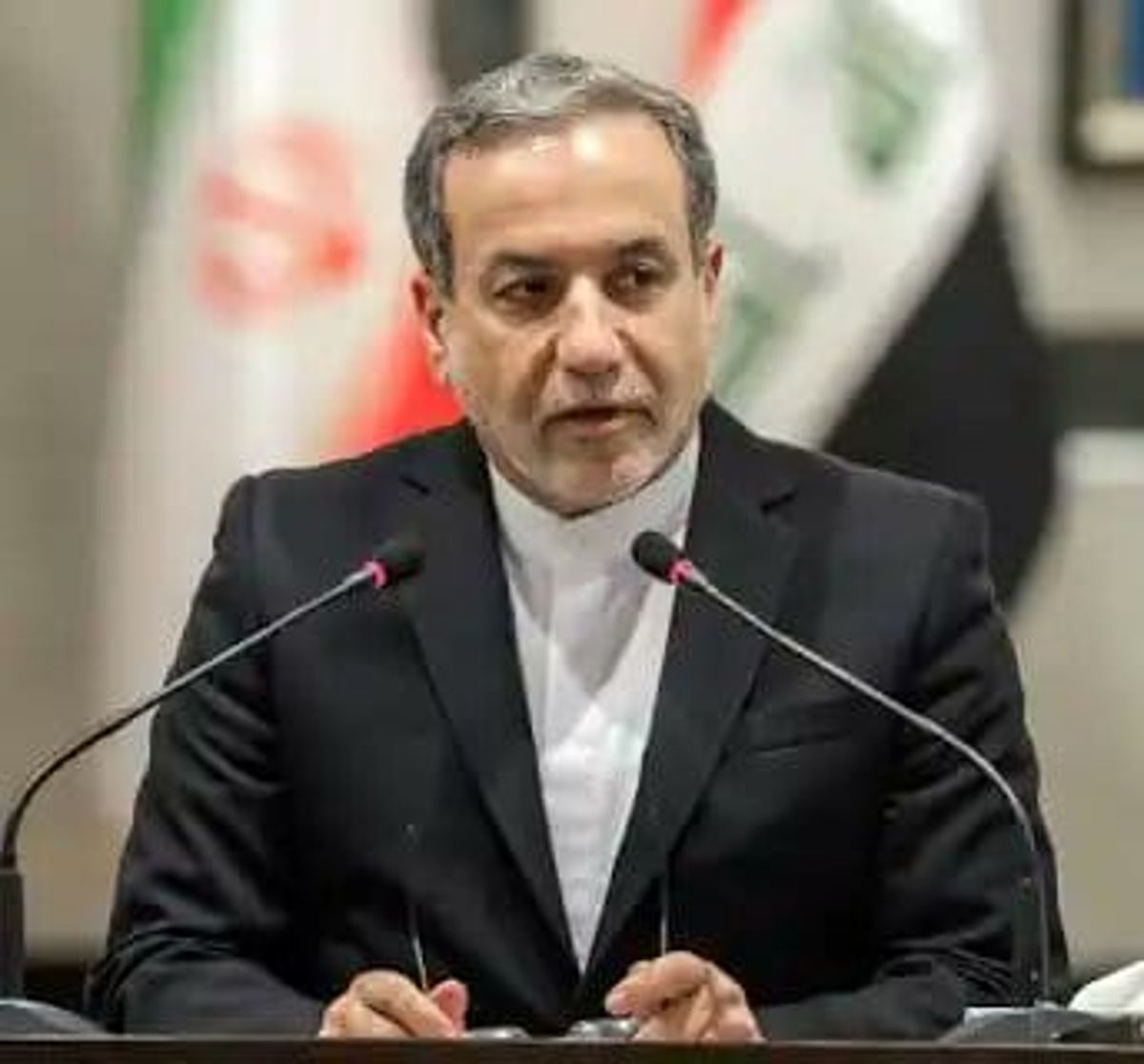
Iranian Foreign Minister Abbas Araghchi revealed that Israeli and American intelligence forces possessed precise target location data regarding Supreme Leader Ali Khamenei and senior regime leadership during opening military strikes, confirming a critical internal security breach. Speaking in an interview with journalist Javad Mogouei for the program "War Story 2", Araghchi described escaping the bombed leadership complex in Tehran as three consecutive precision strikes hit surrounding structures. The foreign minister noted that he has been constantly moving across the capital in civilian vehicles to avoid targeted assassination following the death of Khamenei.
The joint strike targeted high level security meetings occurring simultaneously across the Intelligence Ministry, the Strategic Council on Foreign Relations, and the Defense Council. Araghchi recalled meeting with Ali Asghar Hejazi, deputy chief of staff to Khamenei, when successive explosions destroyed their facility.
"What is important to me is the fact that Israel had intelligence on these meetings," Araghchi stated. "This may indicate a security breach that probably still exists. It needs to be fixed."
Describing the moments of the attack, Araghchi detailed the physical destruction inside the leadership compound. "We were on the other side of the building, and after the explosion the ceiling, walls, and everything collapsed on us. I grabbed Mr. Hejazi's hand, and we made our way through beams, planks, and pieces of wood while hearing calls for help. Water was flowing from the ceiling. Everything was destroyed. Eventually we managed to get out, and then I saw that various parts of the compound had been attacked," Araghchi explained. A passerby rushed Araghchi to the Foreign Ministry after his official vehicle was destroyed in the barrage.
Araghchi clarified that regime operations remained functional despite three days of complete communication blackouts following the strikes. He disclosed that Tehran had previously enacted a secret contingency protocol designated "Code 110", named after Article 110 of the Iranian constitution governing the powers of the Supreme Leader, to shut down the Strait of Hormuz upon Khamenei's death. Addressing the appointment of Mojtaba Khamenei as the new Supreme Leader, Araghchi stated that the rapid transition sent a "very important message to the world that there will be no change in the regime's policy and its ideals."
Diplomatic maneuvers preceded the escalation, with Araghchi confirming Iran offered a nuclear deal proposal during negotiations in Geneva. Omani Foreign Minister Badr al-Busaidi informed Araghchi the following day that Washington's posture had suddenly hardened. Araghchi defended participating in talks despite low odds of success, arguing, "No one will be able to tell us that it was our fault."
Iranian officials issued direct regional warnings while seeking to exploit strategic differences between Washington and Jerusalem. Araghchi disclosed that warnings sent to Ankara prompted Turkish Foreign Minister Hakan Fidan to firmly confront American officials, successfully dismantling a White House proposal to encourage a Kurdish uprising crossing from Iraq into Iran. Regarding military strategy, Araghchi noted that following a 12 day Israeli bombing campaign in 2025, Iran upgraded its missile capabilities, reducing facility reactivation times from 15 hours down to 40 minutes, concluding, "We do not fight unless the cost of avoiding war is higher than the cost of fighting."