US Secretary of War Pete Hegseth delivered a comprehensive assessment of military operations against Iran, declaring that sustained American strikes have degraded Tehran's military capabilities to their lowest level in nearly five decades. Speaking during official testimony, Hegseth outlined how targeted campaigns have systematically dismantled the conventional forces built by the Iranian regime to protect its strategic assets.
"Iran is at the weakest point militarily it has ever been in, in the past decade, certainly, maybe in 47 years," Hegseth stated.
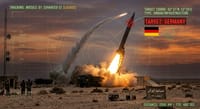
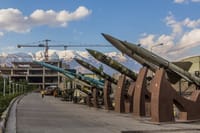
Hegseth explained that over the past several decades, Tehran spent vast resources building what he described as a terror army designed to shield its pursuit of non conventional capabilities. This defensive network relied heavily on massive stockpiles of advanced weaponry, including thousands of ballistic missiles aimed at deterring foreign intervention and threatening regional stability.
"That terror army was built to try to create conventional capability to defend against a pursuit of nuclear weapons, which meant thousands of ballistic missiles, many of which we have destroyed," Hegseth noted during his address.
The Secretary of War acknowledged that while American forces have eliminated vast portions of Iran's arsenal, Tehran still attempts to hide remaining assets within reinforced subterranean networks. He pointed out that regime leadership has increasingly moved remaining equipment into deeply buried bunkers across the country to escape continuous air strikes.
"Others of which they have put inside facilities and hidden in underground facilities, and that is what terror regimes would do," Hegseth explained.
Despite these efforts to hide assets underground, Hegseth emphasized that relentless operational pressure from the US military has severely compromised Tehran's overall combat readiness. He reiterated that while the regime retains some residual strike capability, the cumulative destruction of its infrastructure has crippled its strategic posture.
"I acknowledge they still have capabilities, no doubt, but the amount of damage that we have done to them over the course of these series of operations has put them in the worst place they have ever been," Hegseth concluded.