A six-month-old baby was admitted earlier this week to Asuta Ashdod Public Hospital after suffering from persistent coughing, wheezing, and breathing difficulties for approximately six weeks. His parents had sought medical attention multiple times during this period, and the infant received inhalation treatments and medications, but showed no significant improvement. Eventually, vomiting was added to his symptoms.
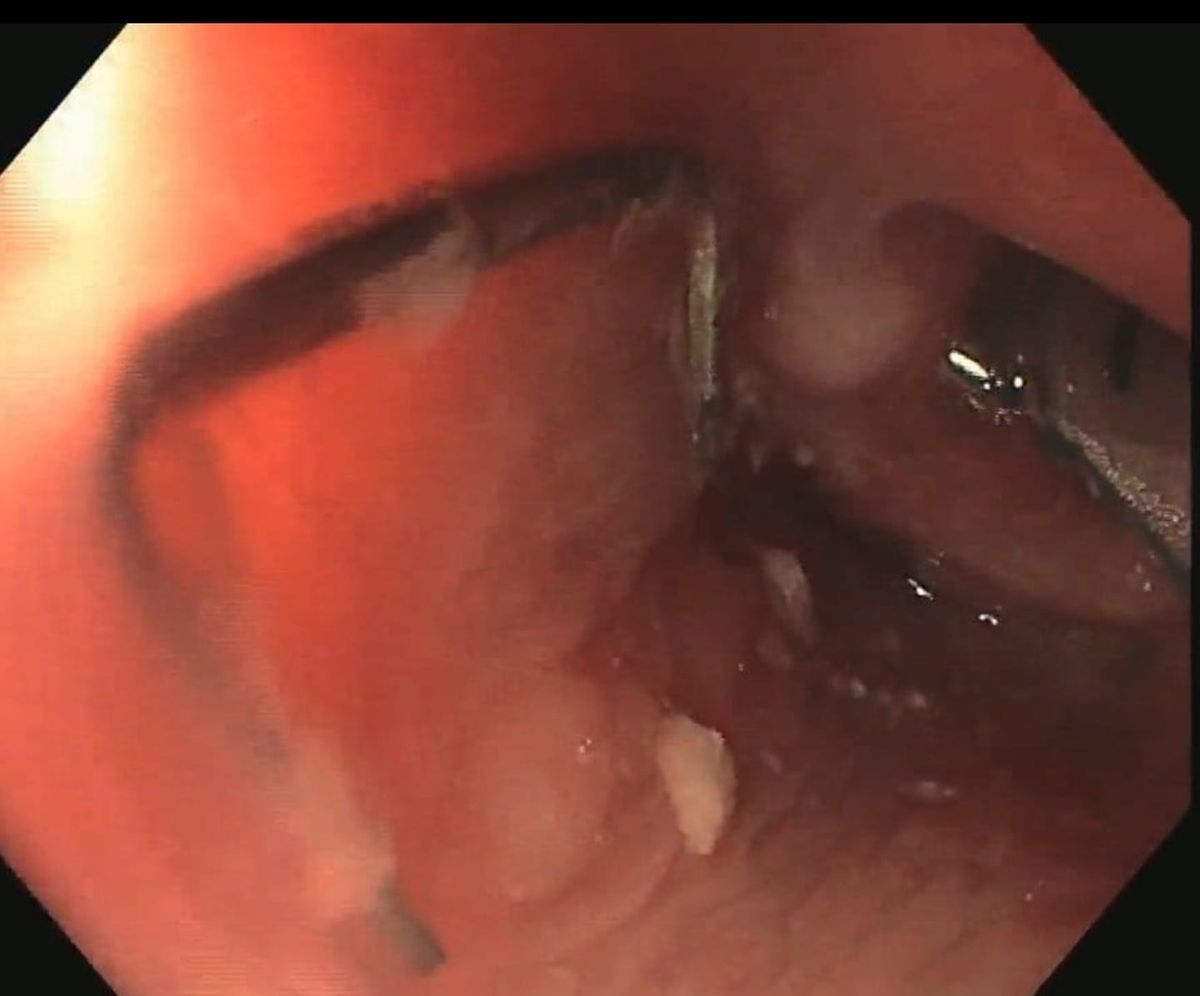
Upon arrival at the hospital's emergency department, an X-ray revealed an unusual foreign object in the esophagus: a cluster of staples. Some remained connected to each other, while others had separated and become embedded in the esophageal wall.
Given the location of the staples and the infant's compromised respiratory condition, medical staff decided to transfer him urgently to the operating room. The procedure involved teams from pediatric gastroenterology, ear-nose-throat, and pulmonology departments, along with the anesthesia team, partly due to concerns that some staples may have reached the airways.
During a complex operation lasting approximately ninety minutes, the staples were extracted one by one, including those that had penetrated the esophageal wall.
The prolonged presence of the staples in the infant's body had already caused local damage, swelling, inflammation, and infection in the area. Following their removal, he was treated with antibiotics, acid-reducing medications, steroids, and inhalations. Initially, he was fed through a feeding tube to allow the esophagus time to recover and heal.
Dr. Hani Olivestone, director of the Pediatric Gastroenterology Unit at Asuta Ashdod Public Hospital, explained: "The infant came to us after a long period of coughing, shortness of breath, and wheezing that did not resolve despite the treatments he received. In the case of an infant who cannot tell us what happened or whether he swallowed something, it's important to remember that a foreign object can also cause persistent symptoms. In this case, the staples had already caused inflammation, infection, and swelling in the esophagus, and the infant's respiratory condition was not good. Fortunately, we succeeded in removing all the staples. The message to parents is simple: when symptoms persist and don't improve as expected, it's important to continue investigating the cause."