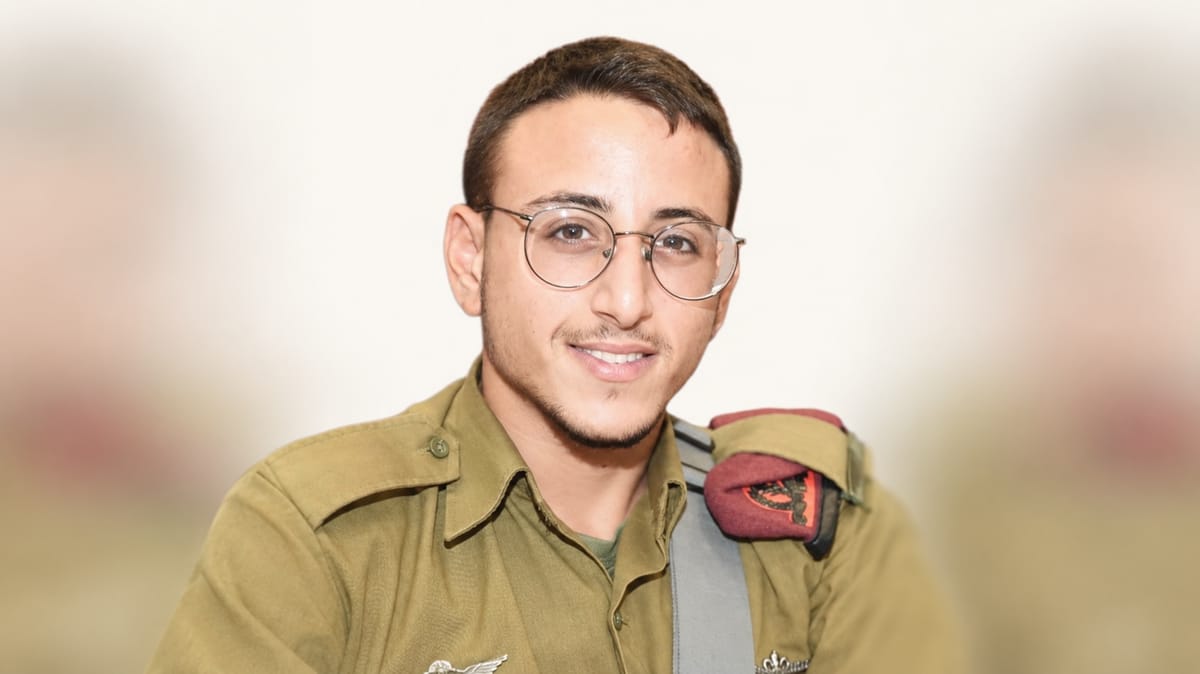
Staff Sergeant Or Mantzur, a fighter in the elite Egoz commando unit, was killed in combat in southern Lebanon on the eve of Rosh Hashanah, alongside seven of his comrades. A book based on his five journals and a song he composed during his service is now being released, with the music performed by his brother Yochai.
On the eve of Rosh Hashanah 5785, Yehudit Mantzur arrived at the synagogue in Beit Aryeh, a community in the West Bank, to clean and prepare it for the holiday. It was there that she received the devastating news: her son, 21-year-old Staff Sergeant Or Mantzur, a fighter in the Egoz Unit, had fallen in battle in southern Lebanon together with seven fellow soldiers.
Just hours earlier, before entering Lebanon, Or had sat down and written in his journal: "Rosh Hashanah eve, I don't know if we'll hear the shofar or how the holiday will be, but it's a great privilege to be on such an important mission on the eve of the holiday, so that the residents of the north can return to their homes."
The words he wrote became especially haunting after his death. Shortly afterward, as his unit prepared to cross the border into Lebanon, Or moved to the front of the column and declared: "I'm going first."
Or grew up in Beit Aryeh in Samaria, in a religious Zionist family. When he was only four years old, his father passed away, and his mother Yehudit raised him and his younger brother Yochai alone.
He studied at the Sha'alvim high school yeshiva, and Torah and faith were inseparable parts of his life. Alongside his spiritual world, he possessed a rich creative dimension: he played clarinet, piano, guitar, and drums, wrote and composed songs, and performed from a young age.
When he chose a combat track and reached the Egoz Unit—an elite commando force specializing in counter-terrorism operations—he didn't leave music or faith behind. Even during service and combat, he maintained three daily prayers and studied Torah, sometimes at the expense of sleep. His teammates remember his voice during Kiddush and Havdalah, and the family has preserved a recording of him conducting Havdalah for his comrades in Gaza, with radio communications audible in the background.
Or was there for his friends wherever they needed him. He was always ready to extend a hand, offer a listening ear, and embrace with an open heart the story and aspirations of each one of them.