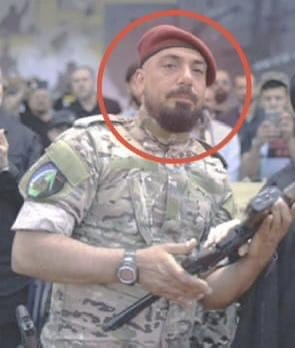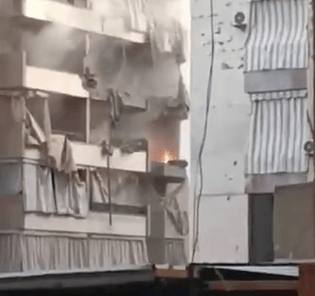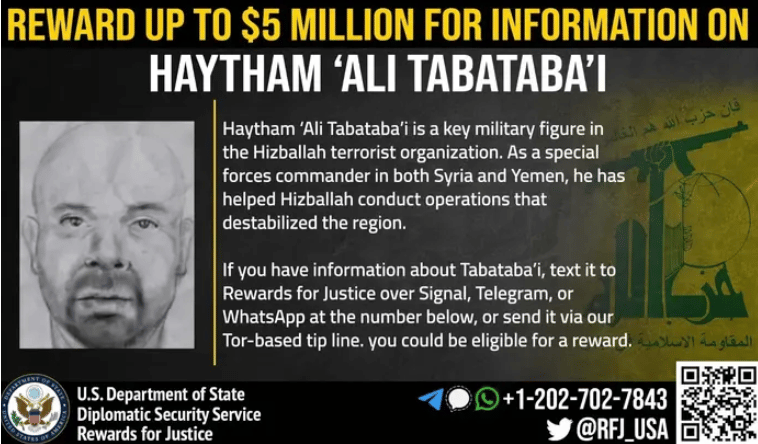

Israel recently conducted a targeted strike on a high-profile terror target eliminated in Beirut: Ali Tabatabai, Hezbollah’s second-in-command after Secretary-General Naim Qassem, and the group’s acting Chief of Staff. Tabatabai has been one of Hezbollah’s most senior military figures in recent years.
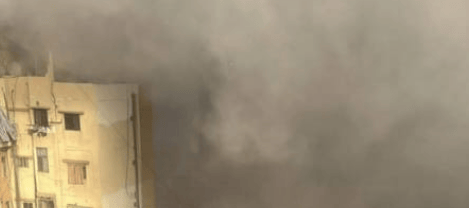
Tabatabai was eliminated in his safe house in Dahieh. According to security officials, in recent months he had been planning multiple terror attacks against Israel and was actively pushing for a military escalation between Israel and Hezbollah.
Over the past year, Tabatabai jointly headed Hezbollah’s military apparatus alongside Muhammad Haydar, with both men responsible for the group’s rebuilding and renewed military expansion.
He commanded Hezbollah’s special forces units and, following the earlier elimination of the organization’s top military leadership, effectively became Hezbollah’s highest-ranking military official.
He was targeted after Israeli intelligence concluded that he was not a restraining force within the organization but, on the contrary, a central figure driving Hezbollah toward renewed military buildup and aggressive action against Israel.
Israel believes that the elimination was successful.
His rise to power:
Before his ascent to Hezbollah’s senior command, he held a series of high-level positions, including commander of the elite Radwan Force and head of Unit 3800, the Hezbollah unit operating under Iran’s Quds Force and responsible, among other tasks, for training and preparing militias in Iraq and the Houthis in Yemen.
During the fighting on the northern front, Hezbollah’s previous “Chiefs of Staff,” Fouad Shukr and Ibrahim Aqil, were eliminated. Another senior commander killed alongside Secretary-General Hassan Nasrallah was Ali Karaki.
Tabatabai assumed Karaki’s role after Karaki was assassinated. At the end of the war, he was appointed to the organization’s top military leadership alongside Abu Ali Reza and Talal Hamiyah.