The United States Navy has announced a major structural overhaul of its future submarine fleet, planning to convert 19 modern attack submarines into guided missile platforms. The strategic move is designed to directly address China's accelerating military buildup in the Pacific Ocean and to maintain Washington's naval superiority in potential conflict zones.
The announcement comes against a backdrop of concerning reports about America's limited missile capabilities following recent military operations against Iran.
Under the plan, Virginia-class submarines will be fitted with a dedicated payload module approximately 25 meters in length, adding 28 new launch cells to the existing 12. This upgrade will enable each submarine to carry Tomahawk cruise missiles for striking ground targets alongside advanced hypersonic vehicles designed to penetrate China's air and naval defense systems.
Defense analysts note that the submarines' stealth capabilities will allow them to operate in close proximity to adversary core areas. Sidharth Kaushal, a senior fellow at the Royal United Services Institute in London, explained that "submarines are one of the few capabilities that can loiter near or within the first island chain with relative safety," adding that bringing missiles closer to targets significantly reduces an adversary's response time.
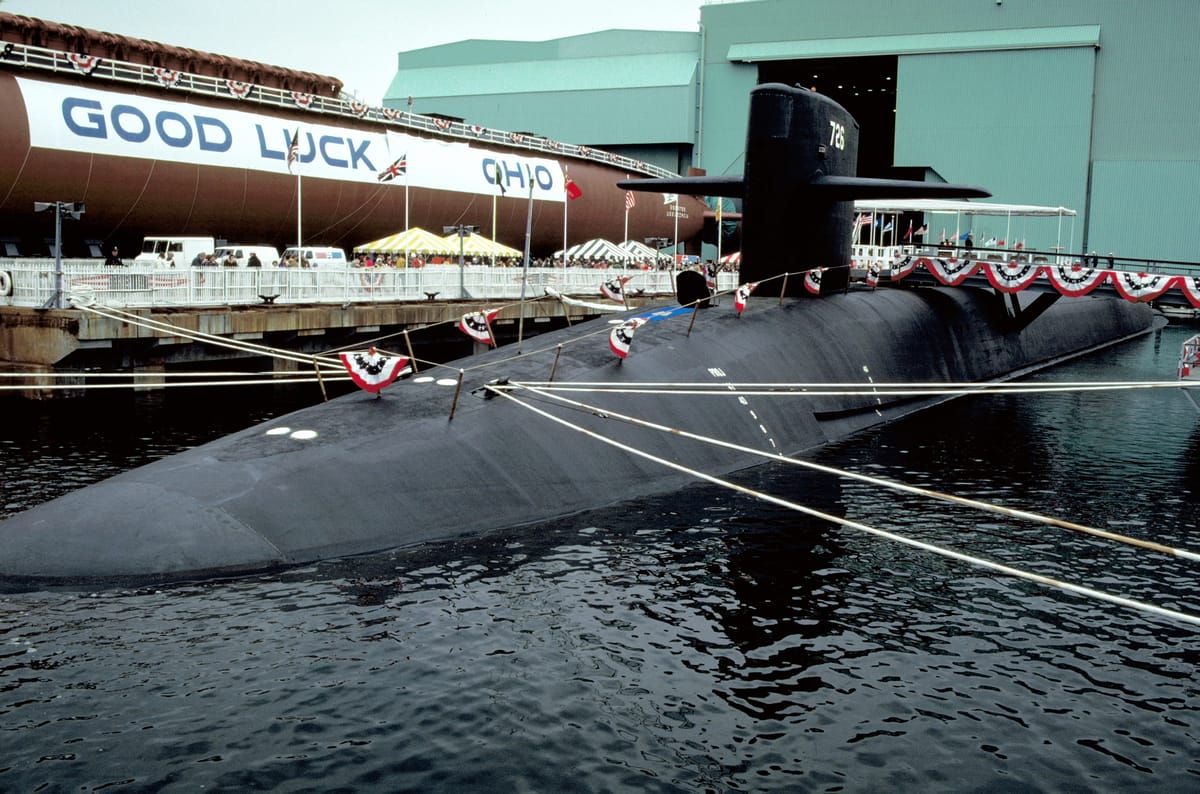
The initiative unfolds as four aging Ohio-class guided missile submarines are gradually being retired. These vessels were previously converted from nuclear weapons platforms to conventional variants and could each carry up to 154 Tomahawk missiles. Bradley Martin, a former Navy captain and researcher at the RAND Corporation, described these submarines as "the platform with the greatest capability to launch conventional missile payloads."
One Ohio-class submarine, the Georgia, began its decommissioning process last month, with the remaining three expected to retire in coming years. According to the Submarine Industrial Base Council in Washington, retiring these older vessels will result in a temporary reduction of up to 60% in the American Navy's undersea strike capability.
The first upgraded Virginia-class submarines are expected to enter active service only in 2029, with the final vessel in the series planned to join the fleet in 2038. Despite the resulting gap in firepower, senior Navy commanders have expressed full confidence in the process. Rear Admiral Rob Gaucher, director of submarine programs, emphasized that "these submarines will ensure the Navy continues to dominate the undersea domain for decades."
Fleet Forces Commander Admiral Daryl Caudle noted that the new generation will build on the Ohio-class legacy while presenting "higher survivability and adaptability." Analysts explain that although each new submarine will carry roughly a quarter of the missiles of a single Ohio-class vessel, distributing payloads across numerous platforms will make it harder for China's military to track naval forces.
The American move comes in response to Beijing's accelerated procurement program. Between 2021 and 2025, the Chinese Navy launched ten nuclear submarines compared to just seven by the United States, and over four years China's rocket forces increased their missile inventory by 50%. Additionally, China unveiled an unmanned underwater vehicle at a military parade aimed at strengthening its readiness for operations around Taiwan.
Washington's renewed posture also occurs amid depletion of American ammunition stocks following "Operation Midnight Hammer" strikes in 2025 on Iranian nuclear sites directed by President Donald Trump. The Navy's statement clarified that "the submarines will operate without interference in contested waters, ensuring the US Navy maintains absolute undersea superiority."