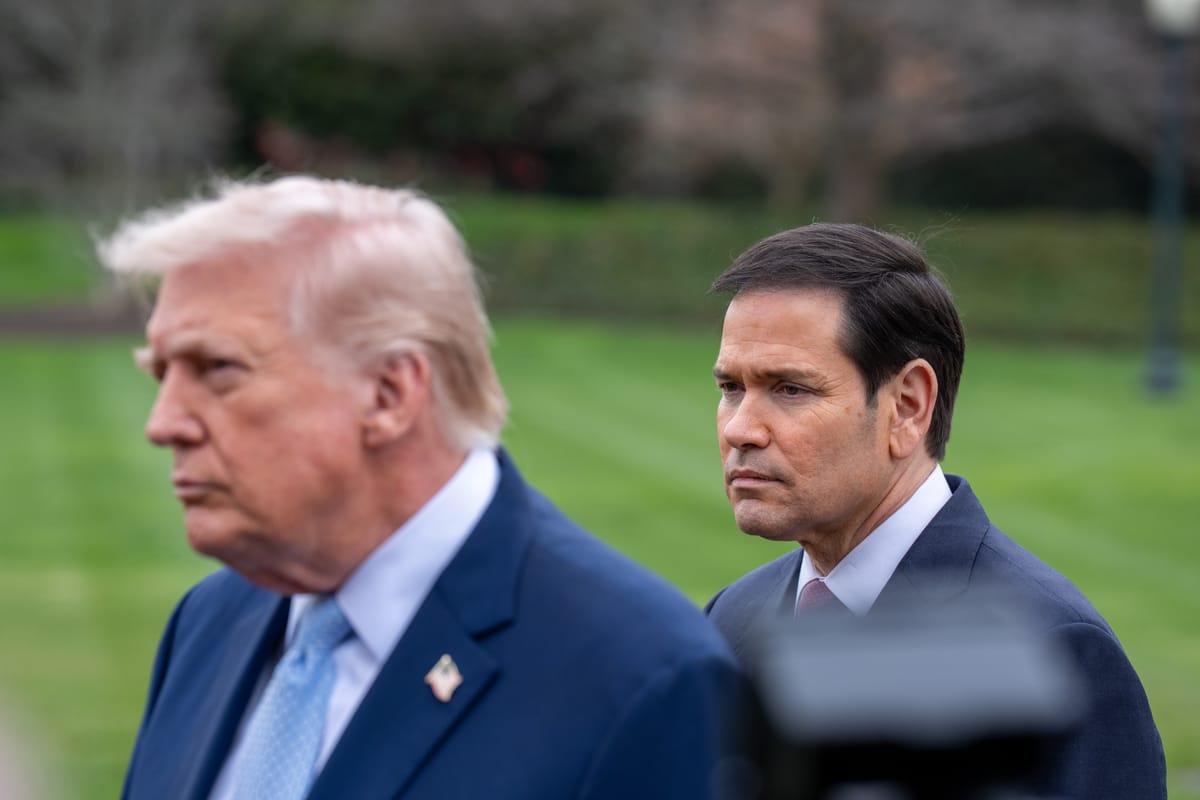
US Secretary of State Marco Rubio informed international counterparts in recent days that the United States does not plan to initiate new military strikes against Iran for the time being. Washington intends to pivot its operational strategy toward non military pressure mechanisms, according to a senior US official and sources familiar with the discussions.
The strategic shift reflects President Trump's desire to conclude active hostilities in the immediate term. However, officials clarified that while the US is stepping back from large scale military operations inside Iran, defensive strikes remain an option should Tehran initiate fresh military actions or provocative maneuvers.
A major turning point in the war occurred as the US Navy completed mine clearing operations across most of the Strait of Hormuz. US officials reported that commercial oil tankers are increasingly navigating the southern shipping lanes of the waterway, effectively stripping Tehran of its ability to manipulate global energy markets as a pressure point. "The Iranians have lost control of the strait. Now the United States controls it," a senior US official stated.
In parallel with naval control over the waterway, the US naval blockade continues to deny critical revenues to the Iranian regime. American officials observed virtually no oil tanker activity over the past two weeks at Kharg Island, home to Iran's primary crude oil export terminal.
US State Department Spokesperson Tommy Pigott emphasized the economic impact of these coordinated measures on Tehran's financial stability. "The Iranian economy is in free fall and the regime's military has been severely hit," Pigott stated. "President Trump holds all the cards, and we are cutting off every financial lifeline left for the regime. The President has made clear that Iran must never possess a nuclear weapon, and that he will use the tools needed to ensure this goal is achieved."
Diplomatic efforts continue behind the scenes through regional intermediaries. Field Marshal Asim Munir, commander of the Pakistani military, traveled to Tehran on Sunday following discussions with President Trump to present a new proposal to Iranian leadership. While the White House did not deny Trump's conversation with Munir, officials maintained that no direct negotiations with Iran are scheduled, asserting that continued economic pressure may eventually force Tehran back to the negotiating table.
Key White House envoys Steve Witkoff and Jared Kushner, who have spearheaded negotiations regarding Iran, are scheduled to visit US Central Command headquarters in Tampa, Florida, on Wednesday. The envoys will receive detailed operational briefings on the situation inside Iran and security conditions across the Strait of Hormuz.