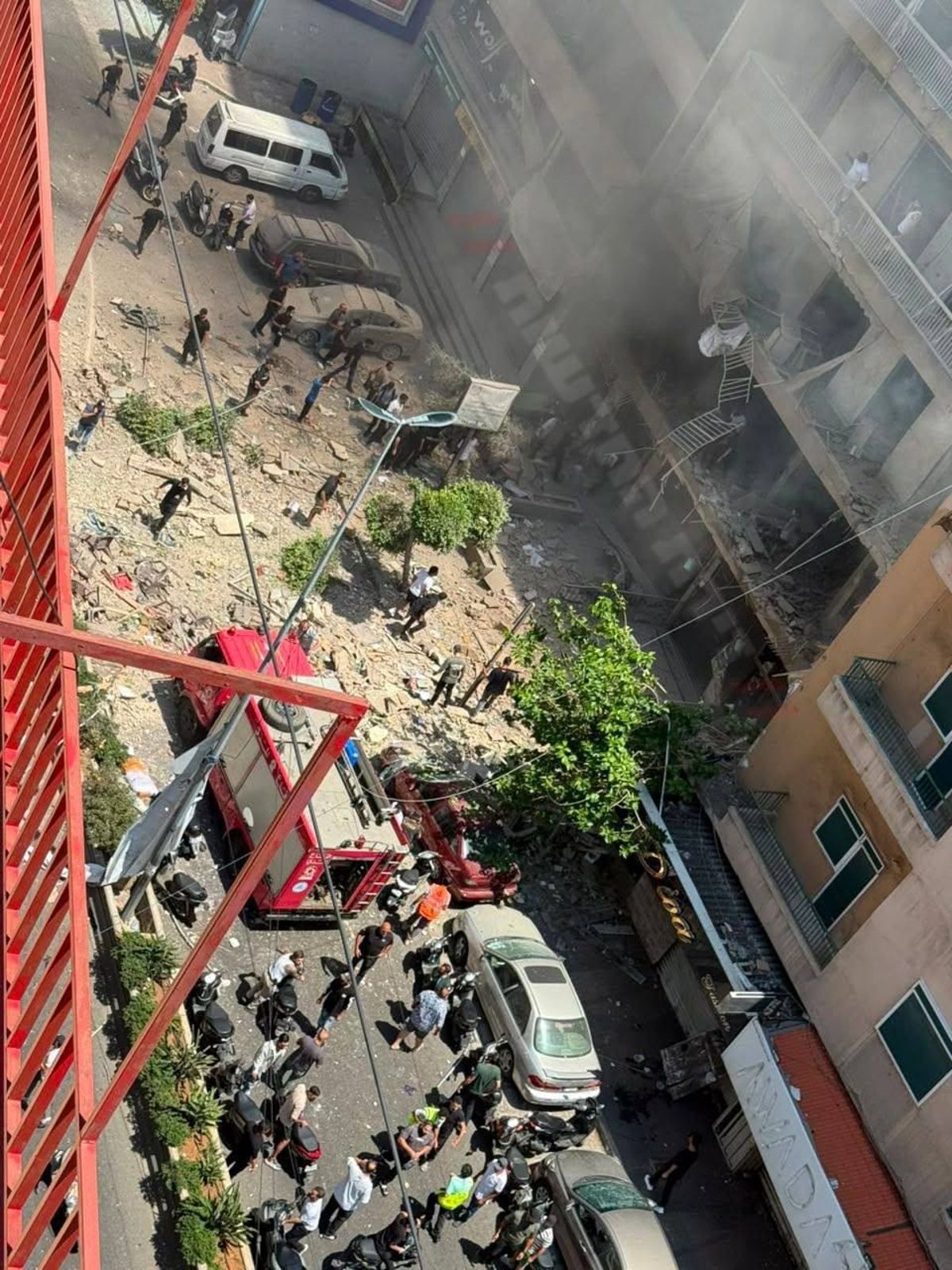
Israel and the United States have engaged in an aggressive campaign targeting the financial networks supporting Hezbollah, combining direct military airstrikes against financial infrastructure with diplomatic pressure on Lebanese authorities. A report published by The New York Times revealed that initial Israeli military strikes during the current phase of operations focused on banking institutions, destroying over a dozen branches accused of serving as Hezbollah's primary banking system in Lebanon.
The military campaign expanded to target money exchangers used by Iran to transfer funds to Hezbollah, as well as commercial fuel stations generating revenue for the organization.
The economic operations accelerated following the fall of the Assad regime in Syria, which closed a critical smuggling route previously utilized by Hezbollah. In response, Iranian authorities attempted to transfer cash directly through Beirut's international airport using civilian flights and diplomatic personnel. Following intelligence warnings delivered through US channels, Lebanese authorities suspended all flights originating from Iran, replaced airport staff affiliated with Hezbollah, and placed airport security under coordination with American officials.
Parallel efforts focused on reforming the Central Bank of Lebanon, where the newly appointed governor, Karim Souaid, implemented measures to curtail illicit financial flows.
Governor Souaid removed bank officials suspected of maintaining ties with Hezbollah, swept central bank offices for surveillance devices, and launched formal investigations into major money transfer firms across the country. As formal financial institutions faced heightened oversight, US Treasury officials issued sanctions against informal money exchange networks operating through the United Arab Emirates, Turkey, and Iraq.
Airstrikes against foreign currency reserves and gold stockpiles also prompted Hezbollah officials to establish networks of gold trading companies to convert precious metals into operational cash.
The financial campaign has created significant economic strain for Hezbollah, forcing reductions in its social welfare programs and compensation payments to supporters. While salaries for core military personnel remain largely funded, the organization struggles to support displaced populations and maintain its broader social infrastructure.
Hezbollah spokesman admitted to media outlets that the organization was forced to suspend promised compensation payments while prioritizing military expenditures.
"The scale of the demands imposed by the campaign and the displacement of the population have placed a significant strain on Hezbollah," the spokesman stated regarding the financial pressure. "Resources are managed according to priorities. There is no doubt there is pressure, but Hezbollah is capable of overcoming it," he added.
Prior to the current war, the US State Department estimated Iranian funding to Hezbollah at approximately $700 million annually, accounting for the majority of the group's $1 billion annual budget. While Tehran increased financial allocations over the past year, total transfers remain insufficient to cover war related expenditures.
Military forces under IDF Chief of Staff Eyal Zamir continue monitoring financial and supply infrastructure across the northern theater to prevent the replenishment of military assets.
According to reporting published by N12, coordinated pressure from Washington and Jerusalem continues to disrupt the primary cash corridors sustaining Hezbollah operations.