Iranian opposition activists, journalists, and private citizens initiated a coordinated campaign across online platforms to challenge state narratives surrounding ongoing diplomatic negotiations with Oman regarding the Strait of Hormuz. Opponents of the clerical government published official government tender documents alleging state funding for pro regime demonstrations while raising warnings over expanding domestic executions across the country.
The public pushback coincides with high level talks mediated by Oman to establish operational transit guidelines through regional maritime channels.
Iranian citizen and activist Fariba delivered sharp criticism against the ongoing diplomatic exchanges, asserting that agreements with the Islamic Republic fail to constrain state actions.
"Agreement and coordination with the regime of the Ayatollahs is giving points for extortion, it will not surrender and will not stand by its signature, they are only buying time to establish kidnappings, extortion, and terror," Fariba stated regarding negotiation efforts. "This balance of power will only be broken through military leverage that will lead to the collapse of the regime."
Fariba further argued that targeting physical utility installations would fail to alter the strategic posture of the leadership in Tehran.
"Striking the infrastructure of the Ayatollah regime will not subdue it, they do not care about infrastructure destruction at all," Fariba added while addressing international policy. "The only way for Trump to get out of the cycle of war, extortion, and negotiation is supporting the establishment of a transitional government and giving a free hand to Israel to strike senior leaders."
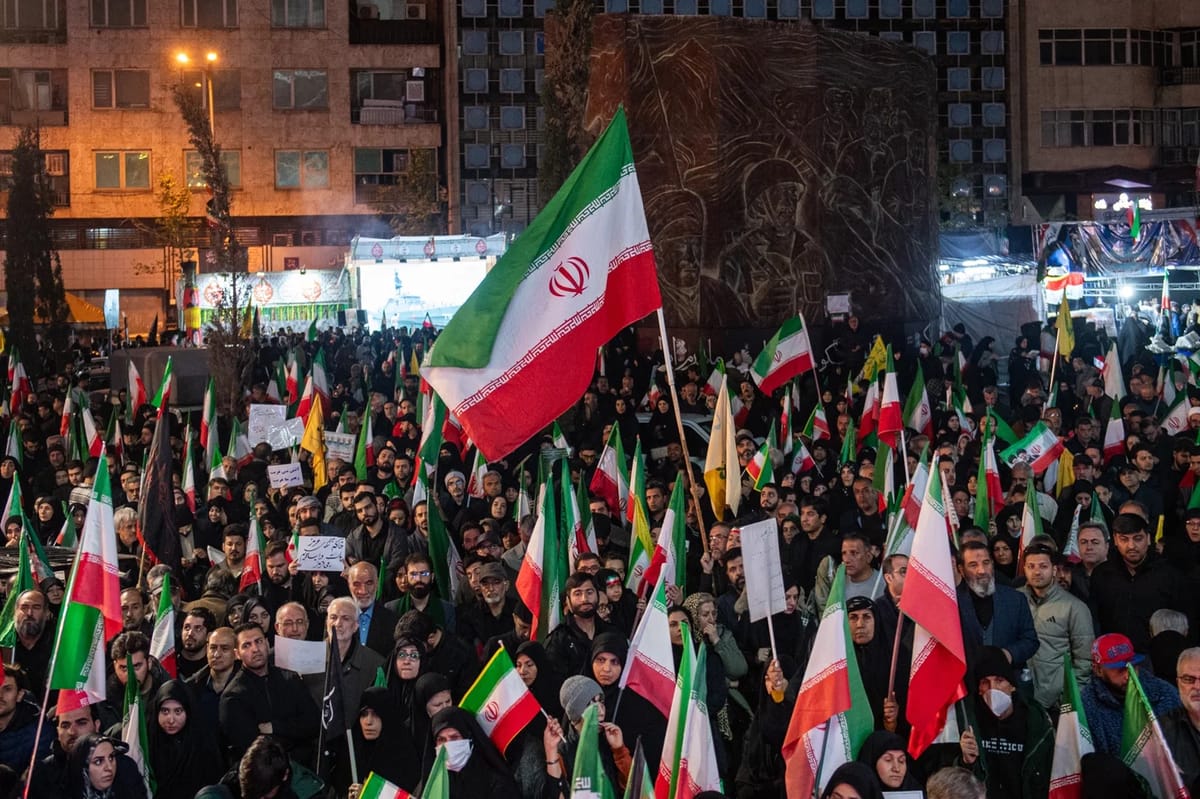
Opposition journalists also targeted official state media assertions that public demonstrations supporting government policies represent spontaneous civilian movements. Iranian journalist Iranian opposition figures published a document extracted from Iran's official government procurement system, alleging that local authorities budget and organize these gatherings in advance.
The procurement document, issued by the municipality of Varamin in Tehran Province under the title "Support for nightly gatherings in squares and across the city," allocated municipal funds for food, beverages, sound systems, staging, and promotional accessories for flag bearers.
"And then they claim that these gatherings are spontaneous," Ahwaz stated, noting that the procurement records contradict official narratives of unorganized civilian support.
Addressing the maritime negotiations over the Strait of Hormuz, Iranian activist Alireza argued that focusing on transit fee collection misinterprets the strategic objectives of the regime.
"The focus on the Hormuz fee is a distraction," Alireza stated regarding maritime policy discussions. "Not every ship passing there is a tanker, and the revenue obtained is secondary."
Alireza asserted that state authorities prioritize geopolitical influence over commercial revenue streams along critical shipping lanes.
"What Iran is looking for here is control, they want to determine who can enter and who cannot," Alireza added regarding state objectives. "It is not clear if this can be achieved, but that is the main goal."
Concurrently, human rights monitors documented an escalation in judicial executions carried out by state security organs since the beginning of the year. Opposition activists reported that the regime executed at least 908 individuals since January 2026, including 67 executions carried out in July and at least eight during the first four days of August.
Monitors emphasized that secret executions and undisclosed detentions indicate the penalty serves as a central political control mechanism following widespread public protests.
Military forces under IDF Chief of Staff Eyal Zamir continue monitoring security developments across regional sectors as opposition groups urge international pressure against state apparatuses.
Reporting published by N12 indicates that while opposition voices remain active online, state security services maintain significant enforcement capabilities across major population centers.