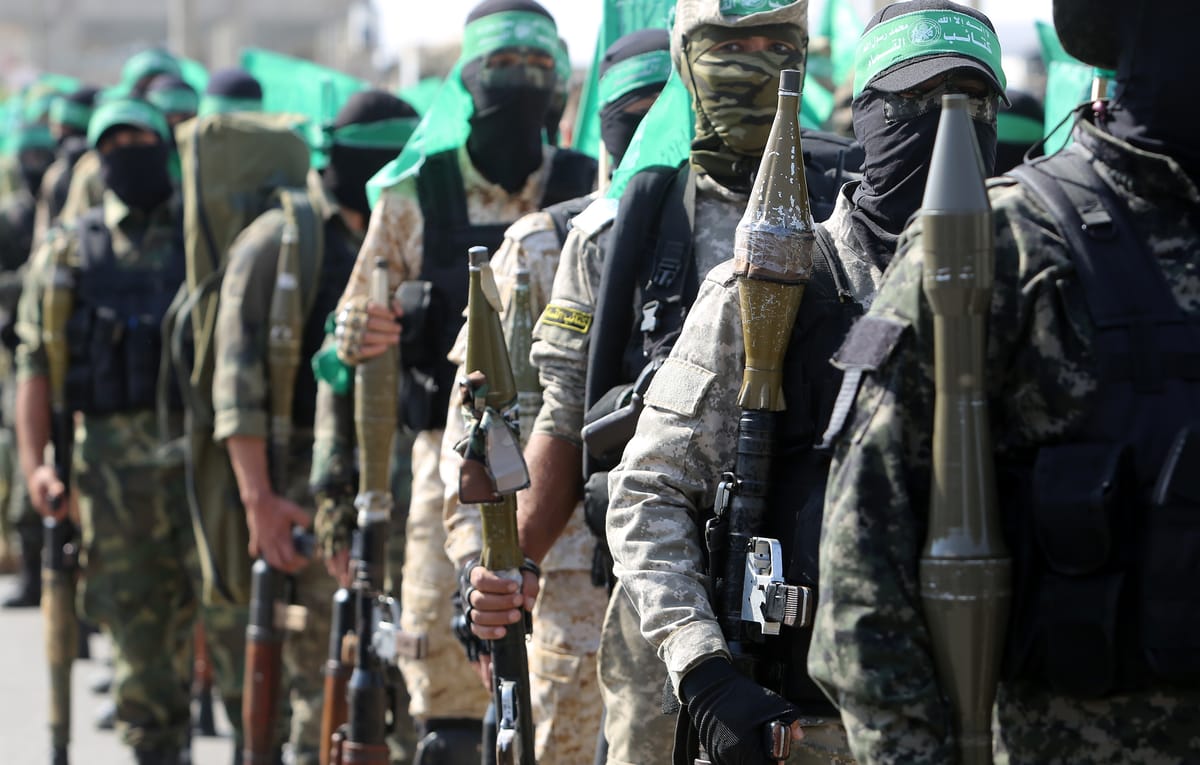
Hamas has moved much of its organizational center of gravity to Turkey over the past several months, according to a report Thursday in the pro-Saudi newspaper Asharq Al-Awsat, marking a significant shift after years in which Qatar served as the terror group's primary hub abroad.
Three sources within Hamas's leadership abroad told the newspaper that the organization has resumed holding its meetings in Turkey, following years in which Doha functioned as the central venue both for leadership meetings and for the group's internal elections. The sources said the recent, inconclusive elections for the head of Hamas's political bureau were held in Istanbul, rather than in Qatar as in years past.
Asked whether the shift reflected a security concern or a falling out with Qatar, one senior source told Asharq Al-Awsat that the move did not amount to a dispute with Doha, but rather came to ease the burden on Qatar in the face of American pressure, driven by Israel, demanding the expulsion of the movement's leaders. A second source said Hamas's leadership still maintains a solid relationship with Qatari officials, who continue to welcome the movement. A third source framed the move in security terms, noting that Turkey is now seen as a safer destination since Israel cannot strike targets there from the air, though it could still carry out assassinations by other means.
The report cited an Israeli strike on Hamas officials in Doha as a turning point in the calculation. Hamas has said its senior officials survived that attack, though five of its members were killed along with a member of Qatar's security forces.
Alongside the relocation, Asharq Al-Awsat reported that Hamas is working to build closer ties with Syria's new government, headed by a leader widely seen as under the patronage of Turkish President Recep Tayyip Erdogan, as the group looks to expand its regional footprint beyond its traditional Gulf backers.
The reported shift comes as Turkey's standing with Washington appears to be rising on a separate but related front. At last week's NATO summit in Ankara, President Trump said he would "certainly consider" selling F-35 fighter jets to Turkey, and told reporters he would lift sanctions tied to Ankara's 2019 purchase of Russia's S-400 air defense system, the issue that got Turkey expelled from the F-35 program in the first place. Erdogan said Trump had personally promised him five of the jets and "always keeps his promises." Turkish officials have said they are seeking an initial delivery of six aircraft, short of the roughly forty Ankara has pushed for.
Prime Minister Benjamin Netanyahu has lobbied Trump directly against the sale, warning in a Fox News interview that arming Turkey with F-35s would upset a regional balance of power that rests on Israeli air superiority, and describing Turkey's government as influenced by the Muslim Brotherhood.
Bipartisan lawmakers in Congress have raised similar objections, citing Turkey's continued possession of the Russian S-400 system and its deepening ties with Moscow and Beijing. No sale has been finalized and no jets have been delivered, but the combination of warmer defense ties with Washington and Hamas's growing reliance on Ankara is likely to sharpen concerns in Jerusalem over Turkey's expanding regional weight.
Turkey has long served as a base for senior Hamas figures. Ismail Haniyeh and Saleh al-Arouri, both later assassinated by Israel, spent extended periods there over the past decade, and Israel has repeatedly pressed Ankara to expel Hamas officials residing in the country, including prisoners released in the 2011 Gilad Shalit exchange.