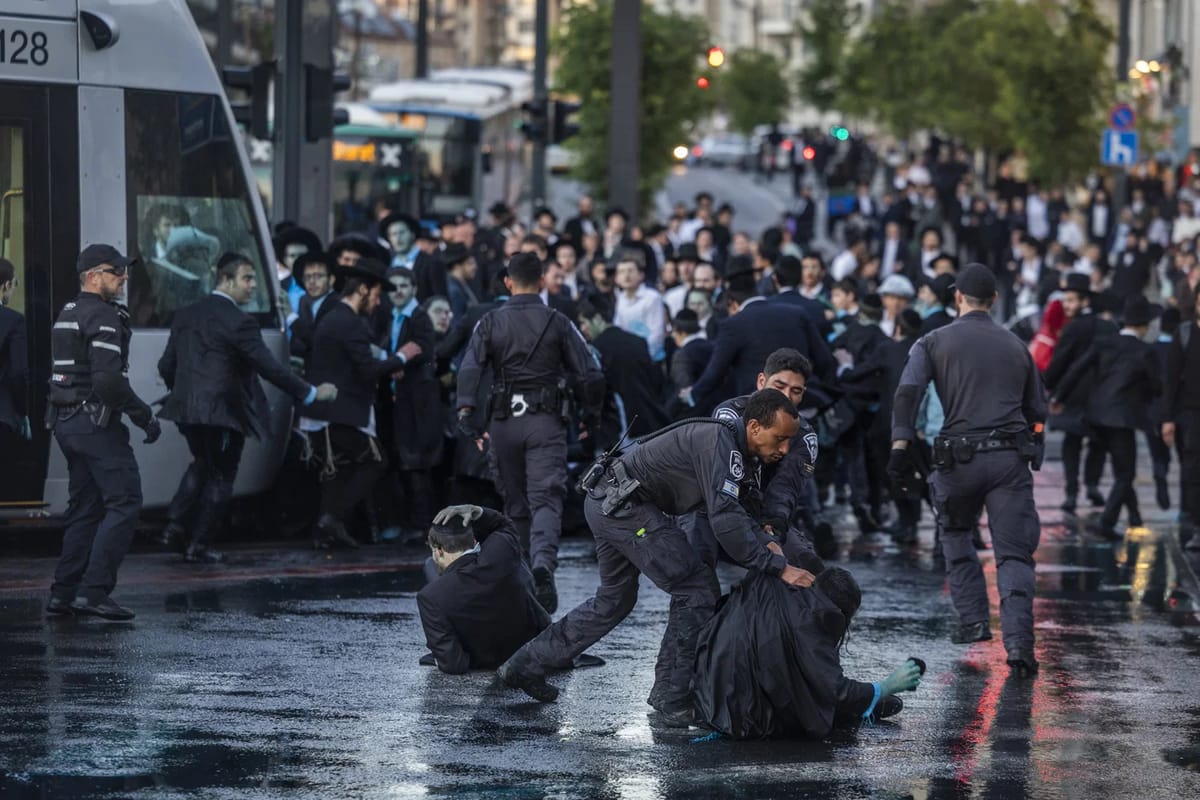
A heated dispute has erupted at the top of Israel's police leadership over whether the force should assist the military in arresting ultra-Orthodox draft evaders, with a senior district commander openly pushing back against army demands, only to be overruled by the national police chief.
According to a report by journalist Roi Yanovsky, the confrontation unfolded during a senior command staff meeting convened by Police Commissioner Danny Levy. Central District Commander Amir Cohen objected to the army's request to deploy police forces in support of planned operations against Haredi draft dodgers, saying bluntly: "The army is dragging us into an event where we're dealing with deserters. They won't tell us how to prioritize our missions."
The intervention drew immediate pushback from others in the room. Senior officer Boaz Balat told Cohen directly: "There's no place for statements of that kind. You represent police officers and commanders here." Legal counsel representatives and other senior officers present also objected to Cohen's remarks.
The dispute comes after the Supreme Court ruled that the police are obligated to assist the IDF in apprehending Haredi men who have evaded military service. Following the ruling, the army informed police it intends to launch proactive operations as early as the beginning of June and is demanding security support.
Commissioner Levy ultimately settled the matter, telling those present: "We will do what the court said."
The standoff reflects the deep institutional tensions surrounding Haredi conscription, one of Israel's most politically charged fault lines. Ultra-Orthodox political parties, whose support is critical to Prime Minister Benjamin Netanyahu's governing coalition, have long opposed mandatory military service for their community, and any large-scale arrest campaign would likely trigger significant protests and political fallout.