The Media Echo Chamber

Respected Journalists Parrot Naor Narkis's Attack on Religious Zionist Soldiers

Narkis calls Religious Zionists draft dodgers despite highest combat enlistment rates • Prominent journalists Nir Dvori and Ben Caspit repeat the claim | When provocateurs find mainstream allies (Israel News)

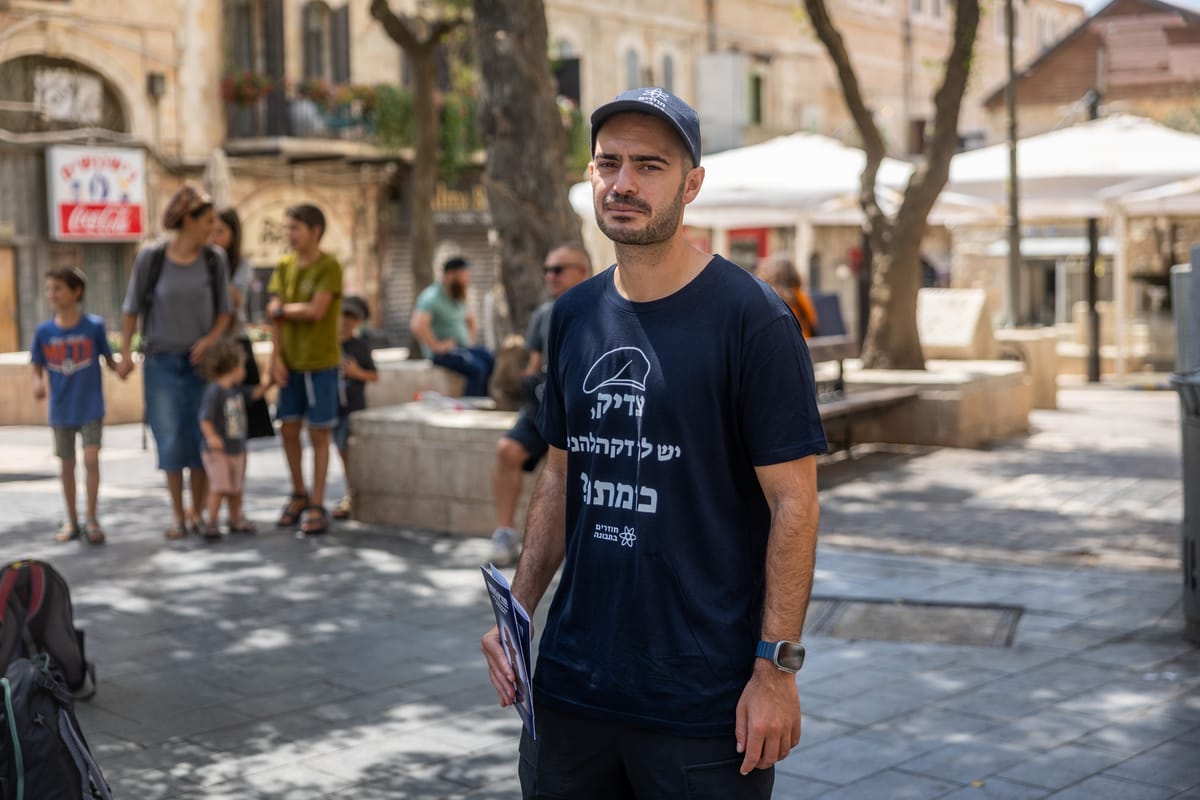
Naor Narkis
Naor Narkis (Photo: Flash90 / Chaim Goldberg)

When secular activist Naor Narkis declared in a recent interview that Religious Zionists are draft dodgers, few were surprised. Narkis has built his entire political brand on contempt for religious Jews, positioning himself as the voice of secular resentment ahead of his Knesset run with the Democrats party. His claim that the hesder yeshiva system should be shut down was pure provocation — the kind of inflammatory rhetoric designed to generate headlines and primary votes.

What should alarm anyone who cares about honest public discourse is that respected mainstream journalists immediately lined up to echo his attack.

Nir Dvori, a veteran Channel 13 correspondent, stated flatly that Religious Zionists "need to do service like everyone else, there needs to be change and full equality on this issue." Ben Caspit, a prominent political analyst, went further, declaring that "the days of this ancient hesder arrangement must end. Full service for everyone."

The statements reveal either profound ignorance or deliberate dishonesty. The Religious Zionist sector has the highest rate of combat enlistment and officer training of any community in Israel. When the IDF announced it needed more combat soldiers during the current war, Religious Zionist yeshivot were among the first to respond. The hesder track — which combines Torah study with full combat service — produces hundreds of frontline fighters every year, many of whom serve in elite units and go on to become career officers.

The irony is particularly sharp given the context. As Dvori made his remarks, a news ticker ran across the screen reporting that haredi politician Aryeh Deri was boasting about grandchildren who had evaded military service. When Caspit tweeted his call to end hesder, he lumped Religious Zionists together with the haredi community in a single condemnation — despite the fact that these are two entirely different populations with radically different approaches to military service.

This conflation suggests two possible explanations, neither flattering. Either these journalists harbor a fundamental hostility toward religious observance itself, viewing any accommodation for Torah study as illegitimate regardless of the military contribution involved. Or they have grown so frustrated with the genuine problem of haredi draft evasion that they have decided to target an easier mark — a community that actually serves, but whose religious character makes it a politically convenient scapegoat.

The second explanation may be worse than the first. It represents a kind of moral exhaustion, a decision to demand sacrifice from those already giving rather than confront those who refuse. It is the logic of low expectations dressed up as principle.

The hesder system is not perfect, and legitimate questions can be raised about the balance between study and service, the length of deferments, and the allocation of military resources. But those are technical debates about optimizing a framework that demonstrably works. What Narkis, Dvori, and Caspit are proposing is something else entirely: the dismantling of a program that produces combat soldiers at rates the secular sector cannot match, on the grounds that it accommodates religious practice.

The timing makes the attack particularly galling. Haredi yeshiva heads have just proposed a one-year freeze on draft arrests while tripling enrollment in haredi hesder programs — an acknowledgment that the hesder model, pioneered by Religious Zionists, may offer a path forward for broader haredi integration. Meanwhile, the IDF has been forced to compromise on plans to integrate women into armored units after more than 25 hesder yeshiva heads threatened a boycott that military officials acknowledged could cause serious manpower shortages.

These are not the actions of a community shirking its responsibilities. They are the actions of a community deeply invested in the IDF's combat effectiveness, willing to leverage that investment to preserve its values, and capable of delivering the soldiers Israel needs.

For Narkis, facts are irrelevant. He exists to provoke, and he has found his ultimate raw material in the fallen soldiers of a community he despises. But when mainstream journalists adopt his framing without scrutiny, they betray their own profession. They allow resentment to masquerade as analysis, and they contribute to a public discourse in which the communities that sacrifice most are vilified for not sacrificing enough.

If this continues, the Religious Zionist sector — which has long viewed the State of Israel as the beginning of redemption — may conclude that the state views them merely as a convenient target. And Israel will have lost not just soldiers, but the community most willing to provide them.

Ready for more?

Join our newsletter to receive updates on new articles and exclusive content.

We respect your privacy and will never share your information.