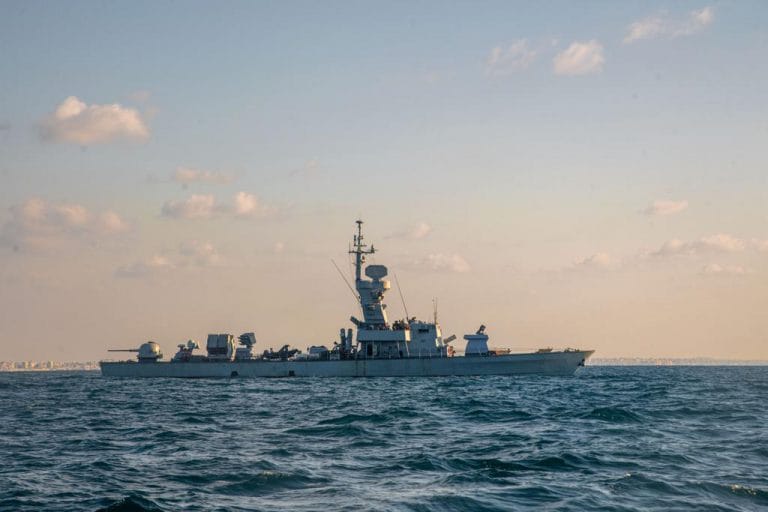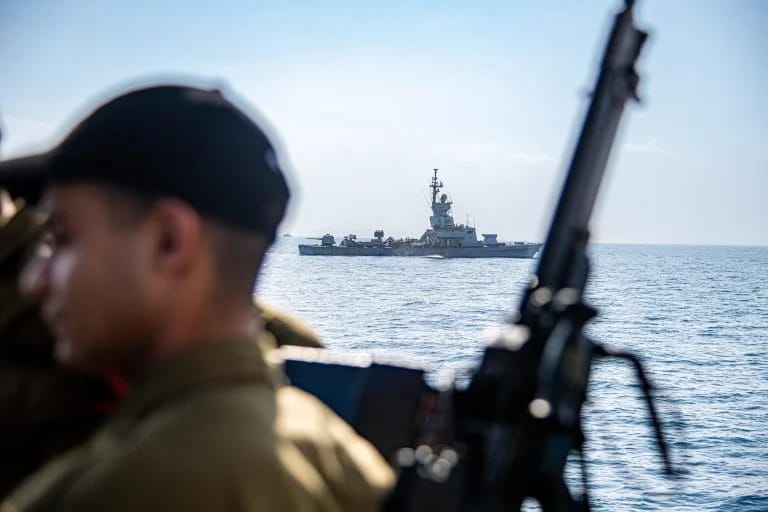
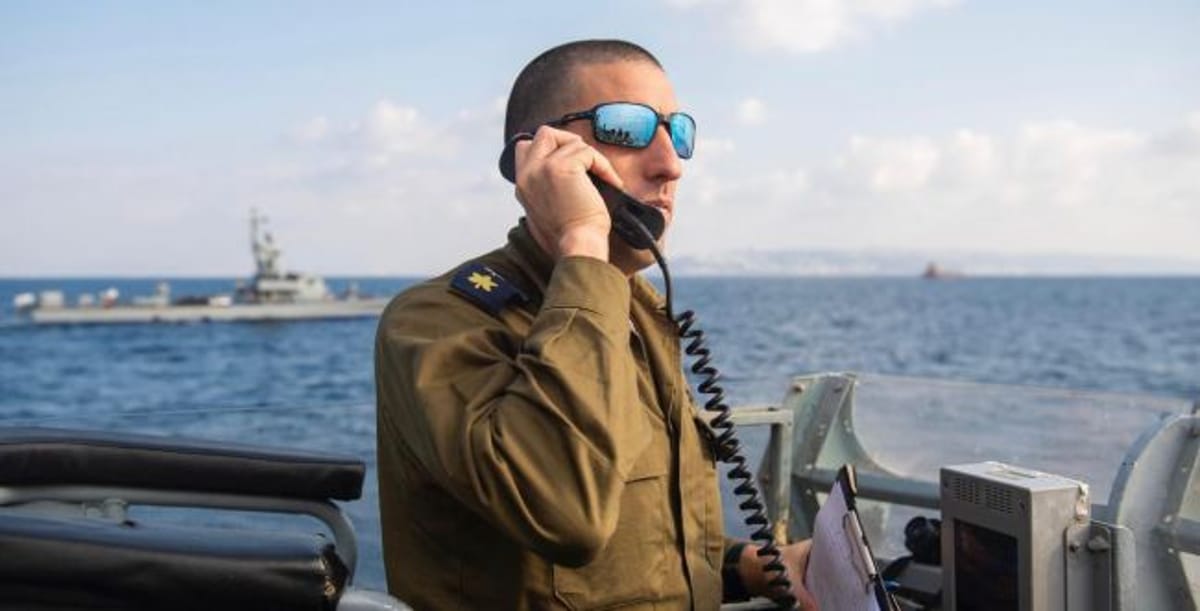
The powerful combination between naval and land power in the fighting in Gaza resulted in many achievements in the fighting. In an interview, Lt. Col. Steven Gordon, the commander of the 32nd Fleet in the missile ship cruise, explains the coordination between the various forces, the precautions taken by the corps against harming the soldiers, about that bitter and hasty morning when terrorists infiltrated Zikim Beach and murdered civilians.
How does the combination between naval power and infantry actually work?
The navy in general and the fleet of missile ships in particular from October 7 are operating in several sectors, one of which is Gaza. I was the first to arrive in the Strip to provide an answer in the first stage for the defense and later for the attack. In the two and a half months of the war, we attacked hundreds of Hamas targets, outposts, weapons depots, lookouts, squads. Everything we could hit from the sea."
According to Lt. Col. Gordon, "one of the tasks that began two weeks after the beginning of the war was to assist the maneuvering divisions. We created a mechanism, which we trained on for a period of time, that one of the times we brought it to fruition in this war of integration together with the same maneuvering factor. It could be at the battalion level that I physically speak with the Major General in the field and also with the Brigadier General, at the same time cooperation of the Air Force with air support and fire coming from the sea.
"It's something we trained and prepared ourselves for and the level of practice is reflected in a very impressive way, close to two months from the first day of the maneuver. It could be that the commander notices a threat, he passes it on to me, I agree, he tells me there are no forces that I endanger.
"I have a helicopter that looks at the target from above and I attack, and the same is the other way around. Beyond assisting with fire, I also assist with observation, an angle that is unique, spread out and large from the direction of the sea, assisting with observation near the coast as well as at depth."
Making sure that no shell will harm our forces
Did the ships fire deep into Gaza as well?
"Specifically in ships, the main means we use is a 77 millimeter cannon and 76 millimeter shells, a precise firing system that the shells reach every point we need. I don't have to see it with the eye but deep on the beach."
According to him, "All the targets I shoot at can be relevant to the entire strip, I can execute from any point in the sea for the same targets even at depth. Even if I can't see the target with my eyes, the Air Force or the maneuvering party knows how to tell me about the hits and whether I have achieved the required achievement and whether corrections need to be made to be more accurate."
There is no fear of harming the soldiers?
"We do our best to avoid operational accidents, unfortunately in a war with the amount of forces and the amount of fire that is used there are accidents. With maneuver assistance from the Navy we make sure of this. Our IT systems in real time also allow us to see in real time where our forces are.
"As I said, we apply safety measures upon safety measures to make sure that no shell hits close to our forces and could endanger them. And so even if I don't see the goal, it's important to me that someone sees to it that I'm making sure that I do reach the required achievement and I'm not endangering our forces."