As thousands of Haredi vehicles rolled toward Military Prison 10 Wednesday afternoon, a different kind of alarm was being sounded on the Davar Rishon program, one aimed not at the draft crisis but at what mako military correspondent Shaן Levy describes as a systematic campaign of deception being waged by the IDF on the Lebanese front.
Frightening indictment
A Scathing Insider Account of What's Really Happening in Lebanon
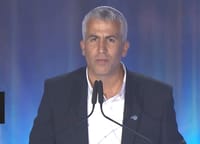
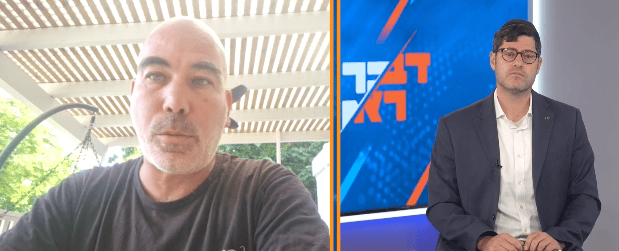
Military journalist Shaן Levy delivered a scathing on-air indictment of IDF transparency Wednesday, accusing the army of concealment, fake "strategic" framing, and punishing critical reporters.
Levy, one of Israel's most respected military journalists, did not mince words. "Don't fall asleep," he warned viewers. The picture he painted of what is happening behind the scenes in Lebanon was, by his own description, deeply troubling.
From Pagers to Quicksand
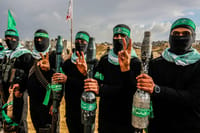
Levy opened by drawing a stark and painful contrast between the dazzling operational achievements of the early campaign, the pager and walkie-talkie operation, the elimination of Nasrallah, the decapitation of Hezbollah's senior command, and the grinding, bloody reality on the ground today.
"The army is a partner in a strategic failure," he said bluntly, accusing the IDF of producing plans built around scenarios that are being sold as "noodles," his word for empty promises and wishful thinking, both to the political echelon and to the public. Meanwhile, he said, Hezbollah continues to fire, continues to kill soldiers, and continues launching drones.
Three Specific Failures
Levy identified three concrete and systemic failures he says define the IDF's current posture on transparency.
The first is concealment and the erosion of trust on the ground. Levy cited what is happening in the Gaza Envelope as a direct parallel, where the IDF issues terse "routine fire" statements during operational events and fails to update readiness units in real time when terrorists cross lines, putting lives at risk and destroying public trust. He said this failure is personal for him: he experienced it himself on October 7 at his kibbutz, Mefalsim.
The second is the weaponization of classification to silence criticism. Levy accused the security establishment of deploying security classifications and inflated language like "strategic" as tools not to protect state security but to swat away journalists and citizens and extinguish legitimate criticism. He cited the outpost at Ali Taher as a specific example of a situation where "top secret" framing was used to shut down scrutiny rather than to protect genuine operational interests.
The third is a deliberate punishment and reward system for journalists. Levy revealed that the IDF manages its press relationships as a coercion tool. Journalists who ask uncomfortable questions find their embed requests buried, their access delayed by months until stories are no longer relevant, while "convenient" competitors receive better materials and faster responses. "The military spokesperson is not the way to know the truth," Levy concluded. "Most of my real information comes from independent sources in the field."
The Broader Warning
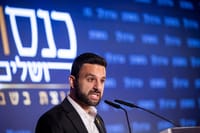
Levy's appearance on the program came alongside Tzachi Barim, Deputy Mayor of Jerusalem representing Agudat Yisrael, who discussed the vehicle protest, and Nathaniel Isaac, who addressed the question of effective protest tactics. But it was Levy's segment that carried the sharpest edge.
His warning arrives at a moment when the IDF's public image has been riding high on the genuine achievements of the past year, from Nasrallah's elimination to the Iran strikes. Levy's message is that those achievements have created a dangerous complacency, both within the military establishment and in the public it is supposed to serve, and that behind the headline victories, soldiers are still dying in a conflict whose trajectory is not being honestly described to the Israeli people.