A railway corridor taking shape between Turkey, Saudi Arabia, Syria, and Jordan is poised to deal a potentially fatal blow to one of Israel's most strategically significant economic projects - and sources close to the Saudi royal court say a formal announcement may be imminent.
According to Gulf media reports, the parties have reached basic agreements on connecting Saudi and Turkish rail networks through Syria and Jordan, creating an Arab-Turkish-European land corridor that would run goods from the Persian Gulf all the way to European markets, entirely bypassing Israel.
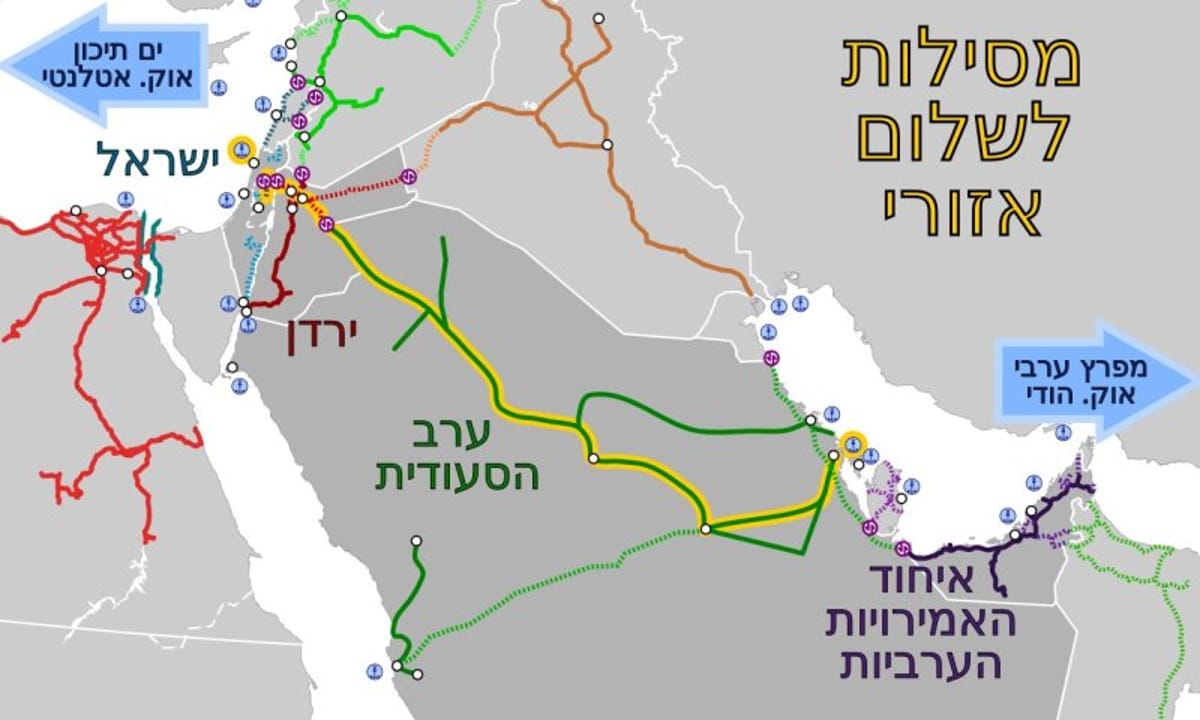
The target is unmistakable. The India-Middle East-Europe Economic Corridor, known as IMEC, was announced during the Biden era as a modern Silk Road: goods would move from India to UAE ports, then by rail through Saudi Arabia and Jordan to Israeli ports, and from there onward to Europe. That corridor was considered a central pillar of the path toward Saudi-Israeli normalization. The new Turkish-Saudi route would make it redundant before it ever gets built.
Earlier this year, Turkey, Syria, and Jordan signed a trilateral memorandum of understanding on transport cooperation, with Turkish Transport Minister Abdulkadir Uraloğlu describing the agreement as a restoration of the historic Ottoman Hejaz Railway, originally built by Sultan Abdulhamid II to link Istanbul with Mecca. The network is expected to take four to five years to complete, after which it is planned to connect to the Saudi rail system.
On June 2, Turkish Foreign Minister Hakan Fidan announced that Ankara was in active talks with Saudi Arabia and other Gulf states, including the UAE, Qatar, Kuwait, Oman, and Bahrain, to revive the regional corridor. Analysts estimate the route could reduce transport costs by 20 to 30 percent and cut shipping times from 15 days to just 6.
The geopolitical logic driving the project is hard to miss. The modern revitalized railway is expected to connect to Saudi Arabia, enabling goods to be transported from the Persian Gulf to Europe over land, avoiding the Strait of Hormuz, which has become a contested waterway since the outbreak of the U.S.-Israel war against Iran.
Saudi Arabia's formal buy-in would effectively close the door on IMEC. The Saudi rail network already reaches the Jordanian border via the al-Haditha crossing, making it a strategic focal point for expansion into regional and international connectivity, with Saudi officials describing their ports and corridors as working in an integrated fashion to facilitate the movement of goods between countries.
For Israel, the stakes could hardly be higher. IMEC was never just an infrastructure project, it was the economic centerpiece of a normalization framework with Riyadh, the promise that peace with Saudi Arabia would come with concrete commercial dividends. A competing corridor that routes Gulf trade through Damascus and Ankara instead of Haifa renders that promise hollow, and removes one of the primary incentives for Saudi Arabia to normalize with Israel at all.
The document formalizing the Turkey-Saudi agreement is reportedly ready, with Syrian and Jordanian ratification considered a formality, Syria being a Turkish client state and Jordan closely aligned with Saudi interests.
For now, a project once described as Israel's ticket into the new regional order is watching a different train leave the station.