The Israel Water Authority's Hydrological Service has released its summary report for the 2024/25 rainfall season, presenting what officials describe as a complex and troubling picture of the country's natural water sources.
Nationwide rainfall totals reached approximately 95% of the long-term average. The coastal basin and the Yarkon-Taninim basin recorded around 100% of average rainfall, while the Kinneret basin measured only 90% and the western Galilee just 85%. But the Water Authority stresses that the national average conceals the reality on the ground: water sources in the north continue to suffer the severe consequences of the extreme drought year of 2023/24.
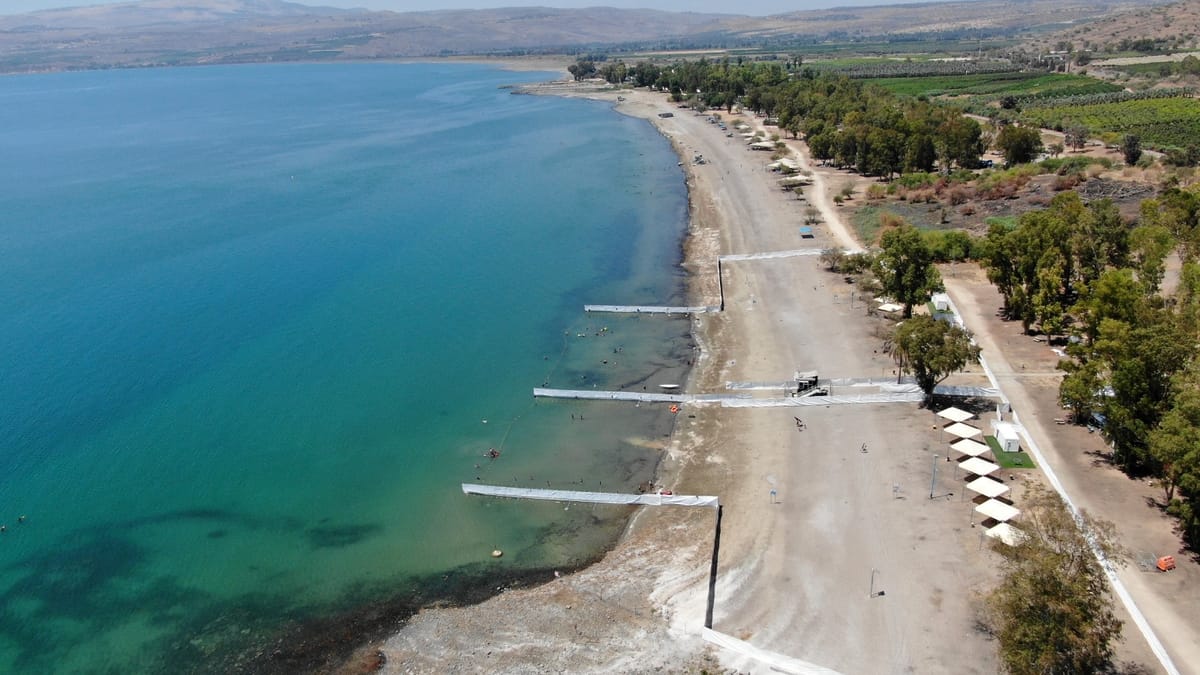
The Kinneret basin shows the sharpest impact. The cumulative volume of available water in the Sea of Galilee from the start of the season through the end of April stood at approximately 142 million cubic meters. Combined with the previous drought season, the total available water volume over the two seasons reached only 208 million cubic meters, the lowest figure recorded in a century of measurements.
The Kinneret's water level began the hydrological year at -213.08 meters, dropped to a seasonal low of -213.45 meters in mid-December, and rose by just 94 centimeters to a seasonal peak of -212.51 meters in early May. That leaves the lake 3.71 meters below the upper red line and only 49 centimeters above the lower red line. Stream flows and spring outputs in the north also fell significantly: the Jordan River recorded flow at approximately 80% of the long-term average, the Dan spring at 94%, and the Banias at 90%.
In sharp contrast to the continuing deficit in the north, the south and east of the country saw an unusual concentration of intense rainfall events and flash floods. In a particularly extreme event at the end of April in the Judean Desert and northeastern Negev, more than 50 millimeters of rain fell within an hour and a half, an event the Israel Meteorological Service classified as having a return period of approximately two hundred years.