Get our mobile app
Download on the App StoreGet it on Google Play

Ben-Gvir quick to respond

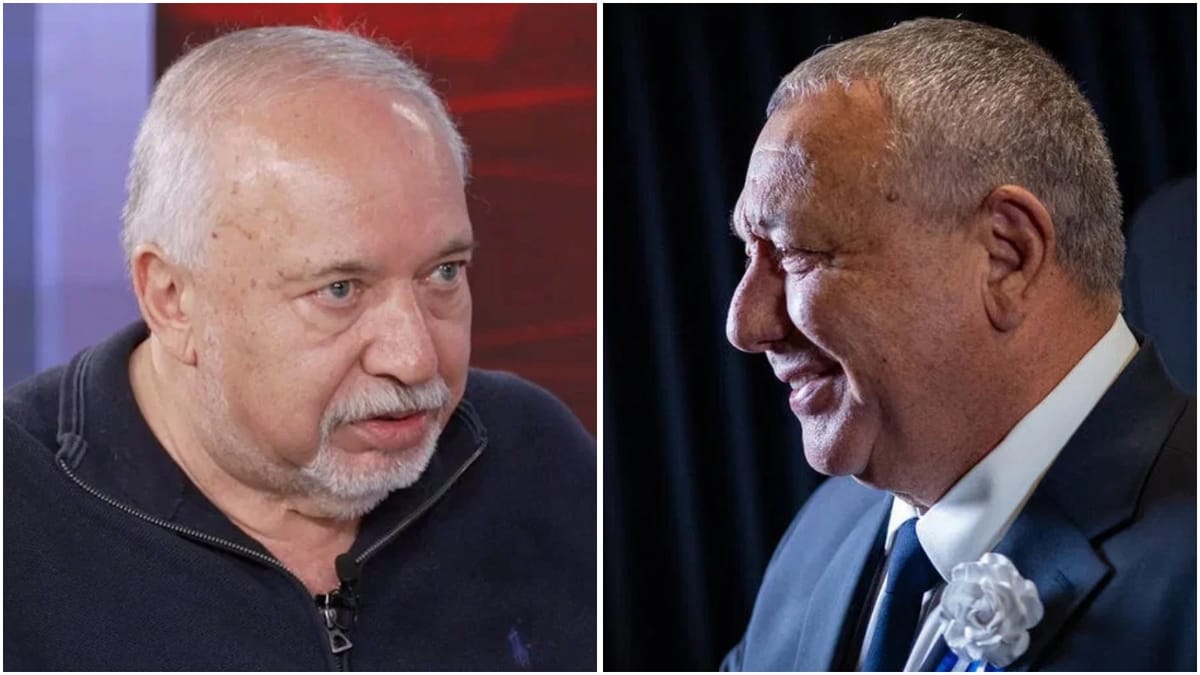
Liberman backs Eisenkot war warning

Yisrael Beiteinu chairman warns against security decisions without parliamentary oversight after Eisenkot's letter to Netanyahu

Liberman Joins Eisenkot: Transition Government Cannot Drag us into War Without Oversight

Yisrael Beiteinu chairman Avigdor Liberman joined Change Bloc leader Gadi Eisenkot's warning on Thursday, cautioning that a transition government is not authorized to make decisions that could drag Israel into war without parliamentary oversight and without full consensus from all security officials.

As Netanyahu's bloc delays his entry into the chairmanship of the Knesset Foreign Affairs and Defense Committee, Liberman issued his statement: "I warn, a transition government is not authorized to make decisions that could drag Israel into war without parliamentary oversight, and without full consensus from all security officials," Liberman said. "I emphasize, all security officials."

Otzma Yehudit chairman and Minister Itamar Ben-Gvir responded: "Liberman, who depends on the mercy of terror supporters, those who walked out demonstratively during the singing of 'Hatikvah' and dictate his political agenda, is the last person who can preach to us about conducting war. You cannot lead a security decision when you are bound by agreements with those who oppose the very existence of the state. We will continue to act with determination solely for the interests of the State of Israel and its security!"

Liberman's remarks come against the backdrop of the unusual letter Eisenkot published yesterday, in which he called on Prime Minister Benjamin Netanyahu to avoid dangerous security steps during the transition period. Eisenkot emphasized in his letter that Netanyahu is currently serving as head of a transition government that does not enjoy the Knesset's confidence, with only 46 MKs supporting the continuation of his tenure.

"I turn to you as one who still holds the reins of power and as one who is still responsible at this hour for the security of the State of Israel, the IDF and the security forces," Eisenkot wrote in his letter. "At this hour, as is well known, you serve as head of a transition government that no longer enjoys the Knesset's confidence — only 46 MKs still support the continuation of your tenure as prime minister."

Eisenkot noted in his letter that in recent weeks, disturbing reports have been published regarding the introduction of considerations foreign to Israel's security, and emphasized the obligation incumbent upon the prime minister to exercise extra caution and responsibility regarding national and security decisions. "In this complex and sensitive political situation, perhaps more than ever, your duty is to exercise restraint and caution," he wrote.

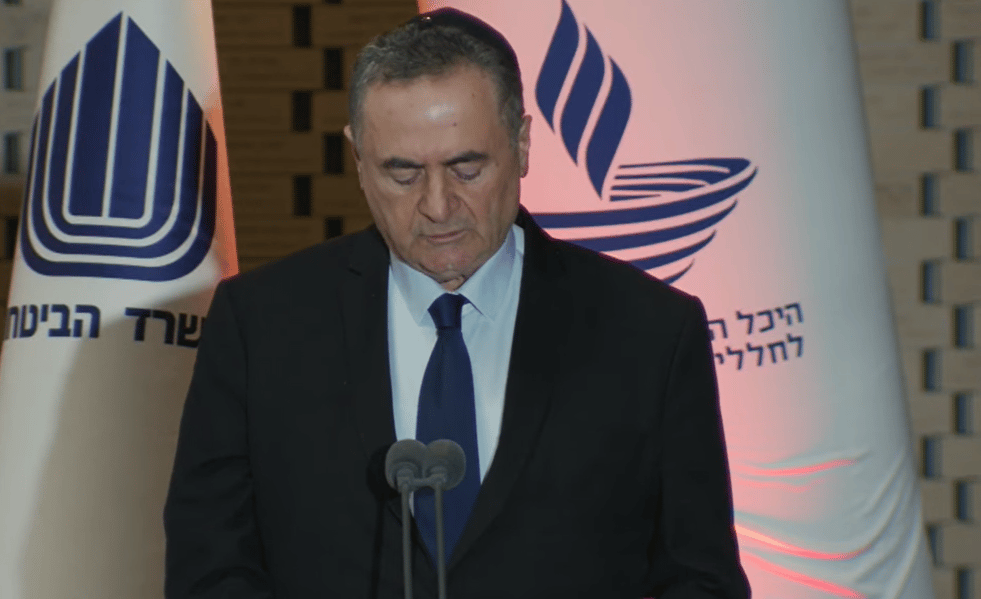
Defense Minister Israel Katz responded sharply to Eisenkot's remarks. "We do not need approval from the opposition or any legal entity to instruct the IDF to carry out thwarting operations in Gaza, defensive and offensive operations in Lebanon, preservation of the security zone in Syria to protect the Golan communities, evacuation of a terrorist neighborhood in Hebron and continuation of offensive activity against terror in Judea and Samaria," the minister clarified.

Defense Minister Katz
Defense Minister Katz (Screenshot)

Katz emphasized that "we have also demonstrated determination and judgment vis-à-vis Iran, in full coordination with the IDF — and so it will be now according to what is required." His remarks refer to the warning he delivered at the Operation Kadesh memorial ceremony, in which he warned that Iran is renewing efforts to obtain nuclear weapons and that "we will not be able to accept these threats."

The minister clarified that "Israel's security is not in transition and is not waiting for the political processes being conducted in parallel." According to him, "there is one prime minister, one defense minister instructing the IDF — and one government responsible for making decisions."

Netanyahu also responded to Eisenkot's letter, claiming that "all decisions were made from security considerations alone." The prime minister called the letter "irresponsible."

The confrontation is taking place against the backdrop of a complex political reality: while President Yitzchak Herzog has given Eisenkot the mandate to form the next government, Netanyahu and Katz continue to manage security policy as a transition government. The political-security cabinet is expected to convene on Sunday for the first time since early October.

In parallel, Eisenkot turned to Attorney General Gali Baharav-Miara with a demand to receive ongoing security updates and access to intelligence assessments. In an official letter sent to her office, Eisenkot argued that in the absence of a new opposition chairman, and as one who has been given the mandate to form a government, he should receive the customary updates.

"Israel is in a challenging and volatile security reality, as the outgoing prime minister has repeatedly testified in a series of public statements," Eisenkot wrote. "The period of government transition, before the establishment of a new government, requires looking with seven eyes at every action and use of force that has the power to affect the State of Israel and its citizens."

Ready for more?

Join our newsletter to receive updates on new articles and exclusive content.

We respect your privacy and will never share your information.

Enjoyed this article?

Yes
No
Follow Us:

Unmissable content


Loading comments...

Also of Interest