Joe Biden has taken the extraordinary step of suing his own country's Justice Department in a bid to prevent the public release of private recordings that sit at the heart of one of his presidency's most damaging controversies.
Biden sued the Justice Department Tuesday in an effort to block the release of audio recordings and transcripts of his interviews with a ghostwriter, obtained by special counsel Robert Hur as part of his investigation into Biden's handling of classified documents.
The lawsuit was filed in federal court in Washington D.C., and comes as the DOJ has scheduled a June 15 release of redacted transcripts and audio recordings to Congress and the Heritage Foundation, which had sued for the material under the Freedom of Information Act.
What's on the Tapes
At issue are audio recordings and transcripts of Biden's interviews at his home in 2016 and 2017 with Mark Zwonitzer, who worked with Biden on his two memoirs. The files were scrutinized by special counsel Hur as part of his investigation into Biden's improper retention of classified documents from his time as a senator and vice president.
Biden denies sharing classified information, but Hur concluded that Biden read classified notebook excerpts to ghostwriter Zwonitzer.
Biden's Legal Argument
Biden's lawyers argued that the disclosure would "constitute an unwarranted invasion of President Biden's privacy," writing: "President Biden, like every American, has a right to privacy in personal conversations he had within his own home."
Biden's attorneys also argued that under the Trump administration, the Justice Department has "reversed" its position on releasing the files, noting that "in February 2026, without any formal explanation for its about-face, the Department notified President Biden of its intention to release the audio recordings and transcripts."
The Hur Report and Its Fallout
Following a year-long probe, Hur released a 345-page report in February 2024 determining that although "Biden willfully retained and disclosed classified materials after his vice presidency when he was a private citizen," there was not enough evidence to bring criminal charges.
The report was nonetheless politically devastating, not for what it charged, but for what it said about Biden's mental state. Hur's report questioned Biden's age and mental competence, and Hur said he found insufficient evidence to successfully prosecute a case in court. Hur concluded that Biden's memory lapses during the special prosecutor's interview with him would make it harder to prove he acted willfully.
The House in 2024 voted to hold Biden's Attorney General Merrick Garland in contempt of Congress for refusing to turn over audio from Biden's interview with Hur after the White House exerted executive privilege.
Trump Pounces
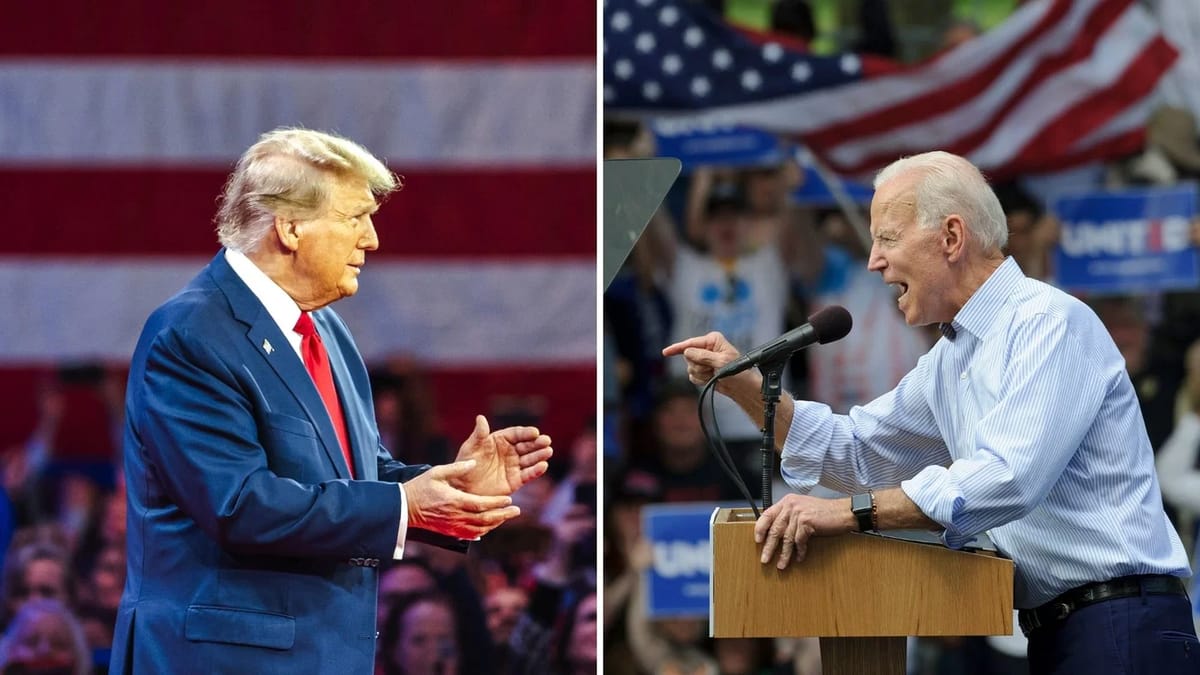
President Trump responded to the lawsuit on Truth Social with characteristic brevity and venom, calling Biden a "corrupt politician!!!" while sharing coverage of the filing, framing the lawsuit as an attempt by a disgraced former president to hide evidence of wrongdoing.
Republicans have long argued that Biden received preferential treatment compared to Trump's own legal battles over classified documents, and the lawsuit is expected to intensify that narrative heading into election season.
The June 15 release deadline set by the DOJ means the federal court will need to act quickly if Biden is to succeed in blocking the recordings. The case is being closely watched by legal experts on both sides.