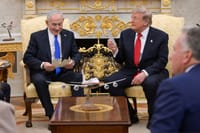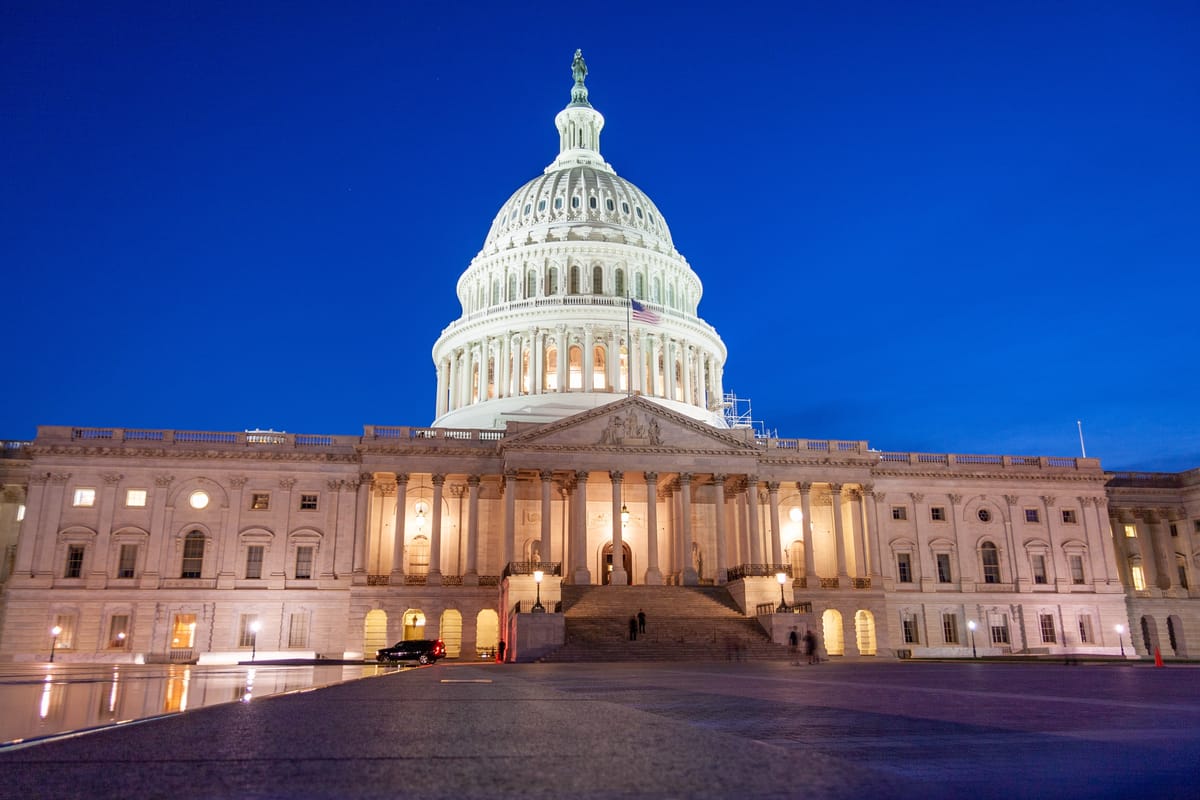
The House of Representatives passed a historic vote Wednesday night, formally demanding that President Trump end military hostilities with Iran. It was the first time either chamber had done so since the war began over three months ago. Four Republicans broke with their party to make it happen. And it will almost certainly go nowhere.
Here's why, and why it still matters anyway.
What actually happened?
A bipartisan majority in the Republican-led House voted on Wednesday to end the war with Iran, the clearest rebuke yet of President Trump's handling of the conflict and the subsequent economic fallout. The war powers resolution passed 215 to 208, with four Republicans joining Democrats in support.
The four Republicans who crossed the aisle, Thomas Massie, Brian Fitzpatrick, Tom Barrett, and Warren Davidson, have each cited constitutional concerns about a war being waged without congressional authorization. Massie said after the vote: "People are tired of this. They're tired of $5 gallon gas and $6 gallon diesel, and fertilizer we can't afford to put on our fields in Kentucky."
This wasn't the first attempt. The resolution had originally been set for a vote two weeks ago, but Republican leaders sent House members home early for the Memorial Day recess when it appeared the largely Democratic-backed measure had enough Republican votes for passage. Speaker Mike Johnson tried to run out the clock. It didn't work.
What is the War Powers Act, and why does it matter here?
The War Powers Resolution of 1973 was passed in the aftermath of Vietnam specifically to stop presidents from waging open-ended wars without Congress. Under the Constitution, only Congress can formally declare war, but modern presidents have long acted unilaterally and dared Congress to stop them.
Under the 1973 War Powers Act, the president has 60 days to end hostilities if there has been no congressional authorization, with a possible 30-day extension. The same law gives Congress the ability to end hostilities by voting on a resolution, subject to presidential veto.
The U.S. and Israel began their military operation against Iran on February 28, 2026, killing Supreme Leader Ali Khamenei in the opening hours of the conflict. Trump never sought congressional authorization. He has variously described the campaign as a "skirmish" and a "short-term excursion."
So what happens now, and where does the veto come in?
This is where it gets complicated, because there are actually two different types of war powers resolutions moving through Congress, and they work very differently.
The House passed what's called a concurrent resolution, a measure that, under the original War Powers Act, does not require the president's signature to take effect. But the White House is already contesting this. The White House said the resolution "will not reach" Trump's desk, calling concurrent resolutions "unconstitutional." The administration points to a 1983 Supreme Court ruling that declared the legislative veto mechanism unconstitutional.
The Senate, meanwhile, has been working on a joint resolution, a different animal entirely. The Senate approved a war powers resolution 55 to 45, with eight Republicans joining all Democrats. That resolution directs the removal of US Armed Forces from hostilities within 30 days unless Congress authorizes the conflict, but it is expected to be vetoed by the president. Overriding that veto would require a two-thirds majority in both chambers, a threshold that is nowhere near reachable.
The administration has a third line of defense as well: it claims the war is already over. The White House wrote in a formal statement of administrative policy: "The hostilities that began on February 28, 2026, have terminated with the ceasefire ordered by the President on April 7, 2026." Never mind that Iran and the US traded fresh strikes in the Persian Gulf just hours before Wednesday's House vote.
So what's the point?
Plenty, according to those who pushed the vote.
First, there's the political signal. Secretary of State Rubio warned at a House Foreign Affairs Committee hearing that the Iranians would interpret a passed resolution as a sign that the administration's "hands are going to be tied," and would therefore have less incentive to make a deal. The fact that the administration is worried enough to make that argument suggests the vote carries real weight.
Second, there's momentum. "We're inching closer to having both chambers of Congress declare this an illegal war. That's huge," said Rep. Jared Huffman (D-Calif.). "It's just becoming more and more untenable, what he has done."
Third, there's history. Every Republican who voted against the resolution is now on the record supporting a war their constituents are growing to dislike, at a time of $5 gas, a rattled global economy, and no clear exit strategy.
The resolution now heads to the Senate, where four Republican senators last month joined Democrats in advancing a similar measure. A final Senate vote has yet to be scheduled.
The bottom line
Congress is not going to stop this war through legislation, at least not directly. Trump will veto any binding resolution that reaches his desk, and there aren't nearly enough votes to override him. But the House vote does something else: it builds a political record, squeezes wavering Republicans, and signals to Iran's negotiators that American public and congressional support for the conflict is eroding. In Washington, sometimes that's how pressure actually works.