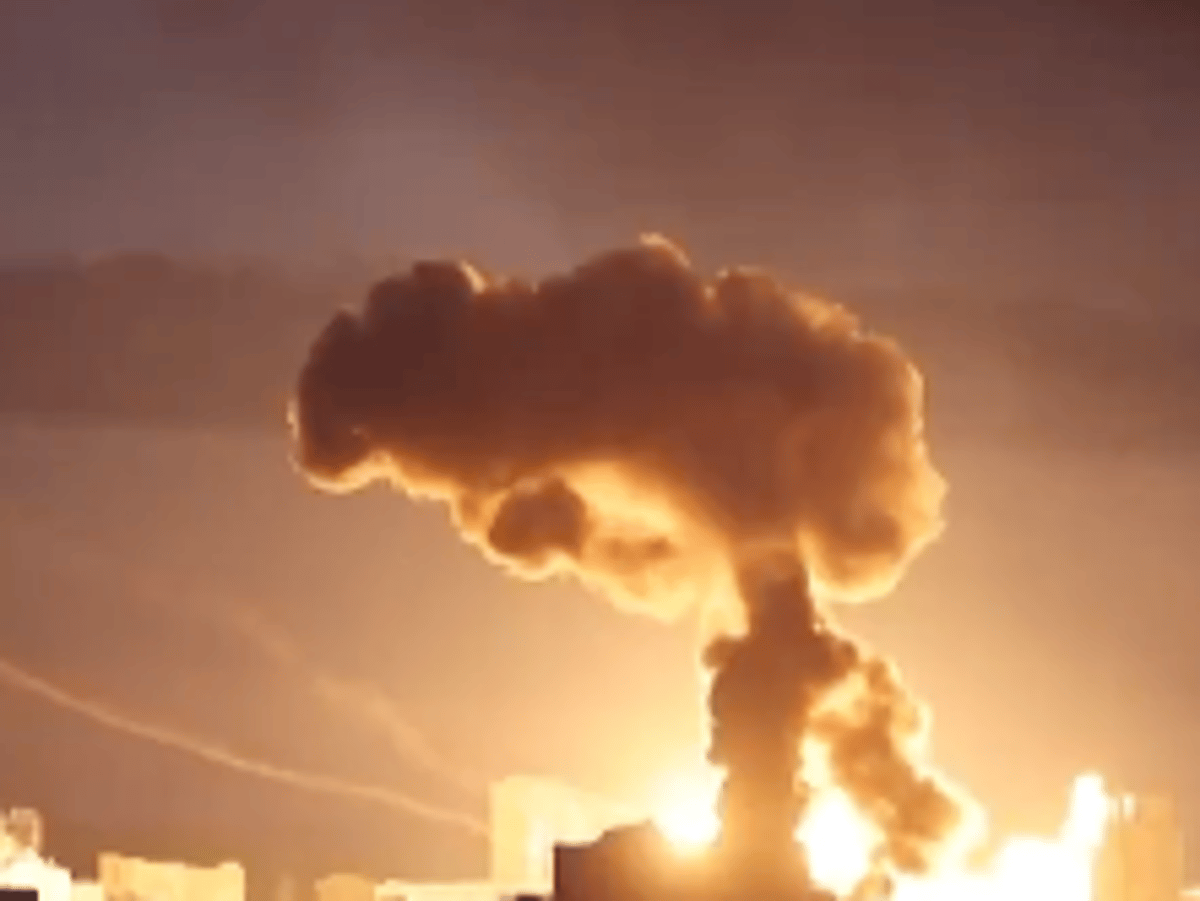
Russia launched one of the most devastating aerial barrages of its four-year war against Ukraine overnight on Sunday, striking every district of Kyiv with a combined wave of 600 drones and 90 missiles, including the hypersonic nuclear-capable Oreshnik ballistic missile. At least four people were killed and 56 wounded in Kyiv alone, with 30 of the wounded hospitalized, according to Mayor Vitali Klitschko. Damage was recorded at 40 locations across the capital, hitting residential buildings, a school, the Museum of Chernobyl, a market, and sites near government offices.
President Volodymyr Zelensky confirmed that the Oreshnik struck the city of Bila Tserkva in the Kyiv region, marking the weapon's third operational use in the war. Zelensky had warned of the impending strike less than 24 hours earlier, citing intelligence shared by U.S. and European partners that detected launch preparations at Russia's Kapustin Yar test range in Astrakhan. The U.S. Embassy in Kyiv also issued an advance warning of a "potentially significant air attack."
"Tonight Kyiv region is once again enduring a mass enemy attack with strike drones, cruise missiles and ballistic missiles."
— Mykola Kalashnyk, Head of Kyiv Regional Administration
The Oreshnik: what it is and why it matters
The Oreshnik, whose name means "hazelnut tree" in Russian, is an RS-26 Rubezh medium-range ballistic missile capable of releasing up to six independent hypersonic warheads. President Vladimir Putin has claimed it travels at Mach 10 and is immune to any existing missile defense system. Russia first used the weapon operationally in a strike on Dnipro in November 2024, then again in an attack on the Lviv region in January 2026. Sunday's deployment against Bila Tserkva, a city of roughly 200,000 people roughly 80 kilometers south of Kyiv, marks its third use and first strike this close to the capital.
Russia's Defense Ministry confirmed it used the Oreshnik alongside other missile types, claiming the targets were Ukrainian "military command and control facilities," air bases, and military industrial enterprises. Ukrainian officials and journalists on the ground reported that the strikes hit heavily civilian areas across multiple city districts.
The scale of the assault
Ukraine's Air Force reported that of the 690 total aerial threats launched, 549 drones and 55 missiles were destroyed or jammed by air defenses. Around 19 additional missiles failed to reach their targets. That still left a significant number of projectiles finding their marks across the capital and surrounding region. Explosions were also heard in Cherkasy, Kropyvnytskyi, and Khmelnytskyi Oblast, according to public broadcaster Suspilne.
In Kyiv's Shevchenko district, a school was struck while people sheltered inside, Klitschko said. In the Solomiansky district, a drone hit a 24-storey residential building, triggering a fire on the 19th floor. Supermarkets and warehouses across the city were also damaged. The attack was still ongoing at sunrise, with additional missiles and drones reported inbound.
Poland's Air Force scrambled Polish and allied fighter jets to protect Polish airspace as the assault unfolded, reflecting the regional alarm generated by the scale and trajectory of the attack.