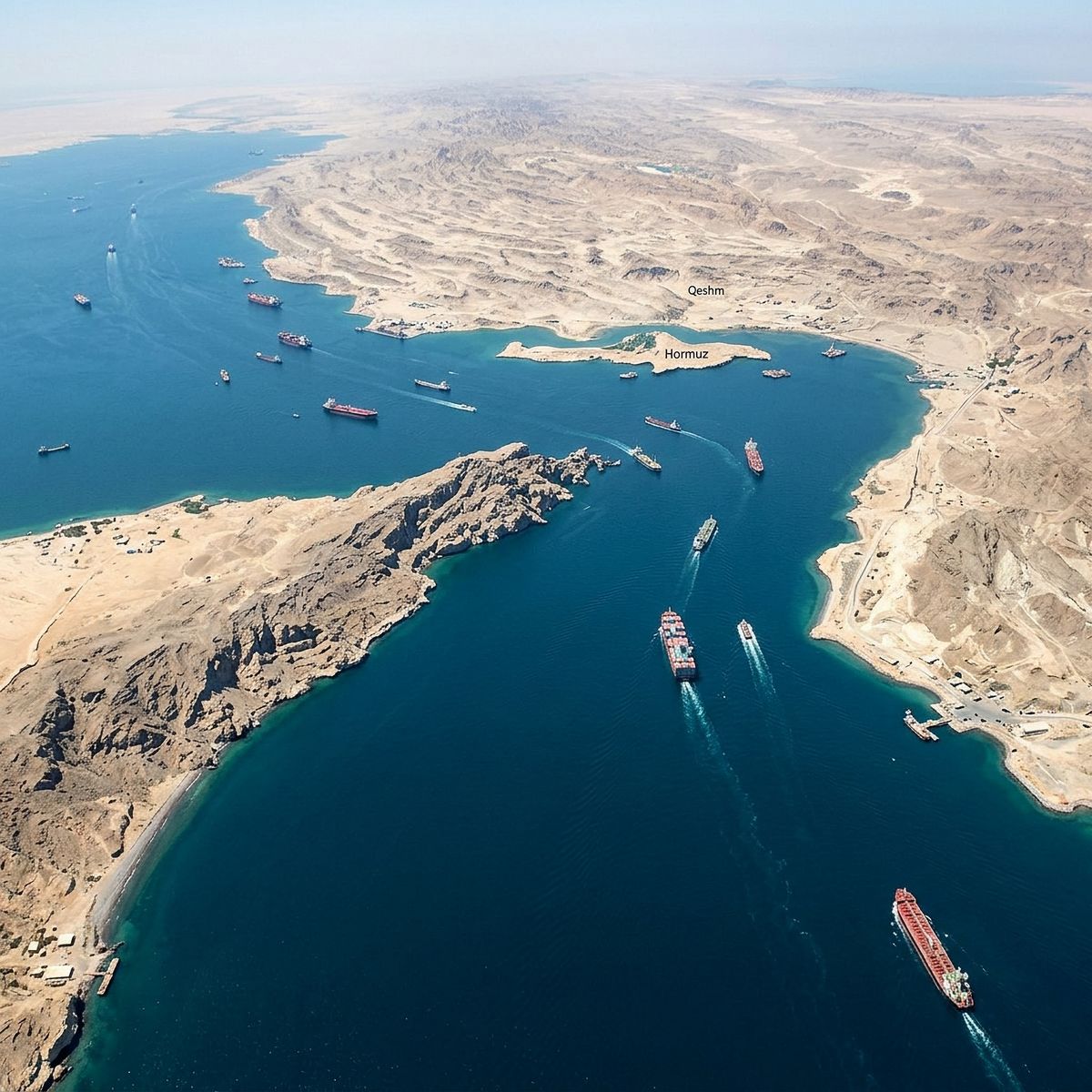
An Iranian drone strike on a commercial container ship in the Strait of Hormuz has sent oil prices surging and forced the United Nations to suspend a fragile maritime evacuation operation, dealing a serious blow to the U.S.-Iran ceasefire framework just days after it appeared to be gaining traction.
The Singapore-flagged Ever Lovely, operated by Taiwan's Evergreen Marine, was struck on its starboard side 7.5 nautical miles southeast of Oman's port of Dahit as it was exiting the strait Thursday. The attack damaged the ship's bridge but caused no casualties or environmental impact. U.S. officials confirmed to multiple outlets that the Islamic Revolutionary Guard Corps carried out the strike.
The timing was especially significant. Just a day before the strike, between 70 and 78 vessels had successfully passed through the Strait of Hormuz, making it the busiest day since the conflict began. Major shipping firms like Maersk had resumed moving stranded container ships following extensive security talks with regional partners. The attack instantly undid that progress, plunging the shipping industry back into uncertainty.
The IMO Secretary-General Arsenio Dominguez confirmed the organization had decided to pause its evacuation scheme to reconfirm safety guarantees to ships crossing the waterway, noting the struck vessel was not transiting under its evacuation plan. The IMO had been working to clear a backlog of hundreds of stranded ships and an estimated 11,000 stranded seafarers from the Persian Gulf.
Iran moved quickly to assert its authority over the waterway. Iran's newly established Persian Gulf Strait Authority warned after the attack that any passage through routes outside its designated framework would not be covered by safe passage guarantees and would not be entitled to insurance coverage, with consequences falling on the owner, operator, and vessel commander. The IRGC separately insisted that all ships must use the northern route along the Iranian coast and coordinate with Iranian naval authorities, directly contradicting the southern Omani corridor that the IMO had been operating.
The strike also dealt a serious blow to the fragile peace framework between Washington and Tehran. The MOU had guaranteed 60 days of toll-free and secure navigation through the strait, but the attack effectively shattered confidence in that agreement and contradicted President Donald Trump's assurances that the waterway had become safe for international shipping.