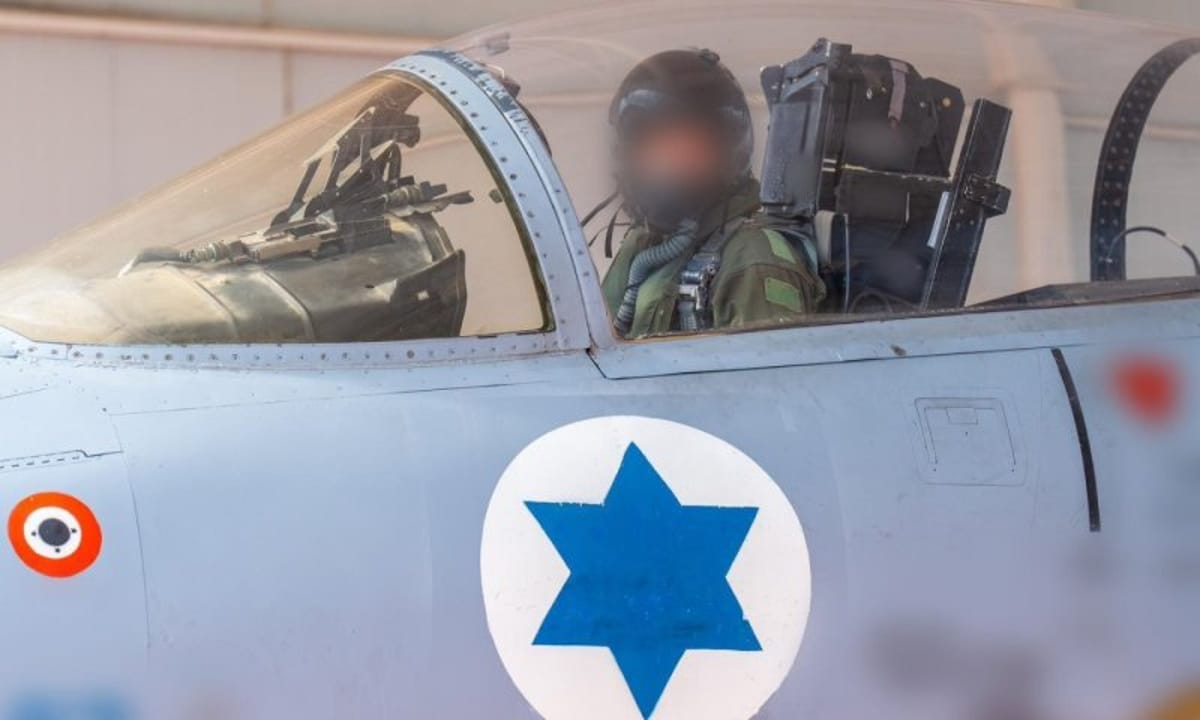
Fighter jets sat fully armed on the runway. Dozens of Israeli Air Force aircraft were ready to take off. The targets had been selected, the mission planned down to the minute. And then, at 12:30 p.m. Israeli time on Monday, a single social media post from President Donald Trump stopped everything.
New details emerging Tuesday morning reveal that Israel came within hours, perhaps minutes, of launching one of its most expansive strikes on Iran since the conflict began, before direct American pressure forced Jerusalem to stand down.
According to the Israeli military correspondent for Galei Tzahal radio, the aborted operation was no improvised retaliatory gesture. It was a large-scale, complex military operation that Israeli defense officials had been preparing from the moment Iran opened direct fire on Israel Sunday night at 10:00 p.m., continuing through the night and into the following morning.
The scope of what was planned was staggering. Unlike the more limited and targeted strike that had already been carried out on a petrochemical facility, the targets now on the list were of an entirely different magnitude, sensitive national infrastructure sites chosen specifically to deliver a devastating blow to the Iranian economy and deepen the instability of the regime in Tehran. Additional strategic targets were also included, details of which remain under military censorship.
The entire operation was poised to launch Monday afternoon. Then Washington intervened.
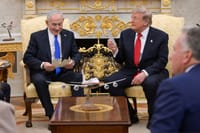
President Trump warned Prime Minister Benjamin Netanyahu that Israel could find itself alone against Iran if it escalated the conflict further, and claimed that Washington had been informed only at the last minute about Israel's earlier overnight strikes. In a phone conversation with Channel 12's Barak Ravid, Trump said he had asked Netanyahu during a call not to respond to Iran's ballistic missile attacks.
The political pressure translated into a public ultimatum. Trump took to social media calling for the attacks to "immediately stop," stating that both countries were seeking an "immediate" ceasefire and that "final" peace negotiations were moving forward. Hours later, Netanyahu addressed the nation and said he would halt attacks on Iran "for now," warning that Israel would strike again if attacked.
Behind the scenes, the optics were jarring: dozens of fully armed fighter jets remained on the tarmac, engines ready, orders frozen, a strike force with nowhere to go.
Netanyahu did not frame the stand-down as capitulation. "Over the past day, Iran and Hezbollah tried to impose a new equation on us," he said. "That equation is intolerable and completely unacceptable to me. They thought they could launch attacks from Lebanon and Iran against Israel and that we would not act. That did not happen, and it will not happen. Not on my watch."
An Israeli official stressed that Israel will not stop its offensive against Hezbollah in southern Lebanon, saying, "The sense is that this round of fighting is behind us."
Iran also suspended its operations against Israel but warned it would resume them if Israeli strikes in southern Lebanon continue.
For now, the jets are back in their hangars. But the targets haven't gone anywhere.